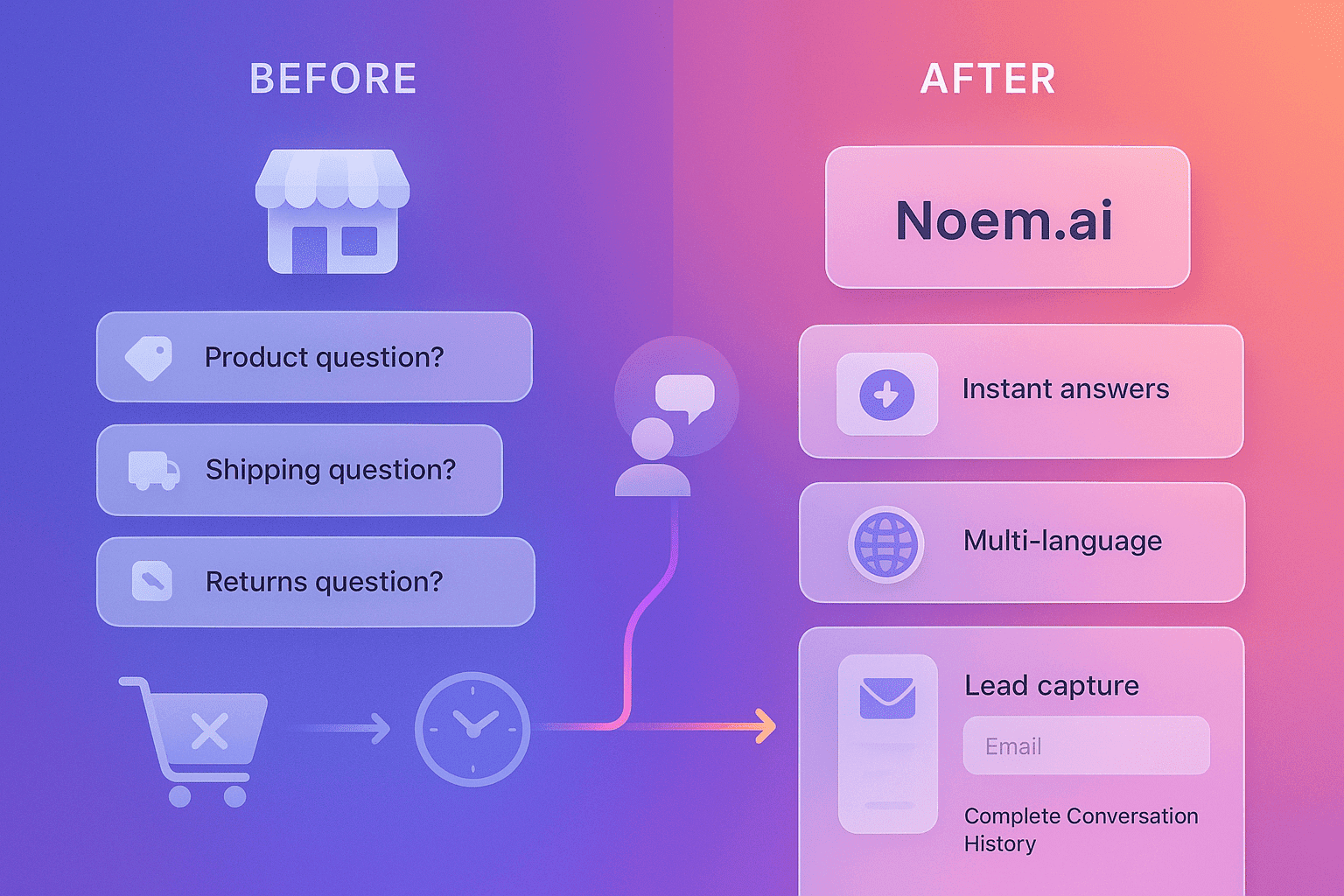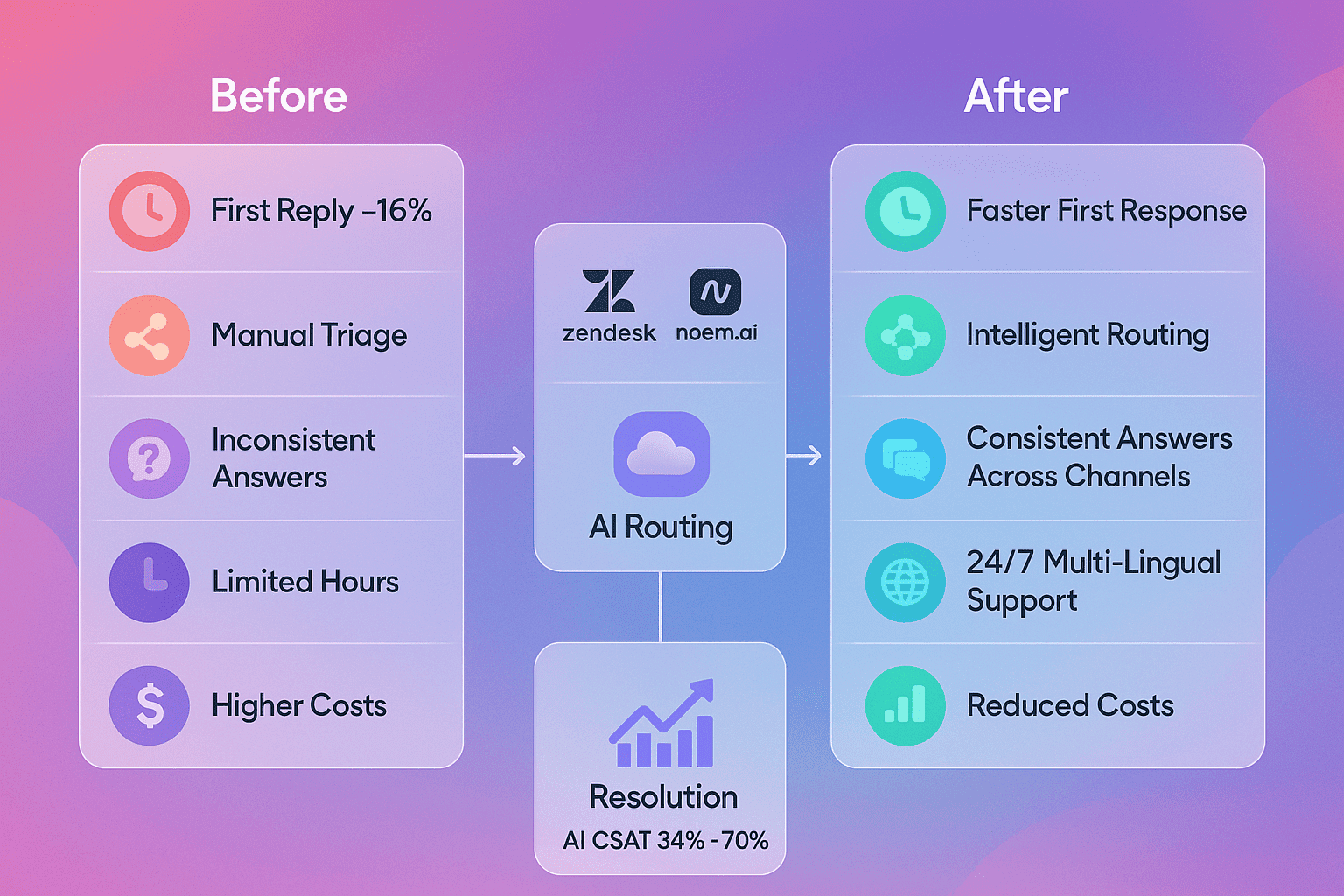
Segmentation, Targeting, and Positioning is one of the oldest frameworks in marketing, and it turns out to be a useful lens for setting up an AI Concierge too. Treating your Concierge like a channel you have to segment, target, and position correctly, rather than a generic chatbot you just switch on, is what separates a Concierge that actually converts from one that visitors ignore.
Segmentation: not every visitor needs the same conversation
A first-time visitor asking “what do you do?” needs a different response than a returning customer asking about their order status. An AI Concierge grounded in your real content through retrieval-augmented generation (RAG) can pick up on context clues in the conversation itself and respond accordingly, instead of giving everyone the identical canned greeting a basic AI chatbot would use.
Targeting: picking the right role for the right audience
This is where Noem.ai’s role-based Concierges matter. A Sales Qualifier targets the visitors who are close to a buying decision; a Support Concierge targets existing customers with a question; a Personal Shopper targets e-commerce visitors comparing products. Picking the role that matches who is actually landing on your site is the “targeting” half of the framework, and it changes what your Concierge should be optimizing for.
Positioning: how your Concierge represents your brand
Positioning is about the impression a visitor walks away with. A Concierge that sounds like a script feels like every other AI chatbot on the internet. One that is grounded in your specific voice, policies, and offerings, the way an AI Concierge from Noem.ai is set up to work, reinforces the same positioning your marketing team has already worked to establish elsewhere.
Putting the framework into practice
Start by identifying your main visitor segments and what each one typically needs. Match a Concierge role to your highest-value segment first, whether that is qualifying sales leads or answering support questions. Sync your knowledge base so the Concierge’s answers reflect your actual positioning, not a generic description of your industry. As with any marketing channel, this is not a one-time setup: read your weekly sentiment and intelligence reports to see which segments are engaging and adjust from there.
Why this matters more for an AI Concierge than a static page
A landing page is passive; it says the same thing to everyone who lands on it. An AI Concierge is a conversation, which means it can actually apply segmentation and targeting in real time, adjusting to what a visitor is asking rather than hoping the right message reaches the right person by chance.
The bottom line
STP is not just for ad campaigns and landing pages. Applied to your AI Concierge, it is the difference between a bot that talks at every visitor the same way and one that is actually positioned to convert the visitors you most want to reach. For more on how an AI Concierge fits into a small or mid-sized business more broadly, see our guide to transforming your SMB with an AI Concierge.