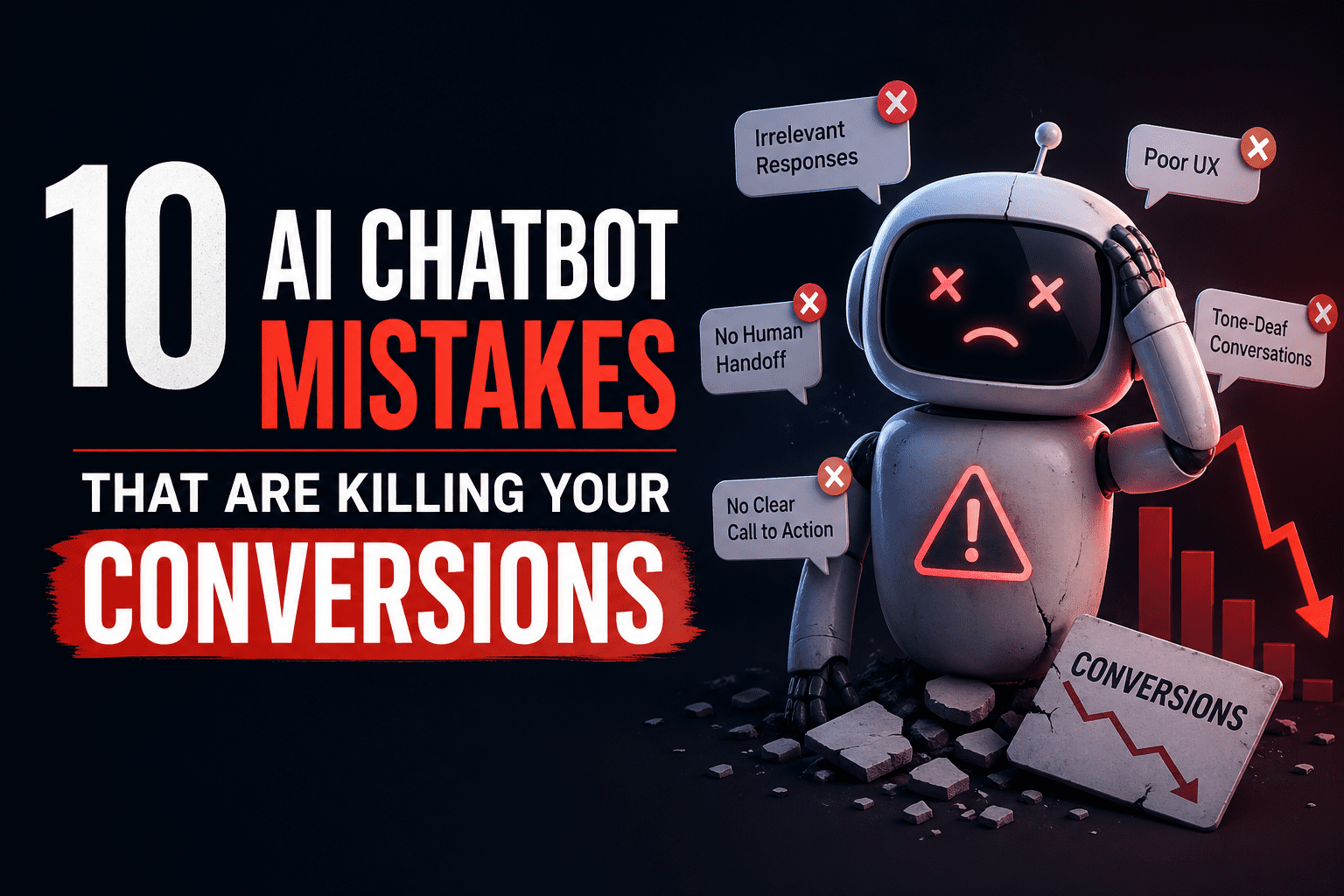
Is Your AI Chatbot a Salesperson or a DMV Clerk? How to Fix Your Conversion Killers

7 Feb 2026 by Daniel Hindi

  • 12 min
  • 51 Views

In the rush to adopt AI, many business owners are falling into a dangerous trap: they are building digital interrogators instead of digital salespeople.

If your current AI strategy relies on rigid flowcharts and “if-this-then-that” logic, you aren’t just frustrating your customers—you’re actively killing your conversion rates. In my latest episode, I break down why your AI flowchart is likely a $0-response machine and how to pivot toward a reasoning-based strategy that actually drives ROI.

The Interrogation Problem: Why Flowcharts Fail

Most chatbots are designed like a DMV intake form. They demand information—name, email, phone number—before they provide a single ounce of value. In the world of high-intent e-commerce, this is a trust-killer.

When a customer asks a high-stakes question, they don’t want to be “processed.” They want an answer.

1. The “Step-by-Step” Trap

The biggest mistake I see medium-sized businesses make is forcing the AI to collect data in a linear fashion.

The Reality: If a customer asks, “Do these frames fit wide faces?” and your AI responds with, “I’d love to help! First, what is your name?”, you have lost the sale. The Fix: Your prompt must instruct the AI to prioritize the customer’s immediate question. Data collection should be an organic byproduct of a helpful conversation, not a gatekeeper to it.

2. Escaping the Keyword Prison

Keyword-based logic assumes your customers know your internal terminology. They don’t. Most of the time, your users don’t even know exactly what they want; they just know the problem they are trying to solve.

If your AI is programmed to show a pricing table only when the word “price” is mentioned, it will miss the customer who asks, “Are the lenses included in the final cost?”

The Fix: Move away from keywords and toward Intent Analysis. Your AI needs to understand the context—whether the user is worried about hidden fees or looking for a bulk discount—and provide a tailored response that addresses the underlying concern.

Case Study: The Warby Parker “Style DNA” Approach

Let’s look at a real-world example: Warby Parker.

Imagine a customer is looking for a specific pair of vintage frames for a wedding. They find out the frames are out of stock. A standard, flowchart-based AI would say: “Sorry, those are out of stock. Can I help you with anything else?”

That is a dead end. That is a lost lead.

A high-converting AI uses what I call “Style DNA.” Instead of stopping at “out of stock,” the AI analyzes the attributes of those frames—tortoise shell, square, wide fit—and immediately suggests the two closest alternatives.

The Result: You turn a “No” into a “How about this?” and keep the customer in the sales funnel.

Strategy Over Paths

Stop trying to map every possible path a customer might take. It’s impossible and it creates a rigid, robotic experience.

Instead, build reasoning frameworks. Give your AI the boundaries (your business rules) and the objective (helping the customer), and let it navigate the conversation dynamically.

Don’t let a bad prompt cost you another customer. It’s time to stop mapping paths and start building reasoning.

Want to see the exact prompts we used for the Warby Parker case study? Check out the full breakdown in our latest video and stop letting your flowchart kill your conversions.

#AIStrategy #EcommerceTips #ConversionRateOptimization #BusinessGrowth #PromptEngineering

Focus on Decisions, We’ll Handle the Rest

While you make strategic decisions, Let Agent Noems efficiently run your company’s departments:

  • AI Support Chatbots
  • Lead Conversion Chatbots
  • Coaching Chatbots
  • Onboarding Chatbots
  • Virtual Clone Chatbots
Try It for Free

Where should we send your invitation to?