Stop Losing Ready-to-Buy Leads: High-Intent Lead Flows for AI Chatbots That Qualify Fast and Push Clean Data into Your CRM

16 Jan 2026 by Erick Quiel

  • 12 min
  • 92 Views

Get more booked meetings, fewer junk leads, and a CRM your reps actually trust—without adding new forms or manual steps.

Key Points

  • Instant Website Lead Capture
  • Real-Time Lead Qualification
  • Automatic Lead Creation
  • Faster Response Times for Prospects
  • Personalized Sales Conversations
  • Complete Conversation History
  • Automated Demo and Meeting Scheduling
  • Higher Close Rates with Better-Qualified Leads

Why High-Intent Lead Flows Matter in 2025

High-intent lead flows are the difference between reps chasing ghosts and reps running focused, valuable meetings. When your system can spot buying signals in real time, you talk to visitors while they are still engaged, not days later when the moment has passed. Modern approaches score intent across dozens of signals and reduce guesswork, so your team works on the right conversations first. This shift shortens time-to-first-touch and creates a cleaner path from page view to pipeline. It also gives managers a way to measure quality at every step and not just volume, which is key for scaling revenue.

Traditional lead qualification leans on static forms and slow reviews, which often fills the CRM with noise. Research shared by industry guides shows that manual scoring methods can produce high false positives, which wastes selling time and hurts morale over time (ref: Lift AI). Newer, AI-powered flows analyze many signals in real time, which can raise qualification accuracy to the 40–60% range versus 15–25% for manual processes, while cutting time-per-lead from hours to minutes (ref: Origami Agents). Teams also report faster engagement, more relevant handoffs to sales, and stronger close rates when their flows are built to capture and act on intent right away (ref: Outreach; Datagrid). When this system logs every step, the CRM becomes a trustworthy source of truth that helps reps prepare and leaders plan with confidence.

  • Faster response times: When your system detects buying signals on-page, AI chat instantly greets high-intent visitors before they bounce. This live timing matters because the first touch often wins the meeting, especially when a buyer is comparing vendors side-by-side. Real-time triggers also drive higher response rates because context is fresh, making your message feel helpful rather than pushy. This is one reason modern teams see strong uplift in engagement as they shift to real-time qualification (ref: Lift AI).
  • Personalized sales conversations: When the assistant learns from a visitor’s answers and behavior, it can tailor questions and recommendations that feel human. This keeps visitors engaged longer and gives sales a story to continue rather than a cold start. Buyers respond better when the thread reflects their industry, role, and pain points instead of generic scripts. The result is higher-quality discovery before a rep ever joins the call (ref: Datagrid).
  • Complete conversation history: Every question, answer, and link clicked should be stored and synced to your CRM. When a rep opens the record, they can see what matters to the buyer, what pages they viewed, and what blocked them. Rich context helps reps ask smarter follow-ups and avoids repeating basic questions that slow trust. This also helps managers coach by reviewing real transcripts, not guesses (ref: Lift AI).
  • Higher close rates with better-qualified leads: When your system focuses on verified intent, your pipeline reflects reality instead of wishful thinking. Teams using AI-powered qualification report more meetings with the right buyers, which leads to better conversion rates and forecast accuracy. This focus turns marketing traffic into revenue more reliably because handoffs contain specific pain points and buying context. Over time, you learn which signals drive wins and feed that back into your scoring (ref: Origami Agents; Lift AI).

The Blueprint: From Instant Capture to Clean CRM Records

Designing your flow means stitching together capture, qualification, enrichment, and scheduling with as few steps as possible. Each step should add clarity for sales and reduce friction for the buyer. A good test is whether a stranger can land on your page, have a helpful conversation in under two minutes, and book a time without ever filling a form. Another good test is whether your CRM gets a fully structured record with notes, tags, scoring, and next steps—automatically. The best flows also include audit trails so leaders can verify performance and trust the numbers.

  • Instant Website Lead Capture: Place the assistant on high-intent pages like pricing, demo, and solution pages to greet visitors with a one-tap prompt. Use friendly microcopy like “Want tailored pricing?” or “See if we fit your use case” to start the right path. Scoring should look at time on page, scroll depth, asset clicks, and return visits to detect stronger intent. Teams adopting this approach report capturing more in-the-moment buyers and creating fuller profiles without heavy forms (ref: Lift AI).
  • Real-Time Lead Qualification: Ask tight, outcome-based questions aligned to BANT or CHAMP to validate fit and timing without feeling robotic. Examples include budget range, team size, related tools, and go-live window—asked only when needed. Keep the flow dynamic: if a visitor mentions a deadline or specific system, branch into a deeper path on that topic. Studies and vendor benchmarks cite 40–60% identification accuracy at a fraction of manual review time, enabling 2–3 minute triage versus hours (ref: Origami Agents; Forecast).
  • Automatic Lead Creation: Once core questions are answered, auto-create the lead with structured fields so no one has to retype anything. Enrich with firmographics and contact validation to reduce duplicates and bounces. Map every field to your CRM schema ahead of time so you can push updates instantly. This step builds trust because reps see complete, accurate profiles from the start (ref: Default; LeadSquared).
  • Faster Response Times for Prospects: Fire immediate confirmations and suggested next steps during the chat rather than after. Offer a pre-filled calendar to lock time while attention is high and reduce back-and-forth emails. If the prospect is not ready, provide relevant resources to keep momentum alive. This reduces drop-off and nudges qualified buyers forward faster (ref: Outreach).
  • Personalized Sales Conversations: Tailor the assistant’s tone and examples to the visitor’s role, industry, and pain. Show targeted case studies or ROI examples to make the value clear in plain language. When a buyer mentions a tool, show how integration works in their stack to remove blockers early. This kind of personalization keeps engagement strong and improves meeting quality (ref: Datagrid).
  • Complete Conversation History: Push the entire transcript and key highlights into the CRM so a rep can prep in minutes. Use summaries that capture pain, timeline, budget hints, and decision makers to help the first call land well. Keep PII secure and log consent steps for compliance. This gives sellers a head start and reduces time on basic discovery (ref: Lift AI).
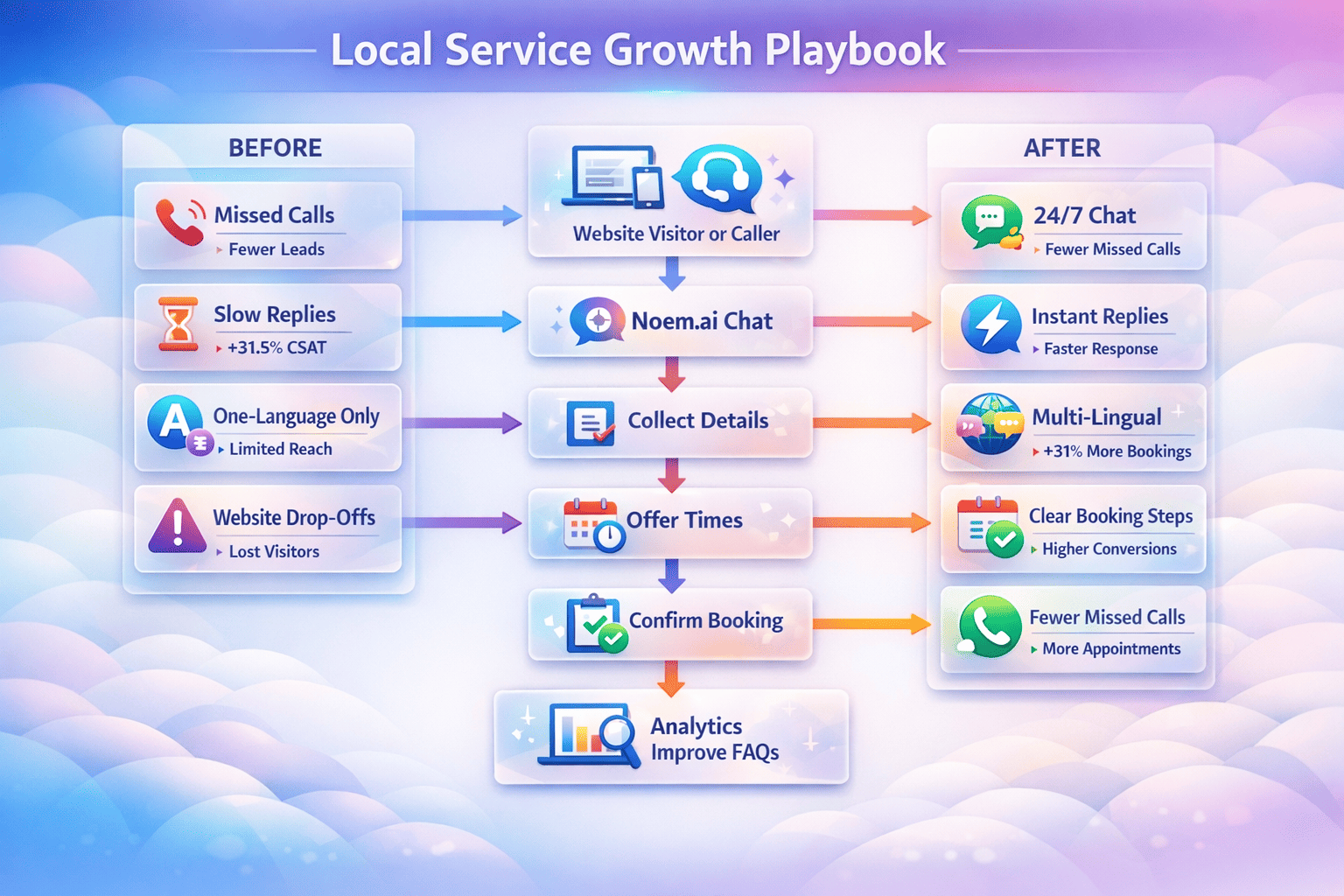
  • Automated Demo and Meeting Scheduling: Trigger routing to the right calendar based on segment, region, or product line while still inside the chat. Offer options like “30-minute discovery” or “15-minute intro” to meet buyers where they are. Today’s tools make it easy to confirm and send calendar holds without email back-and-forth. That speed shows professionalism and keeps your brand top of mind (ref: Outreach).
  • Higher Close Rates with Better-Qualified Leads: When reps meet prospects that already confirmed need, budget guardrails, and timeline, first calls turn into solution design. Leaders can set entry criteria for opportunities that match these signals, improving forecast health. Over time, you can backtest which answers tie to wins and tighten your scoring and copy. This creates a flywheel where data quality drives more wins and more wins drive cleaner data (ref: Origami Agents; Lift AI).

Data Hygiene, Governance, and CRM Sync Without the Headaches

Clean data is the backbone of trust between marketing, sales, and RevOps. Before launching your flow, audit your CRM for duplicate records, empty fields, and broken field mappings so every new record lands correctly. Build a simple validation checklist: company domain, email pattern, phone format, and role mapping so you can reject or repair low-quality inputs at the edge. Add enrichment from reliable sources to fill firmographics and technologies so reps have context from day one. Finally, set up scheduled checks to deduplicate and standardize fields so your reporting stays sharp as volume grows.

  • Establish data standards first: Define required fields and accepted formats, then enforce them at capture. This prevents fractured records like “VP Revenue” vs “VP of Revenue” that break reporting. Make a simple dictionary and share it with all go-to-market teams so everyone speaks the same data language. When data arrives clean, dashboards and handoffs work without fixes (ref: Default).
  • Push structured data, not blobs: Store scores, qualifiers, and timestamps in dedicated fields that map one-to-one with your CRM. Keep long transcripts as attachments or notes, but summarize key facts into searchable fields. This helps auto-segmentation, triggers, and forecasting stay fast and accurate. It also makes it easy to run cohort reports later (ref: LeadSquared).
  • Enrich and verify at the edge: Validate emails, company domains, and role signals before creating the record when possible. If needed, collect missing data through a follow-up prompt that feels like support, not a form. Edge checks reduce downstream cleanup and keep bounce rates low. They also increase rep adoption because the records look complete on arrival (ref: Default).
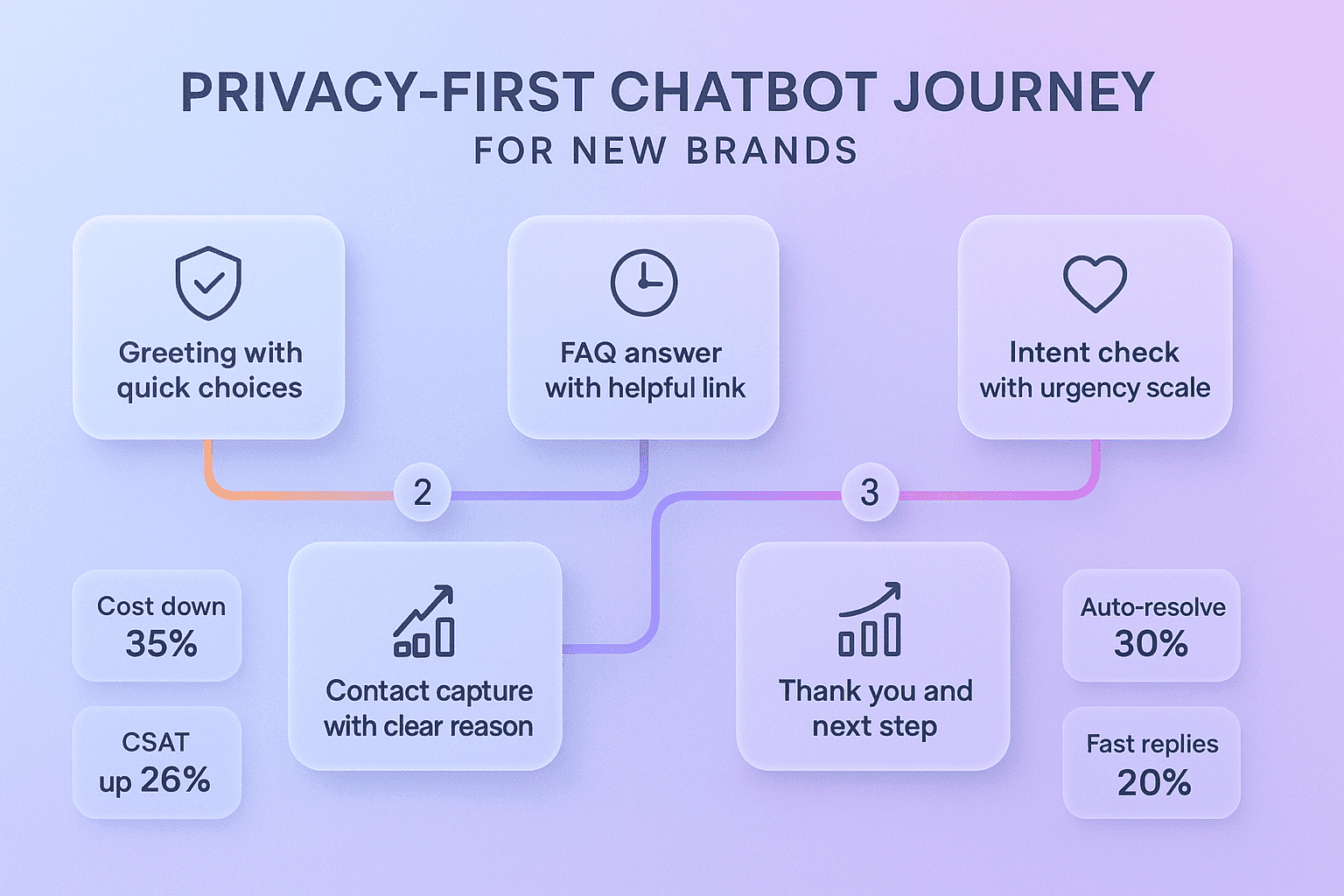
  • Log consent and security: Always capture consent steps and include links to your policy inside the chat for transparency. Limit access to transcripts based on role and mask sensitive data in summaries. This builds trust with buyers and protects your brand. Many teams look for SOC 2 aligned vendors to simplify reviews and compliance gates (ref: Autobound).
  • Maintain, monitor, and learn: Create a monthly review where sales and RevOps inspect a sample of records for quality and completeness. Track error rates, duplicate rates, and enrichment coverage so you can tune your flow. Feed win/loss results back into scoring so your model keeps learning which answers lead to revenue. This closed loop keeps your system honest and your pipeline realistic over time (ref: Lift AI).

Implementation Playbook and Metrics That Prove It

You do not need months to get value from high-intent lead flows. Focus on one or two high-intent pages, a simple qualification script, and direct scheduling. This lets you measure lift quickly and gives your team confidence to expand. Set clear goals such as “time-to-first-response under 60 seconds” and “booked meetings per 100 visitors” to see impact in the first month. When you document a few wins, roll out the same pattern to more pages and channels like WhatsApp or SMS.

  • Phase 1: Assess where you are today: Map your current capture points, response times, and close rates. Look at where leads stall—often it is between form submit and first reply. Identify your best high-intent pages and plan to launch there first. Define success metrics like qualification accuracy, average time per lead, and percentage of auto-scheduled meetings (ref: Datagrid).
  • Phase 2: Select the right platform: Choose tools that support fast deployment, strong analytics, and easy CRM mapping. You want a vendor that is simple for ops to manage and flexible enough for advanced teams. Security and privacy matter, so look for documented controls and clear data handling. Trials and proofs of concept help you validate fit before a full rollout (ref: Autobound).
  • Phase 3: Integrate and test across channels: Connect your CRM, identity resolution, and calendars, then test end-to-end with sample leads. Verify that transcripts, fields, and tags land exactly where you expect. Expand to web widgets, hosted pages, and messaging channels to meet buyers where they are. Multi-channel entry points capture more high-intent moments throughout the day (ref: Lift AI).
  • Phase 4: Train and tune: Enable your sales team with short call-prep videos and cheat sheets that explain new fields and summaries. Gather feedback after the first 10–20 meetings to improve question order and scheduling rules. Review transcripts to make the dialog feel natural for different roles and industries. Continue to refine scoring with real results so you improve precision over time (ref: Forecast).
  • Metrics that demonstrate ROI: Track time-to-first-response, time-to-qualified, and time-to-meeting as your speed metrics. For quality, measure qualified rate, false positives, and meeting-to-opportunity conversion. Also track the percentage of records with complete conversation history and enriched fields. Teams report strong improvements when moving from manual to AI-guided flows, with accuracy rising and time costs falling sharply (ref: Origami Agents; Lift AI).

Where noem.ai Fits: Speed, Simplicity, and Clean Data by Default

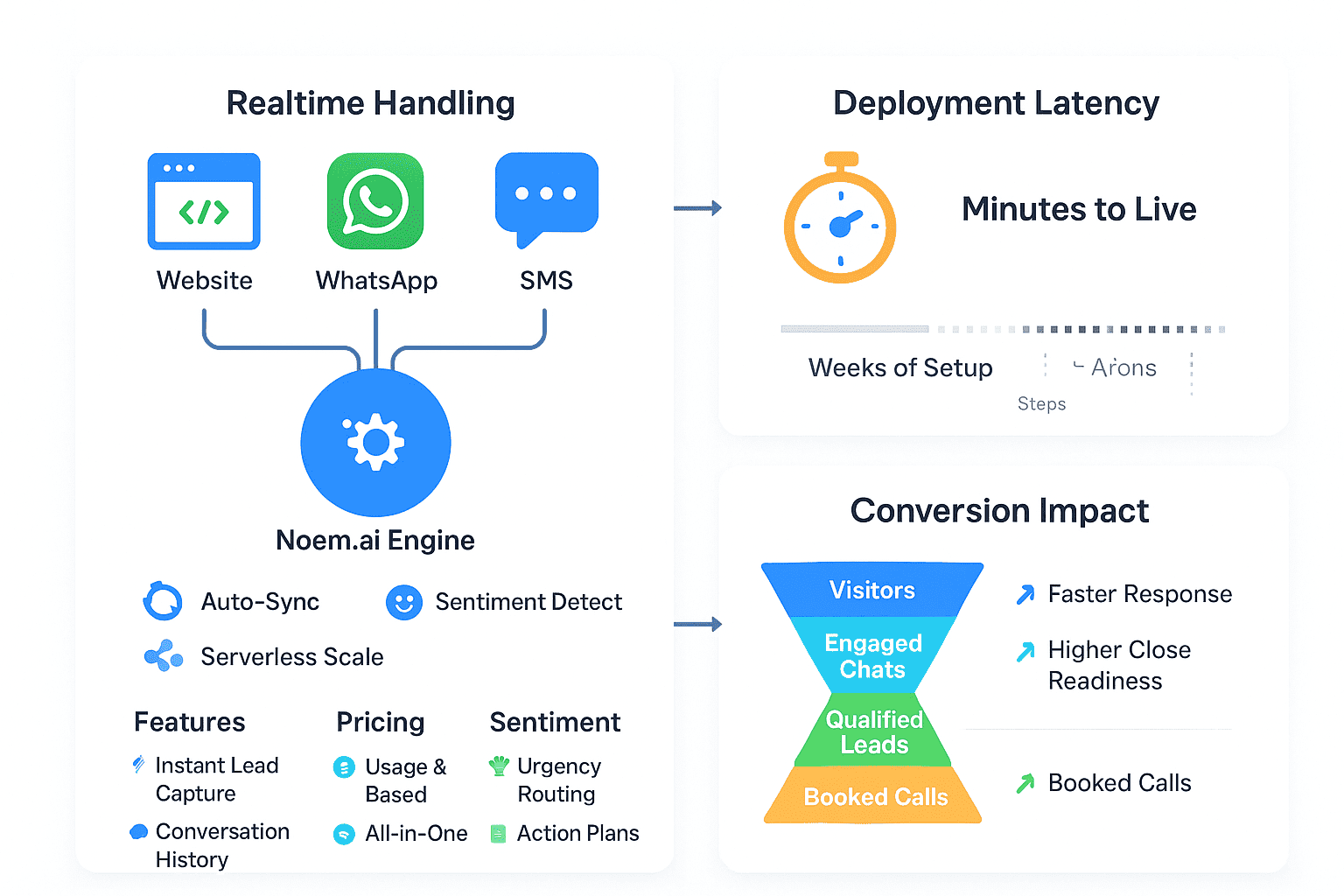
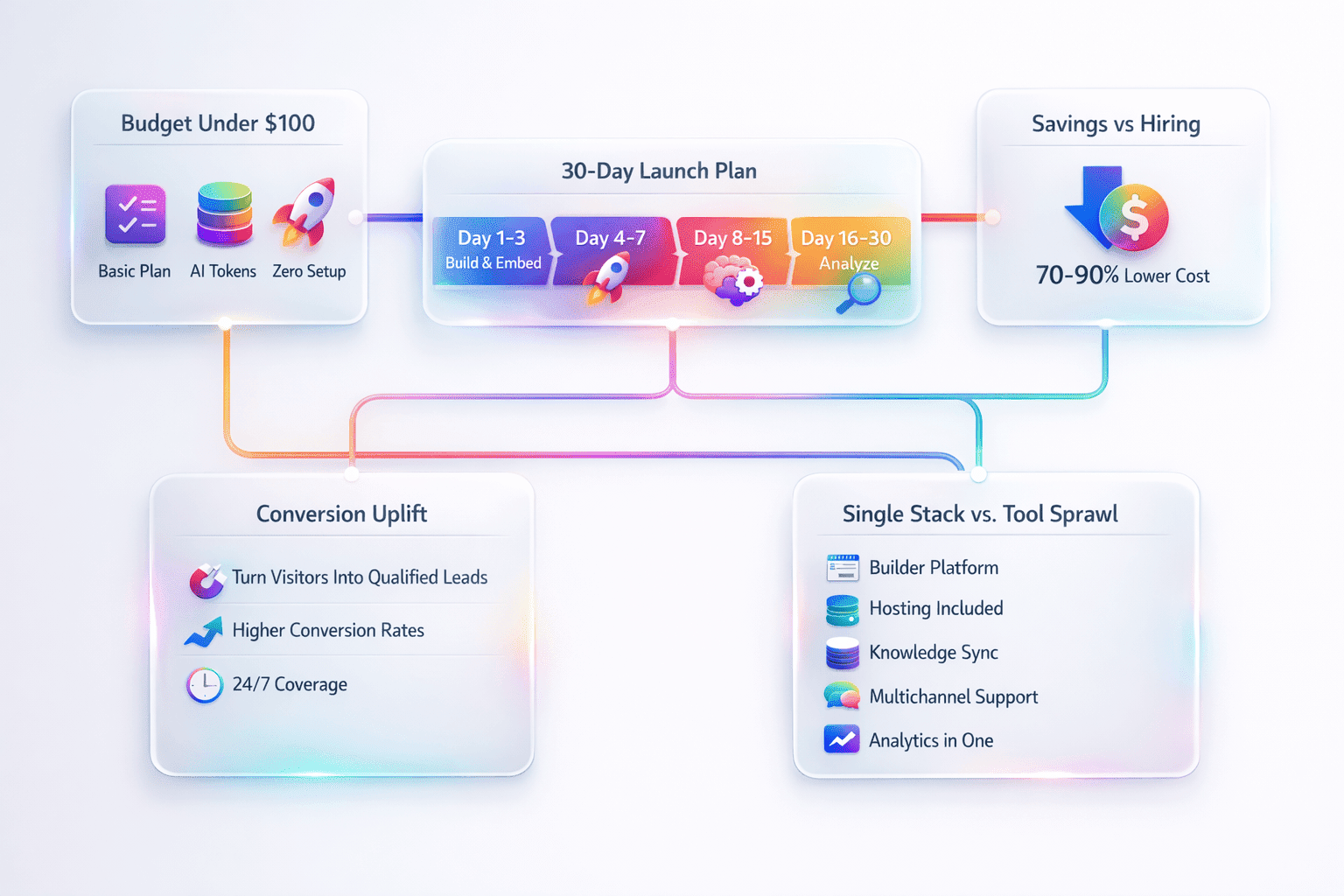
If you want the shortest path from idea to impact, platforms that combine builder, hosting, knowledge sync, multichannel publishing, and analytics make a big difference. That is exactly how noem.ai is built: 100% focused on chatbots and designed for teams who want to go live in minutes, not weeks. In one dashboard, you can design flows, ingest knowledge from files or URLs, and publish the same assistant to your website, WhatsApp, SMS, Facebook Messenger, or a hosted page. Real-time analytics, missed-question alerts, and one-click retraining help keep answers fresh and tuned to your results. Optional APIs and webhooks are there if you want deeper integrations for advanced or enterprise needs.

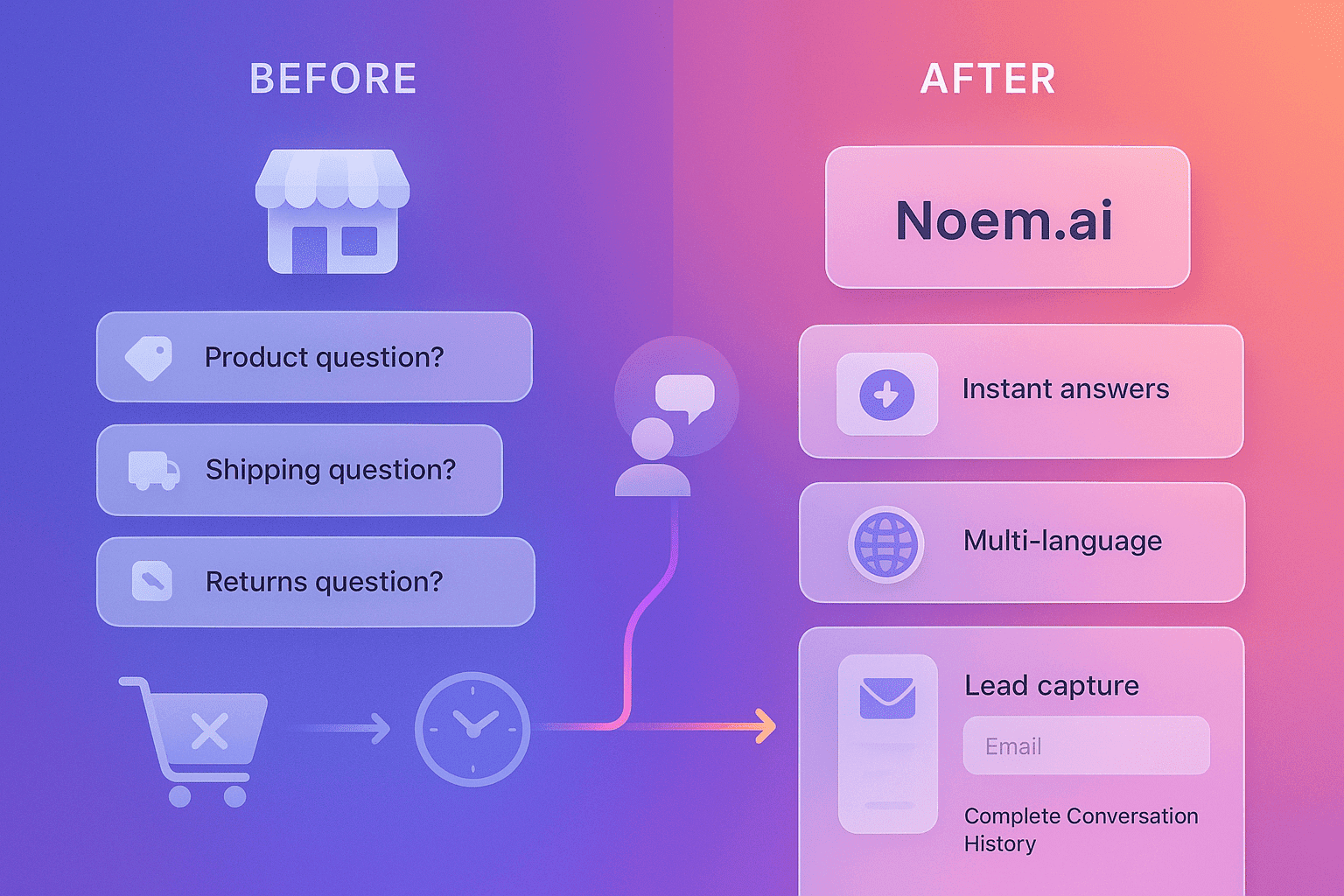
  • Instant capture across channels: With noem.ai, you can place a widget on your site or spin up a hosted page fast, so you capture more in-the-moment buyers. This omnichannel setup lets you listen for intent wherever prospects prefer to talk. Because the same bot runs across channels, you get a single conversation history for every lead. That unified view avoids split records and makes your CRM cleaner from day one.
  • Real-time qualification and clean push to CRM: noem.ai supports structured dialogs that map directly to your CRM fields, so your data arrives clean and ready. Usage-based pricing lets you scale as volume grows without overcommitting. Auto-sync keeps knowledge current, which reduces wrong answers and boosts trust with buyers. All of this helps you shorten time-to-qualified and time-to-meeting in a measurable way.
  • Personalization that feels human: Because noem.ai keeps a complete conversation history, it is easy to tailor follow-ups by role and use case. You can guide the flow with friendly prompts and show the right resource at the right time. When a prospect asks about integrations or pricing models, the assistant can share specifics and offer a booking link. That creates a thoughtful, helpful experience that earns replies.
  • Scheduling that actually sticks: After qualification, noem.ai can handoff to calendars so prospects book instantly. This removes the classic back-and-forth and reduces no-shows because the hold is set while interest is highest. Reps start meetings with context from the transcript and summary, which improves call quality. Leaders see both the meeting and its source in the CRM for clear reporting.
  • Built-in trust: With noem.ai, teams get a single-stack approach that lowers risk compared to stitching tools together. You do not have to maintain brittle connectors or rebuild flows with every change. Instead, you get a stable foundation that you can adjust quickly as you learn. That means more time selling and less time troubleshooting.

Ready to turn more traffic into booked meetings with clean, trusted data? Try a focused launch on your pricing page this week, then expand to your next two highest-intent pages. Set your targets for time-to-first-response and meeting conversion, and measure results daily. Your buyers are already telling you what they need—now you can greet them at the right moment and prove value fast. Want help setting up a flow that qualifies in minutes and pushes clean data to your CRM?

Focus on Decisions, We’ll Handle the Rest

While you make strategic decisions, Let Agent Noems efficiently run your company’s departments:

  • AI Support Chatbots
  • Lead Conversion Chatbots
  • Coaching Chatbots
  • Onboarding Chatbots
  • Virtual Clone Chatbots
Try It for Free

Where should we send your invitation to?