Dental practices today face growing pressure to respond faster while managing increasing front-desk responsibilities. Missed calls, delayed replies, and manual appointment handling can make it harder to capture new patients and deliver a smooth experience.
Many practices still depend on phone calls and staff members to manage scheduling, reminders, and routine questions. But as patient expectations increase, traditional workflows can create unnecessary workload for dental teams.
An AI dental receptionist helps practices automate patient conversations, handle routine tasks, and improve response times. This article explains the key benefits of AI for dental practices and how they support modern dental practices.
TL;DR
- An AI dental receptionist helps dental practices automate patient communication, reduce front-desk workload, and improve response times.
- It captures more patient inquiries, supports appointment conversions, and delivers a more consistent patient experience.
- Compared to a traditional receptionist, an AI receptionist can handle multiple conversations, provide after-hours support, and automate routine communication tasks.
- A successful rollout requires clear automation goals, defined human handoffs, accurate practice information, and integration with existing dental practice management workflows.
- Solutions like noem.ai help businesses automate customer conversations, streamline inquiries, and support scalable communication without replacing human teams.
What Are the Key Benefits of an AI Dental Receptionist?
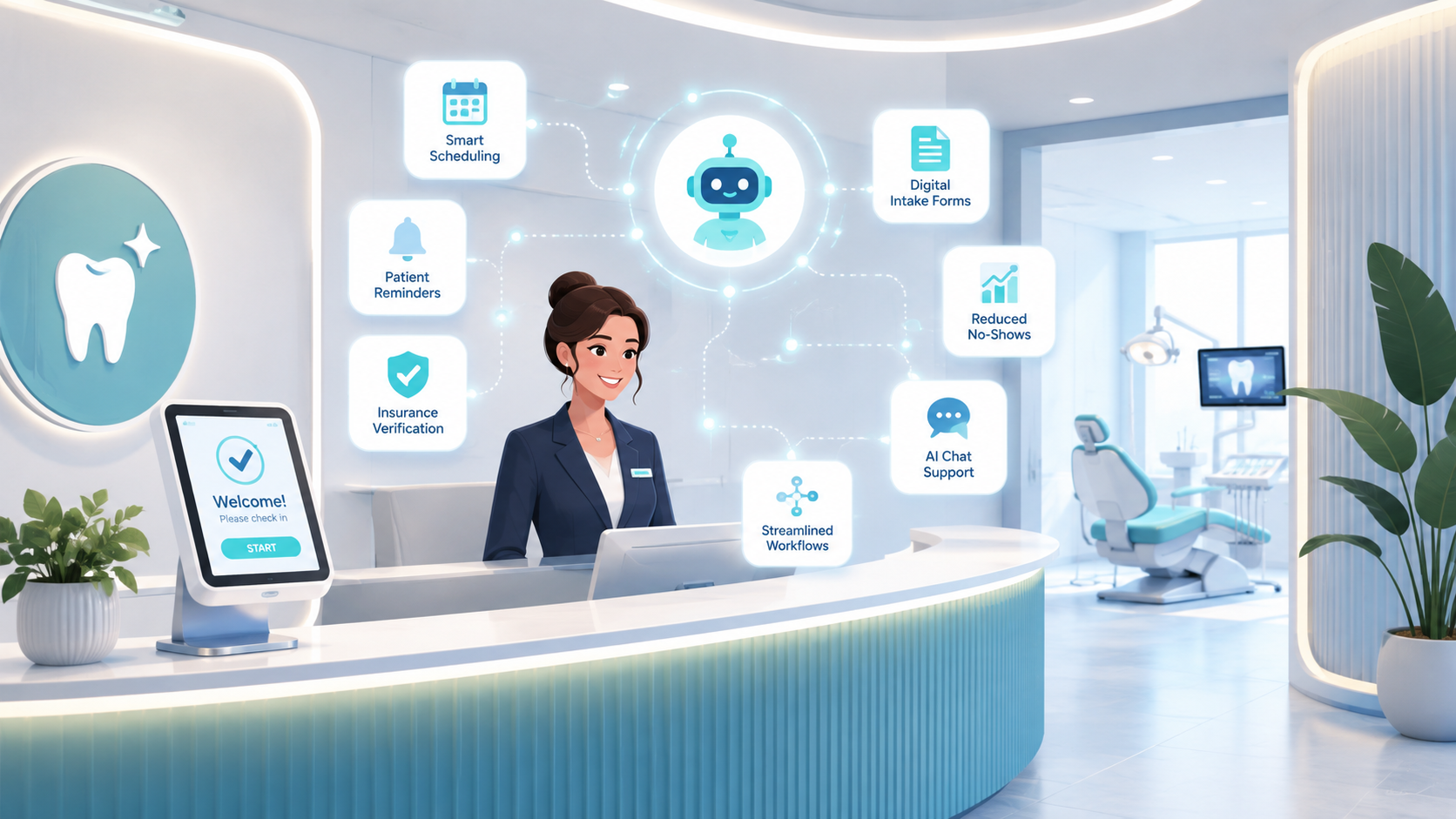
A dental AI receptionist helps dental practices capture patient inquiries, improve communication, and reduce repetitive administrative work. It supports front-desk teams by handling routine interactions while staff focus on patient care. The following are the key benefits of an AI dental receptionist:
- Capture more patient opportunities: Responds to new inquiries quickly and collects basic details to help teams follow up effectively.
- Improve appointment conversions: Reduces delays between patient questions and booking decisions by providing faster responses.
- Give staff more time for patients: Handles repetitive communication tasks so front-desk teams can focus on in-person interactions.
- Create consistent patient experiences: Provides accurate information about services, treatments, and practice details across conversations.
- Support patient follow-ups: Helps practices stay connected with patients through reminders, updates, and post-visit communication.
- Understand patient needs better: Identifies common questions and communication patterns that help practices improve support.
- Handle growing patient demand: Helps practices manage more conversations without increasing administrative pressure.
- Reduce missed patient inquiries: Responds to patient questions as they arrive, helping dental practices engage more prospective patients and reduce missed opportunities.
- Support communication across multiple channels: Provides consistent patient communication across your website and other connected channels.
- Gain insights from patient conversations: Analyzes common questions and conversation trends, helping dental practices improve communication, refine workflows, and make better operational decisions.
How Is an AI Dental Receptionist Different From a Traditional Receptionist?
An AI dental receptionist supports front-desk teams by handling routine patient communication, while human receptionists focus on tasks that require personal attention. It helps practices manage more conversations without adding pressure to existing teams. Here are the differences:
| Traditional Receptionist | AI Dental Receptionist |
| Available during office hours | Responds to patient queries beyond office hours |
| Handles one conversation at a time | Manages multiple patient conversations simultaneously |
| Spends time answering repetitive questions | Handles common queries automatically |
| Manages reminders manually | Supports automated patient updates and follow-ups |
| Limited by staff availability | Helps maintain consistent communication at all times |
Routine questions shouldn’t slow down your team. noem.ai helps businesses automate customer conversations, respond faster, and keep every interaction consistent, so teams can focus on complex conversations that require human expertise.
How Can Dental Practices Start Using an AI Receptionist?
Dental practices can start using an AI receptionist by automating repetitive patient communication, defining clear handoff points, and connecting it with existing workflows. A structured setup helps teams manage inquiries faster while keeping control over patient interactions.
Follow these steps to implement an AI receptionist effectively:
1. Identify Tasks You Want to Automate
Start by finding repetitive tasks that take up front-desk time. These may include answering common questions, handling appointment inquiries, or sharing basic practice information.
Example: A patient asks about available appointment slots. The AI receptionist can collect their preferred timing and share the next available options.
2. Define When Human Support Is Needed
Decide which conversations the AI receptionist can handle and when a team member should take over. This ensures patients get personal assistance for complex requests.
Example: The AI can answer questions about clinic timings, while staff handles treatment discussions or billing concerns.
3. Add Your Practice Information
Provide details about your services, timings, policies, and frequently asked questions. Accurate information helps the AI receptionist give reliable responses.
Example: A patient asks about teeth cleaning services. The AI can explain the procedure details, pricing information, and available appointment options based on your practice data.
4. Connect It With Your Dental Practice Management Workflow
Integrate the AI receptionist with your existing communication and scheduling processes. This helps reduce manual coordination and keeps patient interactions organized.
Example: When a patient asks for an appointment, the AI can capture details and send the information through your preferred workflow for confirmation.
5. Review Patient Conversations Regularly
Monitor interactions to understand common patient questions and improve responses over time. Regular reviews help practices maintain accurate and useful communication.
Example: If patients frequently ask about insurance options, the practice can update responses to provide clearer information.
5 Common Mistakes to Avoid When Using an AI Dental Receptionist
An AI dental receptionist delivers better results when it follows clear workflows, uses accurate practice information, and knows when to involve your team. Poor implementation can lead to incorrect responses, frustrated patients, and extra work for front-desk staff.
Here are the most common mistakes dental practices should avoid.
1. Trying to Automate Every Patient Conversation
Routine questions about appointments, office hours, and services are good candidates for automation. Treatment recommendations, payment disputes, and emergency concerns should go to your dental team. AI should reduce repetitive work, not replace personal care.
2. Using Outdated Practice Information
Patients rely on accurate information when choosing a provider. If your AI receptionist shares outdated office hours, service details, or policies, it creates confusion and increases follow-up calls. Review and update your knowledge base regularly.
3. Making It Difficult to Reach a Team Member
Patients should be able to connect with a staff member when their question needs human support. A simple handoff process prevents frustration and helps resolve complex requests faster.
4. Ignoring Dental Practice Management Workflows
Your AI receptionist should work with existing dental practice management processes instead of creating separate workflows. Well-connected systems reduce manual work and keep patient communication organized.
5. Skipping Regular Performance Reviews
Patient questions change over time. Review conversations, identify recurring issues, and update responses regularly. Continuous improvements help your AI receptionist stay accurate and deliver a better patient experience.
Bottom Line
An AI dental receptionist helps practices automate routine conversations, respond faster, and reduce front-desk workload. It allows dental teams to spend more time on patient care instead of repetitive communication tasks.
Patients expect quick answers about appointments, services, and practice information. Managing these requests manually can slow response times and add pressure on front-office teams.
See how noem.ai helps businesses automate customer conversations, manage inquiries efficiently, and deliver support that feels personal.
Frequently Asked Questions
How much does an AI dental receptionist cost?
An AI dental receptionist’s cost depends on factors such as features, integrations, usage, and customization needs. Dental practices should evaluate pricing based on the tasks they want to automate and the level of support they require.
Can an AI dental receptionist handle HIPAA-compliant patient conversations?
An AI dental receptionist should follow healthcare data privacy requirements and use secure systems to protect patient information. Dental practices should review security standards, data handling practices, and compliance support before implementation.
Can an AI dental receptionist integrate with dental practice management software?
Yes, many AI receptionist solutions can connect with existing dental practice management systems through integrations or APIs. This helps practices automate communication while keeping their existing workflows in place.
What happens if an AI dental receptionist cannot answer a patient’s question?
An AI receptionist should transfer complex queries to a human team member when needed. Clear escalation rules help dental practices handle sensitive questions, treatment concerns, or situations that require personal support.
Can an AI dental receptionist handle emergency dental inquiries?
An AI dental receptionist can collect initial details and guide patients based on predefined workflows. Dental practices should set clear instructions for urgent cases so patients receive the right support quickly.