In a global market, customers expect help in their own language, at any hour, and on the channel they prefer.
For most companies, the challenge has always been the same: delivering multilingual support is expensive, hard to scale, and difficult to keep consistent. Hiring teams for multiple languages, managing several tools, and trying to stay available 24/7 can quickly become a major operational burden.
Today, that no longer has to be the case.
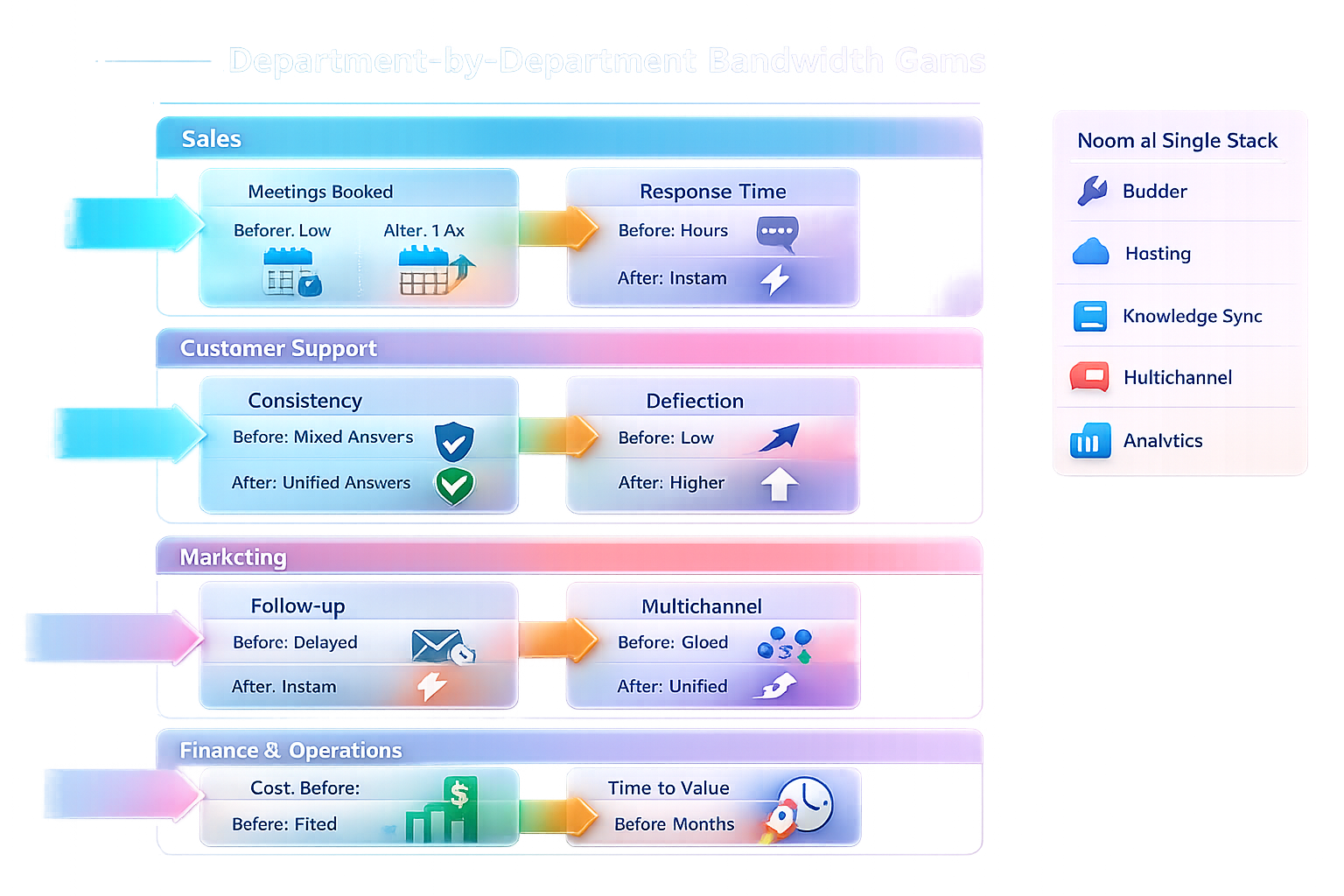
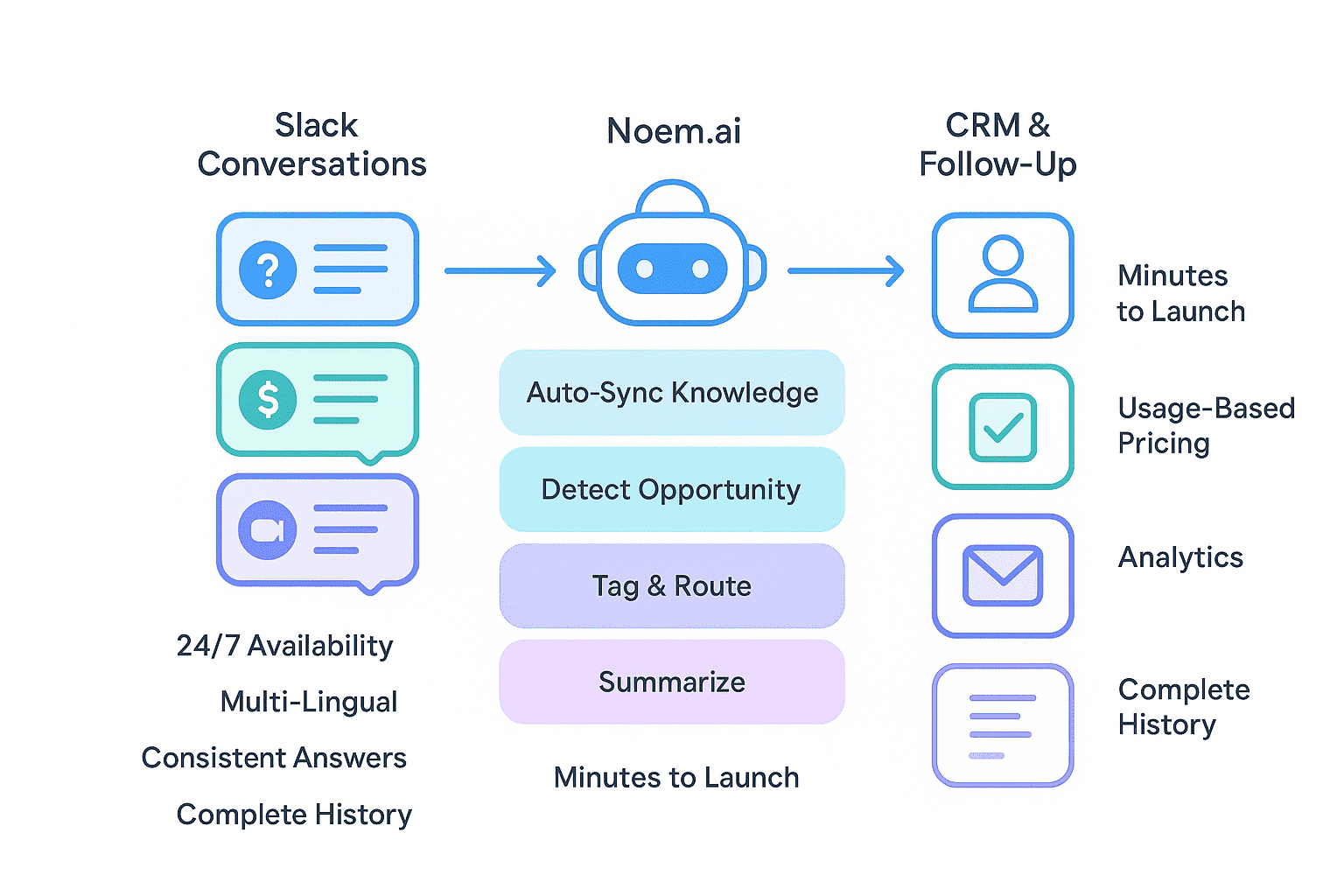
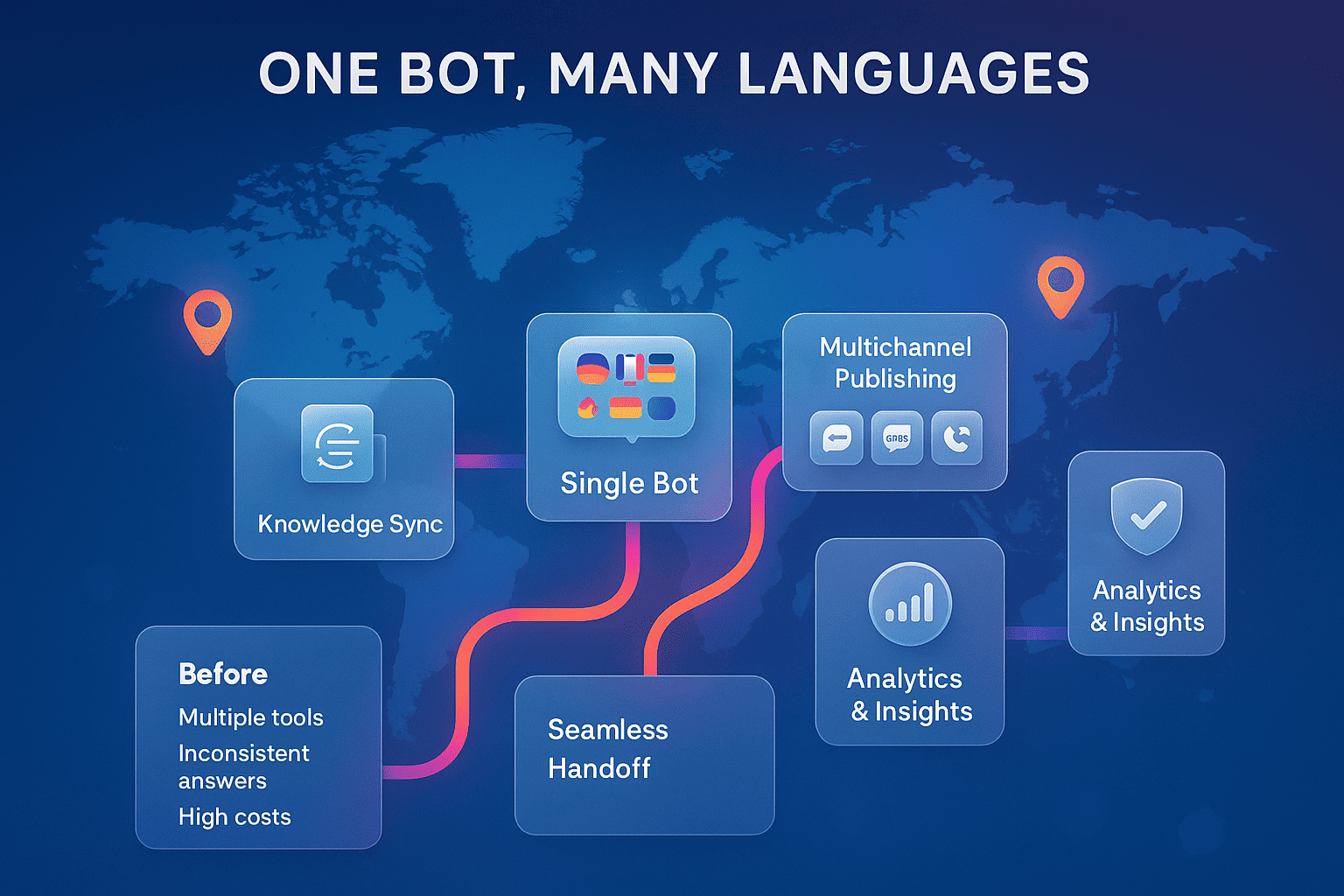
With the right AI chatbot setup, businesses can support customers in more than 100 languages, stay available day and night, and keep answers aligned across web chat, SMS, voice, and social channels. That is where Noem.ai stands out. It brings chatbot building, hosting, knowledge sync, multichannel publishing, and analytics into one stack, making it possible to go live in minutes instead of weeks.
The result is simple: lower support costs, faster response times, and more trust from customers because your chatbot always stays aligned with your latest content and policies.
Why Multilingual Support Matters More Than Ever
Customers do not just want translated answers. They want support that feels natural, local, and easy to understand.
That means a chatbot needs to do more than swap words from one language to another. It needs to understand user intent, match the right tone, and respond with the kind of clarity a local support agent would use.
Modern natural language technology now makes that possible. A well-designed multilingual chatbot can understand context, adapt to the customer’s language automatically, and respond in a way that feels much more natural than a rigid translation tool.
This changes the economics of customer support in a big way.
Instead of building separate support teams for every market, companies can use one smart chatbot to handle a large share of common support interactions, while human agents focus on the cases that truly need personal attention.
The Power of One Bot in Many Languages
A smart multilingual bot should do three things well:
- understand the customer’s intent
- pull from your latest knowledge and policies
- respond clearly in the customer’s language and your brand voice
That is what makes a multilingual chatbot truly valuable.
With one bot, your customers in Tokyo, Berlin, Mexico City, or Kuala Lumpur can all get support that feels local, fast, and consistent. You are not just increasing coverage. You are creating a more scalable support experience without multiplying complexity behind the scenes.
Local feel, not just translation
The goal is not to sound translated. The goal is to sound helpful.
Good multilingual support preserves your brand voice while keeping the response natural in every language. That reduces confusion, builds trust, and makes self-service much easier for customers who are already stressed or pressed for time.
Over time, that local feel becomes part of your brand experience, not just part of your support function.
Real-time language detection
A great chatbot should recognize the customer’s language from the first message and adapt immediately.
That keeps the experience smooth and removes friction. Customers do not have to choose a language manually or navigate through extra menus before they can get help.
Real-time language detection also gives your team better visibility into where demand is coming from, helping you decide which languages and regions deserve more investment.
Scale without rebuilding
One of the biggest benefits of a unified chatbot stack is that you can expand without rebuilding your entire system.
You can launch with your top two or three markets, gather feedback, and then activate more languages as demand grows. Because everything is managed in one platform, you are not constantly reworking integrations, reconfiguring separate tools, or fixing fragile handoffs between systems.
That makes multilingual growth far more practical.
Built for global teams
Even if a chatbot handles a large share of support volume, human agents still matter.
The best support models combine automation for speed with people for judgment, empathy, and exception handling. When the chatbot escalates a conversation, the human team should receive the full thread, including the customer’s messages and the chatbot’s suggested next steps.
That makes handoffs faster, cleaner, and much less frustrating for the customer.
Consistent Answers Across Channels and 24/7 Availability
Customers do not think in channels. They just want answers that are accurate, clear, and consistent.
They may start with website chat, continue through SMS, then follow up on social media or voice. If every channel gives different answers, trust breaks down quickly.
That is why consistency matters just as much as speed.
With a synced chatbot system, your answers stay aligned across web chat, SMS, voice, and social. When you update a policy, price, process, or support article, that change can flow across all channels instead of forcing your team to update each one manually.
One source of truth
Your support system works best when there is one place to manage content.
If policies or pricing change, those updates should appear everywhere at once. That reduces stale answers, avoids mixed messages, and helps customers trust the information they receive no matter where they ask.
Channel consistency builds trust
If a customer hears one thing on Instagram and something different on your website, the experience starts to feel unreliable.
Consistency lowers confusion and makes resolution faster because people are not comparing different answers from different channels. It also makes life easier for your support team, since everyone is working from the same playbook.
24/7 means real coverage
A chatbot does not clock in or out.
That makes 24/7 support much more achievable without building expensive night shifts or international staffing layers. Customers in different time zones can still get fast answers, and your business stays responsive even when your office is closed.
For online businesses, global brands, and fast-moving support environments, that is a major competitive advantage.
Easy to add new languages
As your company grows, you should be able to activate support in new languages quickly.
That lets you test new regions, support new campaigns, and adapt to demand without long implementation cycles. A multilingual chatbot becomes more than a support tool. It becomes a growth tool.
Cut Costs While Keeping Quality
The strongest support strategy is not automation alone. It is automation plus human care.
When a chatbot can handle repetitive and common issues, your agents gain time to focus on the high-value conversations that matter most to retention, satisfaction, and revenue.
That creates savings without sacrificing service quality.
Handle common support at scale
Many customer inquiries are repetitive. Order status, password resets, shipping questions, refund policies, setup instructions, and account basics all tend to follow repeatable patterns.
A well-trained chatbot can resolve those quickly, reducing ticket volume and freeing human agents to handle the conversations that need more nuance.
That is where real efficiency starts to show up.
Lower staffing pressure without overpromising
Extending support into nights, weekends, and new languages does not always require adding large teams.
A chatbot can absorb a major share of demand during off-hours while still escalating complex or sensitive issues to human staff when necessary. This helps companies grow coverage without overstretching budgets.
Predictable usage-based pricing
From a business perspective, predictable cost matters.
A single chatbot stack with usage-based pricing gives finance and operations teams a clearer view of what support actually costs. Instead of juggling multiple vendors and hidden add-ons, leaders can forecast more confidently and scale with fewer surprises.
Faster time to value
One of the biggest hidden costs in support transformation is delay.
The longer it takes to launch, the longer you wait to improve response times, reduce support load, and gather useful data. When your stack includes builder, hosting, sync, and publishing in one place, you can go live much faster and start learning almost immediately.
That speed matters.
Complete Conversation History Creates Better Support
A full conversation thread is essential for great support.
When a chatbot escalates to a human, the agent should not have to start from zero. They should see the entire conversation history, what the customer already tried, and what the chatbot already suggested.
That makes the experience feel more respectful and more efficient.
Seamless handoffs
Clean handoffs reduce handle time and eliminate one of the most frustrating support moments: having to repeat everything again.
When agents inherit the full conversation, they can move directly toward resolution instead of retracing steps the customer already covered.
Better training and quality assurance
Full conversation history also helps managers improve the system over time.
They can review where the chatbot performed well, where it failed, which questions are being asked repeatedly, and where human agents are stepping in most often. That makes coaching, QA, and chatbot optimization far more data-driven.
Insights that improve products and content
Support conversations are a valuable source of business intelligence.
When you track top questions by language, region, and channel, you start to see what customers struggle to understand on their own. That helps support leaders, product teams, and marketing teams improve documentation, product flows, and customer communication.
The result is fewer tickets and a stronger customer experience.
Better privacy and control
Managing support in one stack also helps with governance.
Access controls, audit trails, and conversation history are easier to manage when data is not spread across multiple disconnected systems. That reduces operational risk and improves confidence internally and externally.
How to Launch Multilingual Support in Minutes With Noem.ai
Getting started does not have to be complicated.
A simple rollout strategy can create fast wins while keeping the process manageable.
1. Start with your top three use cases
Begin with the most common reasons customers contact support.
These often include:
- order status
- password help
- shipping updates
- refunds
- setup steps
- billing questions
Write clear, helpful answers for each and keep the language simple.
2. Connect your knowledge sources
Sync your help center, FAQs, policy pages, and core documentation into your chatbot.
This gives the bot access to your current support content and helps keep responses accurate across languages.
3. Turn on your top languages
Start with the languages that match your biggest markets or most requested support needs.
Once the bot is live, monitor results and expand from there.
4. Publish across your channels
Put the chatbot where your customers already are.
That may include:
- website chat
- SMS
- social messaging
- voice
- other support touchpoints
The more consistent the experience is across those channels, the stronger your support operation becomes.
5. Set clear escalation rules
Decide which topics stay with the chatbot and which should go to a person.
A strong escalation model protects the customer experience and helps the chatbot stay useful without trying to handle cases it should not.
6. Measure and improve
Track a small set of performance metrics consistently, such as:
- deflection rate
- first response time
- average handle time
- satisfaction by language
- consistency across channels
Each content improvement or workflow adjustment can create value across every supported language at once.
What Makes Noem.ai Different in the Market
Many platforms offer multilingual chatbot capabilities on paper.
The real difference is not just how many languages are listed. It is how easy the platform makes it to launch, keep content current, publish across channels, and manage everything in one place.
That is where Noem.ai has a clear operational advantage.
Coverage matters, but stack design matters more
A high language count is useful, but it is only part of the story.
If your support setup depends on too many separate tools, updates become slower, data becomes messy, and answers drift over time. A single stack keeps everything more stable.
Speed to launch drives ROI
Every week you delay launch is another week of slower replies, higher support load, and missed learning.
A platform that helps you go live quickly gives you faster proof of value and a faster path to scaling.
Predictability matters for finance and ops
Usage-based pricing and one central system reduce surprises.
That is valuable not just for support teams, but also for leaders who need visibility into cost, performance, and scalability.
Continuous sync reduces errors
When your help content auto-syncs into the chatbot, your support answers stay aligned with your most current policies and documentation.
That reduces repeat tickets caused by outdated or inconsistent guidance.
Real Outcomes You Can Measure
Leaders want measurable results.
With a multilingual chatbot, you can track improvements in:
- support deflection
- speed to first response
- average handle time
- satisfaction by language
- channel consistency
- growth in coverage without proportional staffing growth
These are not abstract benefits. They are practical outcomes that show whether the chatbot is driving real value.
Deflection rate
Track how many support interactions the bot resolves without escalation.
Higher deflection means your human team has more time for complex work.
First response time
A chatbot can deliver immediate replies at any hour.
That lowers stress, reduces drop-off, and keeps customers from opening duplicate tickets elsewhere.
Consistency score
Review whether customers receive the same answer across channels and languages.
The more consistent your system becomes, the more trust you build.
Satisfaction by language
Measure customer satisfaction across language groups to identify where tone, clarity, or process may need improvement.
These insights help you improve specific markets faster.
Final Thoughts
Multilingual support does not need to mean more complexity, more vendors, and more staffing pressure.
With one chatbot that works across 100+ languages and multiple channels, businesses can deliver support that feels local, stays available 24/7, and remains aligned with current content and policy.
That means you can reduce cost without reducing care, scale support without rebuilding your system, and create a more consistent experience for customers everywhere.
If you want to make every customer feel at home, the smartest next step is to start with a few high-volume use cases, activate your top languages, and launch quickly with a system built to stay in sync.
Ready to turn multilingual support into a real competitive advantage? Start with Noem.ai.