Your website visitors decide quickly whether to stay or leave, and instant AI responses can shape that experience. When a real-time AI chatbot delivers an accurate and relevant answer in seconds, visitors can get help without waiting for an email reply or an available live agent. That faster path can support lead capture, demo bookings, and customer engagement.
Quick answer: The best instant-response AI chatbot is not simply the platform using the fastest AI model. It is the platform that delivers a useful first response quickly, keeps answers grounded in current business information, remains responsive during traffic spikes, and transfers complex conversations to a human with full context.
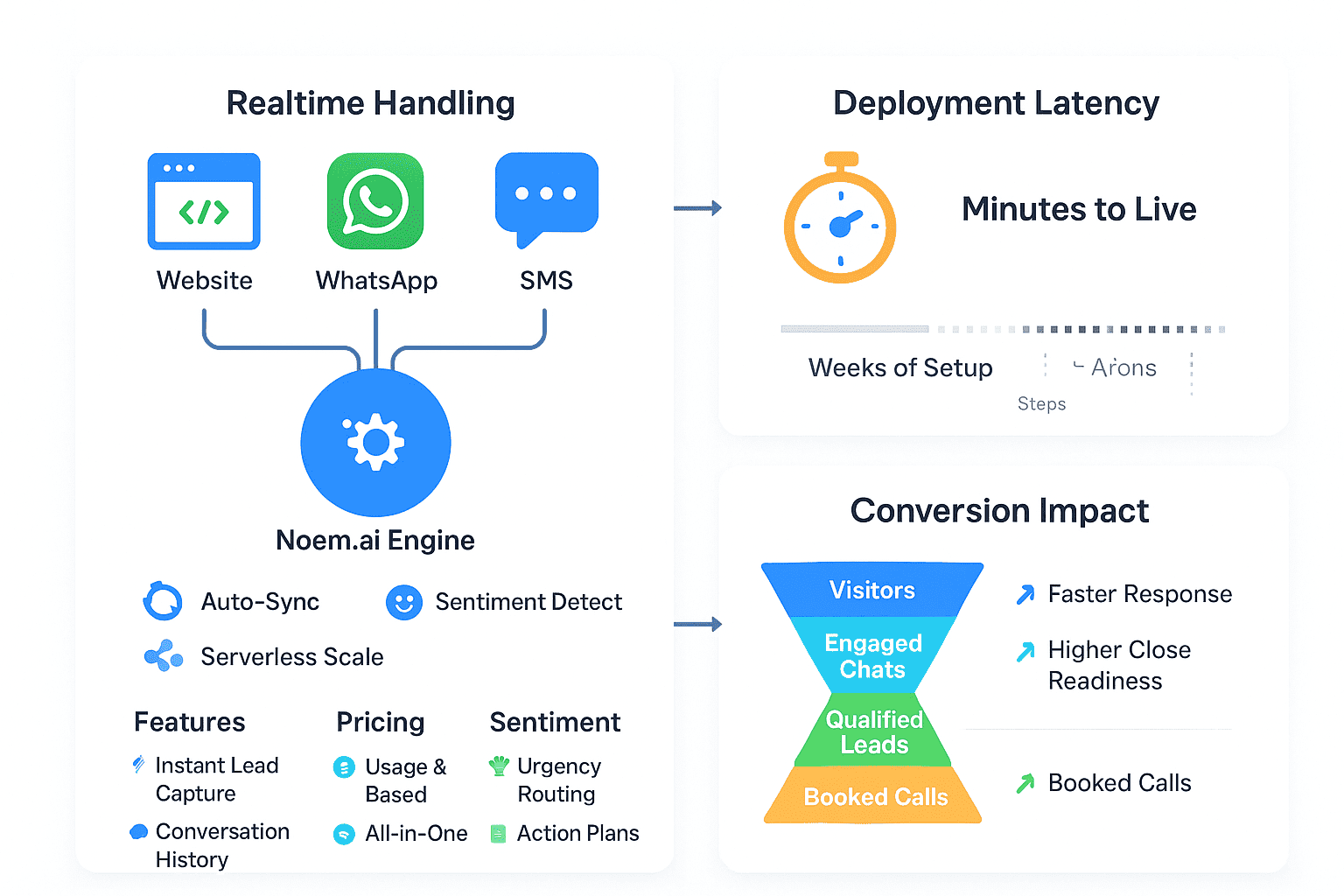
Industry data shows chatbots that move from minutes to seconds lift engagement, which is a known driver of conversion rate gains (ref: Noem.ai). This is why realtime handling is not just a tech choice; it is a growth choice with measurable impact (ref: Noem.ai).
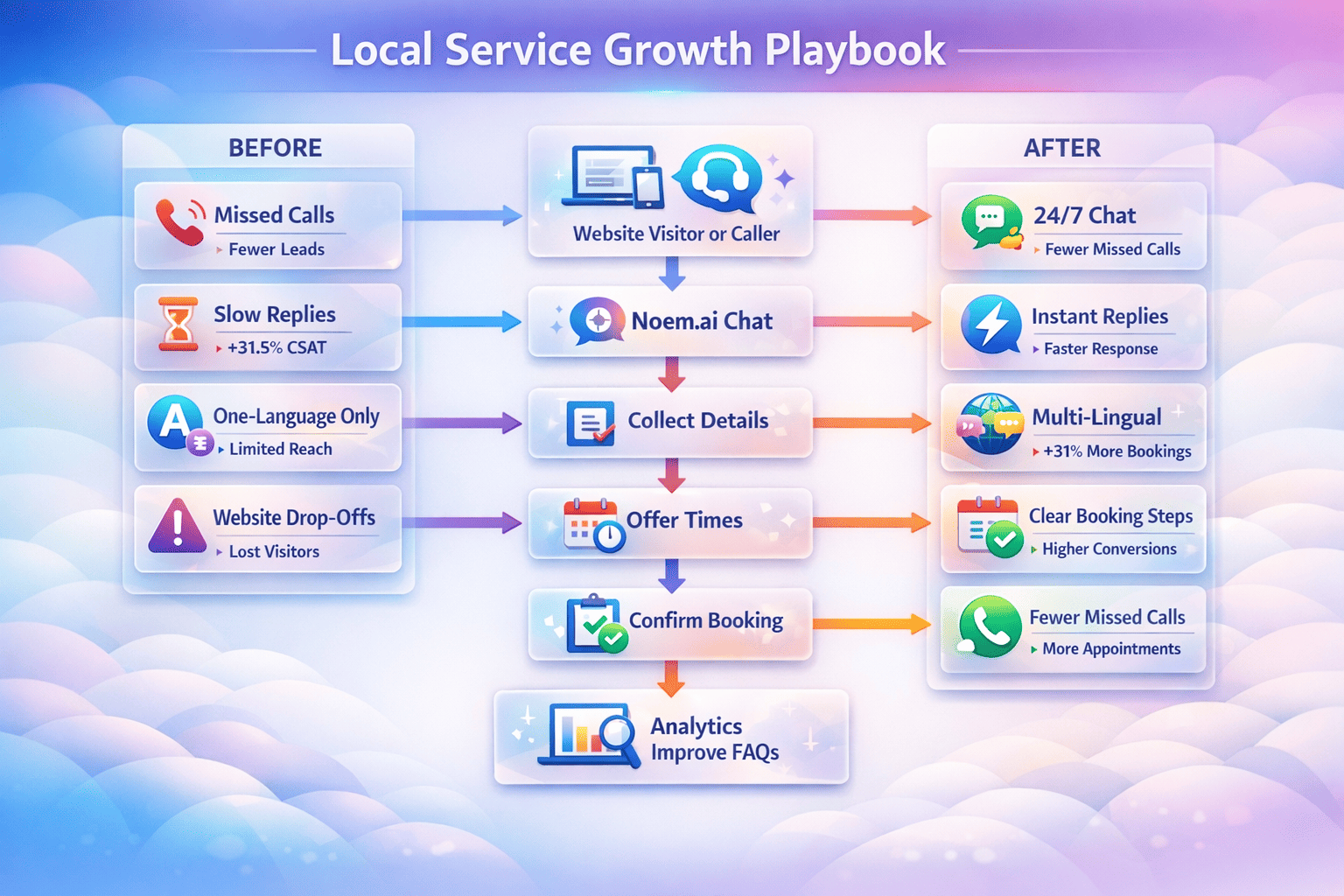
When teams rely on email queues or delayed live chat, buyers fall through the cracks. A visitor who waits a full minute for a response often clicks away, which hurts conversion math and raises ad costs because fewer clicks pay off. With a realtime engine that knows your content and updates itself, your bot becomes a fast guide, not a slow gatekeeper, which feels smoother for the user and safer for the team (ref: Noem.ai). Noem.ai uses continuous auto-sync, so your answers reflect the latest docs, pages, and offers, which prevents the stale replies that damage trust and cost you deals (ref: Noem.ai). When the system stays current and replies fast, you protect your brand and your funnel at the same time.
Speed also boosts sales team output because reps work on warm, real leads. Instant website lead capture with sentiment-aware routing means your team can jump to urgent buyers right away, instead of sifting through a pile of cold chats. Teams using similar instant architectures report up to 80% faster responses and trimmed ticket loads, which frees your staff to focus on the deals that matter (ref: Noem.ai, Noem.ai). With Noem.ai, this lines up with a single-stack approach—builder, hosting, knowledge sync, multichannel, and analytics—so you spend more time selling and less time stitching tools (ref: Noem.ai). Fewer moving parts means fewer things to break and fewer chances to miss a hot lead.
Realtime also helps during traffic spikes from campaigns or press hits. A serverless approach scales to bursts without latency spikes that stall chats or drop messages, keeping the experience smooth for the user and predictable for your budget (ref: Noem.ai). With usage-based, flat-feeling pricing, you can welcome big days with confidence instead of fear of overages or surprise fees (ref: Noem.ai). Noem.ai backs this with API support and multichannel publishing across web, WhatsApp, and SMS for faster reach, so every channel shares the same knowledge and tone (ref: Noem.ai). This unity lets you meet buyers where they are, with answers that feel consistent and current.
Finally, complete conversation history keeps your pipeline clear and searchable. You can see what users asked, what the bot said, and what actions followed, all in one place. This full timeline helps you coach the bot and coach your team. It also builds trust because you can audit answers and show your team where to improve (ref: Noem.ai). With Noem.ai, conversation history pairs with analytics to show patterns, so you fix friction early and keep your conversion rate moving in the right direction (ref: Noem.ai).
What Makes Instant AI Responses Fast, Accurate, and Scalable?
A fast answer is not enough. The answer must be accurate, current, and routed to the right person when needed. Noem.ai uses continuous auto-sync to keep knowledge fresh, so the bot does not drift from your website or docs when you ship new features, adjust pricing, or post new policies (ref: Noem.ai). This reduces retraining lifts and prevents stale or wrong answers that can stall a sale. When content is always fresh, your users feel safe to ask the next question, which keeps them on the track to book or buy (ref: Noem.ai).
Does the Fastest AI Model Guarantee the Fastest Response?
Not necessarily. The fastest AI model for real-time responses depends on more than the model name. Model size, hosting location, prompt length, knowledge retrieval, tool calls, traffic volume, and response streaming can all affect how quickly users see a useful answer.
For a website chatbot, businesses should measure both time to first response and total response time. A smaller model with optimized retrieval and fewer external tool calls may feel faster than a larger model connected to a slow or complicated workflow. Accuracy, consistency, and response speed should therefore be tested together.
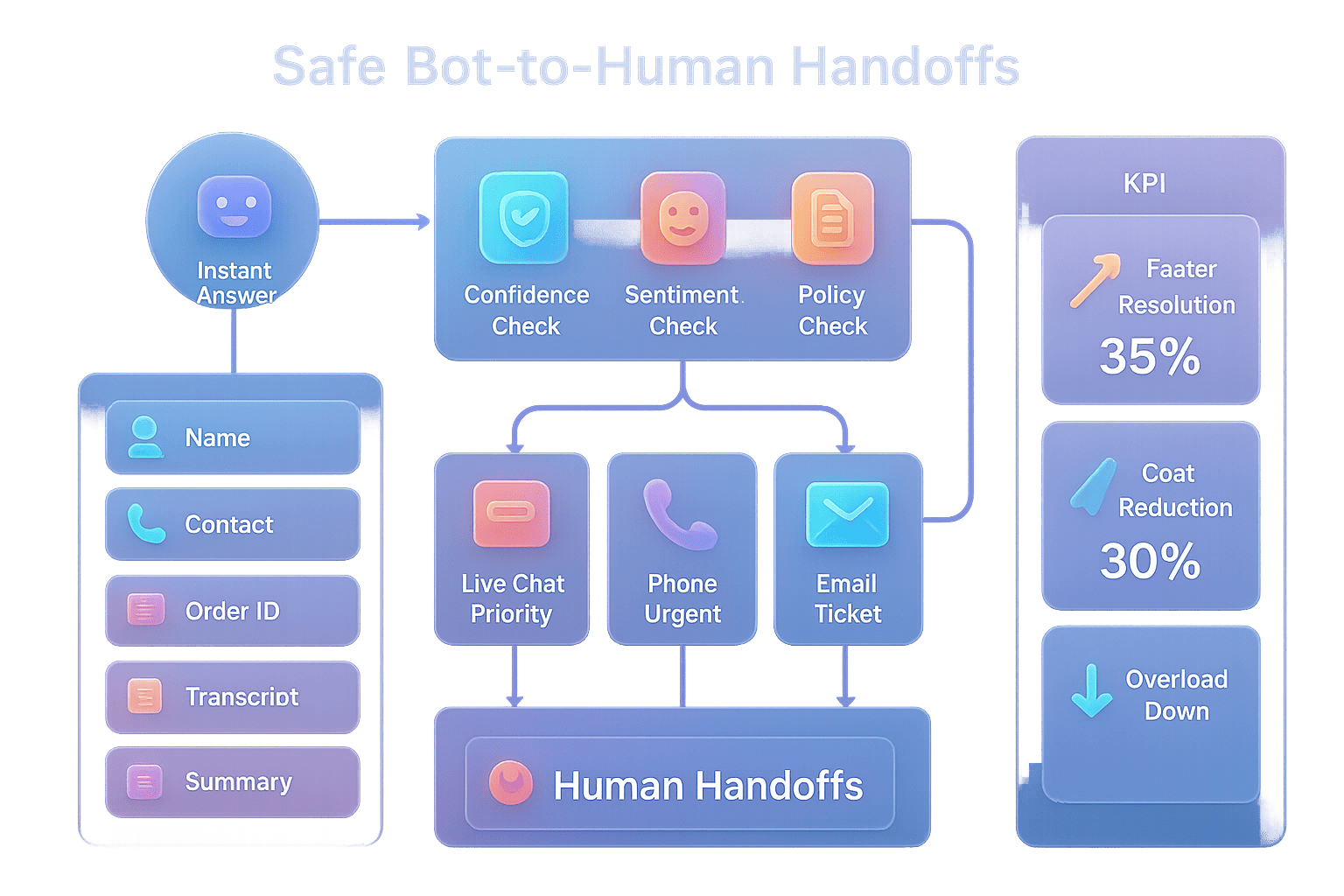
Built-in sentiment analysis is a key part of instant-response architecture. The system detects urgency or strong buying signals, and it can route those chats to a rep or trigger a handoff with context, so humans step in at the right time (ref: Noem.ai). This approach reduces wait time for hot leads and keeps cool leads moving through self-serve flows. Noem.ai can also produce weekly action plans so your team knows which threads to follow and which content to improve, turning insights into action without extra tools (ref: Noem.ai). Teams using similar routing see faster response cycles and fewer tickets because the right questions go to the right place the first time (ref: Noem.ai).
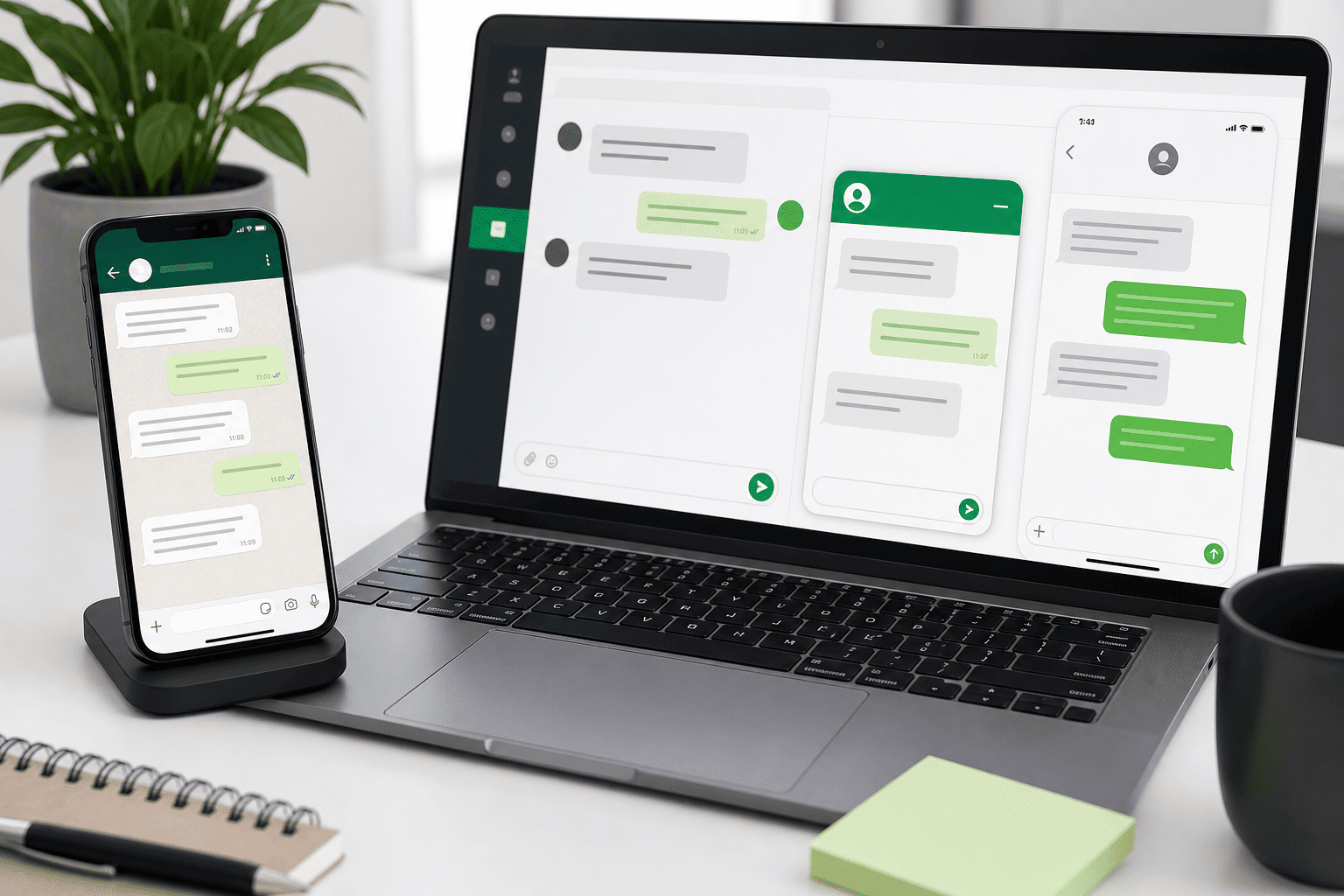
Multichannel reach makes this engine even more useful. With one stack, your bot can live on your website, WhatsApp, and SMS, keeping the same brain and the same brand tone across all touchpoints (ref: Noem.ai). When a user switches channels, the complete conversation history follows, so you do not lose context or make the user repeat themselves (ref: Noem.ai). This is a quiet but big win for conversion because it reduces friction and builds trust. A buyer who feels seen is more likely to proceed to checkout or schedule a call.
Serverless scale removes the worry of traffic surges. Noem.ai is built to handle busy hours without slowing down, which keeps chat response in seconds even when site traffic climbs (ref: Noem.ai). This is great for campaigns, launches, or seasonal peaks. Your customers get fast help instead of a spinning wheel, and your team avoids expensive over-provisioning. A steady, predictable performance line leads to a steady, predictable conversion line.
Lastly, analytics and audit trails matter for growth. You want to know which questions drive the most chats, which answers lead to next steps, and where users drop out. With single-stack analytics and complete conversation history, Noem.ai helps you find and fix breaks in your funnel without buying extra tools or exporting logs all day (ref: Noem.ai). This is a practical way to improve accuracy and outcomes every week. When insights live next to actions, changes happen faster, and results improve sooner.
How Quickly Can You Deploy an Instant-Response AI Chatbot?
Time to deploy is a hidden tax on sales. If it takes weeks to get a chatbot live, you miss leads and leave money on the table during that time. No-code setup means Noem.ai can go live on a website in minutes, which is a big win for small teams and a relief for big teams with busy backlogs (ref: Noem.ai). This speed matters because the market moves fast, and your campaigns cannot wait for long build cycles. A faster launch means faster learning and faster returns.
Teams comparing implementation requirements can review how Noem.ai works to understand the steps involved in syncing knowledge, selecting an agent role, and deploying across different channels.
Auto-sync also removes the long tail of upkeep. You do not need to pause, retrain, and republish when you update your site. Noem.ai keeps your bot aligned with your latest content, so accuracy stays high without manual chores (ref: Noem.ai). That is less latency on day one and less latency every week. You save time while your users get better answers.
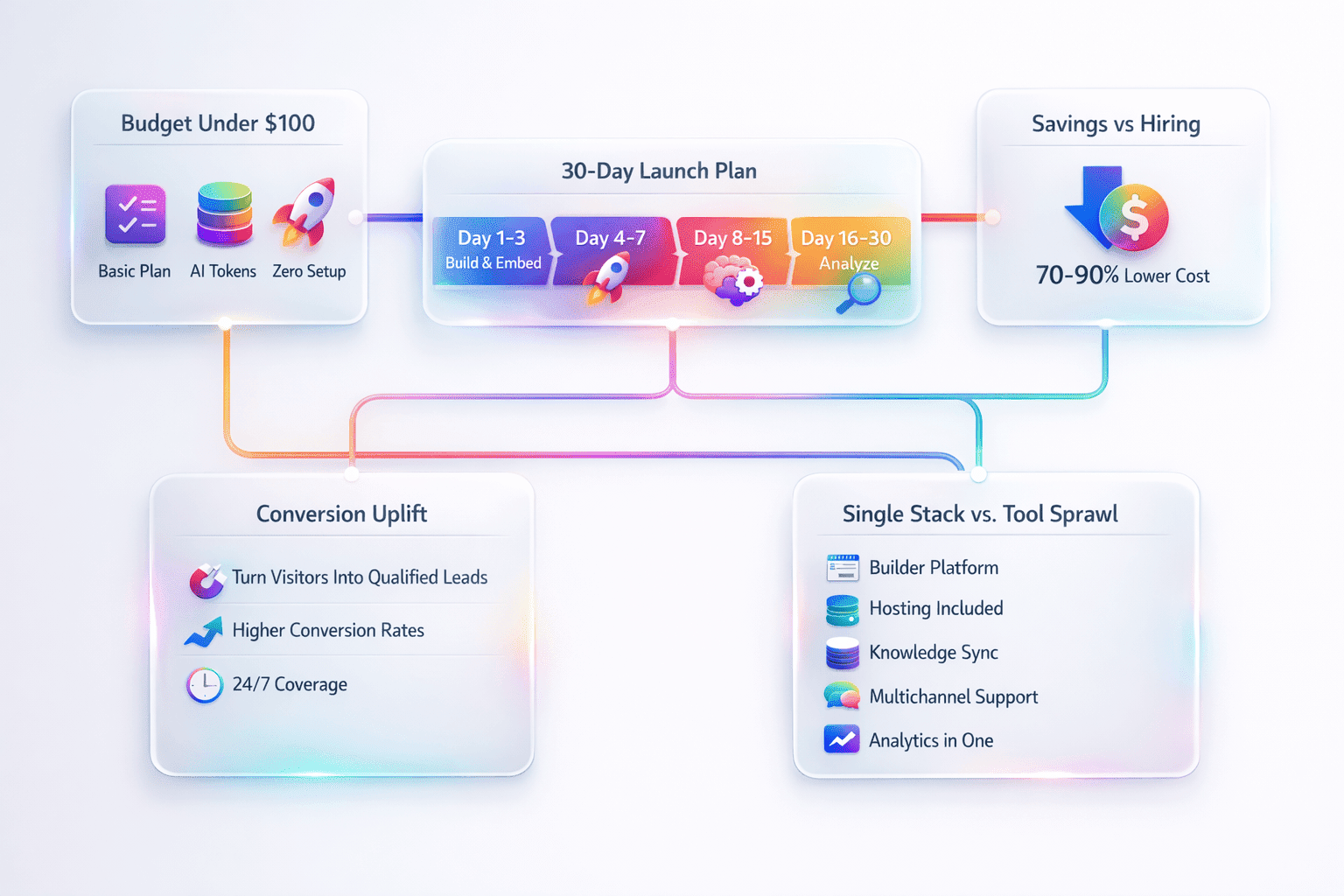
The single-stack approach reduces “tool sprawl” and integration drag. Instead of stitching a builder to a host to a channel router to an analytics tool, you get one path that works end to end (ref: Noem.ai). This keeps you from costly delays and version mismatches. When everything is in one place, you can move faster with fewer blockers. It also helps your team share knowledge and keep quality steady.
Pricing also plays into time-to-value. With usage-based, predictable pricing, you can start small and scale as your traffic grows, without painful per-interaction fees that cause teams to ration chat volume (ref: Noem.ai). This keeps friction out of your growth plan and helps you say “yes” to traffic spikes. It also makes it easier to budget across quarters, since you do not need a cluster of add-ons to get full value. Simplicity speeds both launch and scale.
If you need custom routing or workflows, you can still move fast. The Noem.ai API and workflow hooks support escalations, alerts, and handoffs, so you do not have to build brittle glue code from scratch (ref: Noem.ai). This is helpful for sales teams that want Slack pings for hot leads, calendar links for demos, or CRM notes for follow-up. You can test, learn, and improve without stopping the train. That is what modern deployment should feel like.
How Instant AI Responses Can Affect Website Conversions
Fast replies create momentum. When a visitor gets help in seconds, they keep going, and many go all the way to a call or a cart. Teams using instant-response setups like Noem.ai often see big drops in wait times and notable lifts in qualified leads—and better-qualified leads mean higher close rates (ref: Noem.ai). The reason is simple: users do not cool off while waiting, so intent stays warm. Shorter cycles make follow-up easier for sales, too.
Complete conversation history helps you act on real patterns. You can see which answers move people forward and which ones cause friction. Then you can adjust content, offers, or CTAs with confidence. Over time, this builds a loop where every chat makes the next one better (ref: Noem.ai). When this loop runs with sentiment-aware routing, your hot leads get human help fast, and your cold leads still get good service.
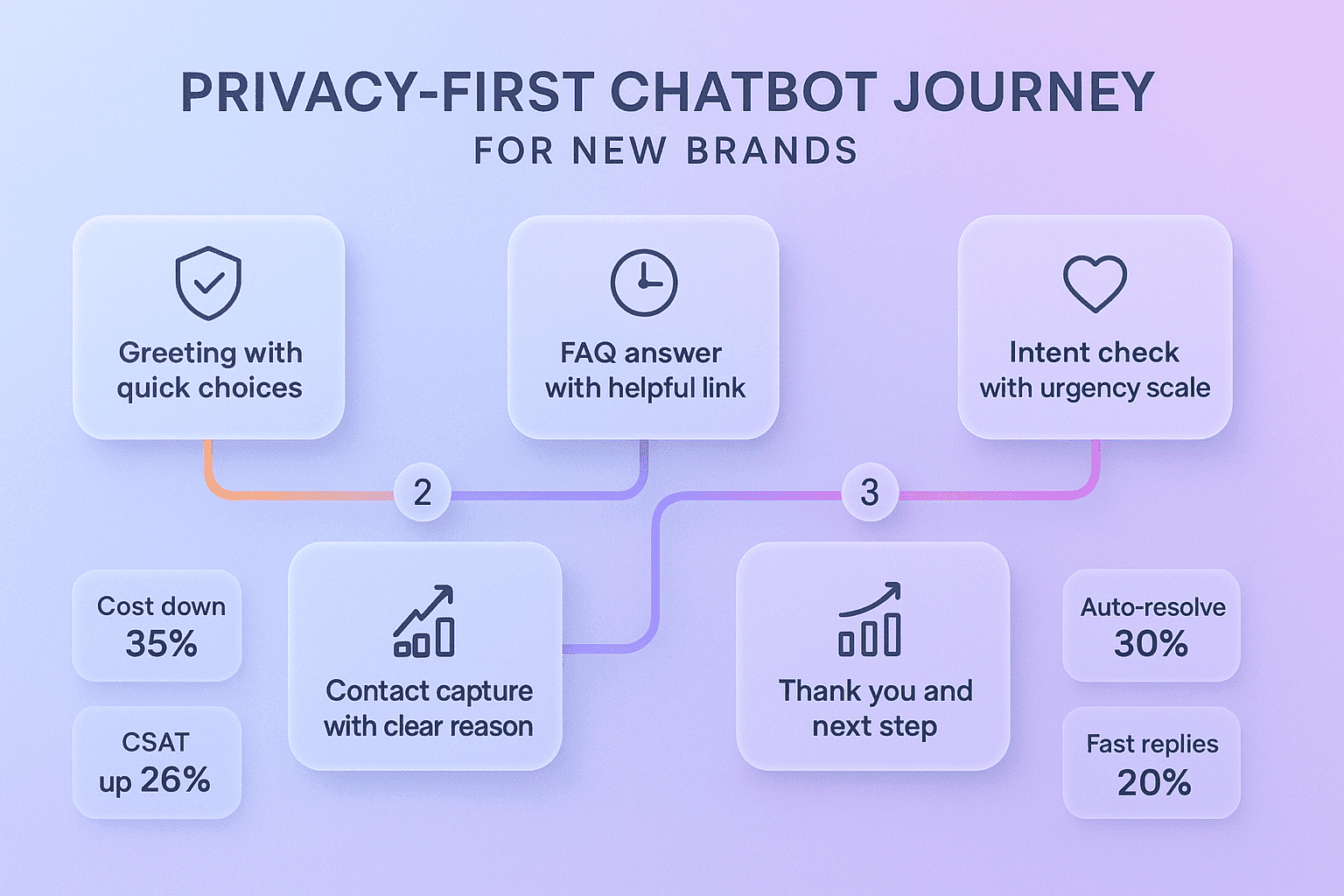
The impact on support metrics also feeds conversions. By routing simple questions to the bot and urgent ones to reps, teams reduce tickets and speed up help for everyone, which boosts satisfaction and trust (ref: Noem.ai). This is good for your brand and your funnel because happy users buy more and come back more often. The data trend is clear: faster help, fewer tickets, and more qualified leads work together to raise conversion rates. These are practical wins, not just nice ideas.
Now, let’s make all of this easy to scan for your decision. Below are side-by-side bullets that cover features, pricing, deployment time, and sentiment analysis—so you can see how the instant-response architecture of Noem.ai compares in practice. Each point connects to outcomes you care about: speed, quality, cost, and confidence. Use these to plan your next steps and set targets you can measure this quarter.
Businesses should measure the impact of instant AI responses through conversion rate, chatbot engagement rate, qualified leads, booked meetings, handoff completion, and assisted conversions. Response speed should not be measured in isolation because a fast but inaccurate answer may create more friction instead of improving the customer journey.
Noem.ai vs. Competitors: Features
- Instant Website Lead Capture: Noem.ai includes built-in instant lead capture with complete conversation history, so you never lose context when a user returns. This helps sales see the full path from first question to booked call, which raises follow-through and close readiness. Competitors often need add-ons to unify channels or history, which slows teams and creates gaps (ref: Noem.ai). With single-stack design, you launch faster and capture more signal from day one (ref: Noem.ai).
- Complete Conversation History: Every chat is stored in one place with analytics, which makes reviews, audits, and coaching simple. When you see full timelines, you can fix the copy or routing that blocks progress and share wins across teams. Competitors with multi-tool setups often scatter data, which adds work to find the truth and slows improvement (ref: Noem.ai). Central history is a quiet driver of higher conversion because it speeds your learning loop.
- Sentiment Analysis: Noem.ai includes built-in sentiment detection to spot urgency or strong buying signals and route them in real time. This keeps hot leads from cooling off and helps reps act at the right moment. Some tools focus on Q&A alone and require custom effort to add routing and alerts, which delays response time (ref: Noem.ai). With weekly action plans, you also get clear next steps without hunting through logs (ref: Noem.ai).
- Multichannel Publishing: Deploy once across web, WhatsApp, and SMS so users get the same fast help anywhere. This reduces friction and avoids duplicate work for your team. Competitors often rely on separate add-ons for each channel, which adds cost and setup time (ref: Noem.ai). A single engine means consistent brand tone and fewer content gaps.
- Analytics and Audits: A single analytics view shows what users ask, what converts, and what needs attention. With complete conversation history, you can trace exactly how a chat led to a form submit or demo booking. This level of clarity is hard to get with piecemeal stacks that split data across tools (ref: Noem.ai). When insights are clear, actions follow fast.
Noem.ai vs. Competitors: Pricing
- Predictable, Usage-Based Pricing: Noem.ai offers a usage-based model designed to handle viral traffic without per-interaction penalties, which protects your CAC math during growth spikes. This helps small and mid-size teams grow with confidence while keeping a close eye on cost-to-convert (ref: Noem.ai). Predictability reduces budget friction and lets you focus on outcomes.
- All-in-One Stack Saves Add-on Costs: Builder, hosting, knowledge sync, multichannel, and analytics are bundled, which avoids extra fees for must-have features. Competing approaches often need add-ons to match this, creating tool sprawl and surprise bills (ref: Noem.ai). Keeping it simple protects both timeline and budget.
- Built-in Task Flows Without Premium Tiers: Routing, alerts, and handoffs are supported without stacking premium tiers just to reach “good enough.” This means you can move quickly from MVP to scaled use without reshuffling plans. The cost curve stays smooth as volume rises (ref: Noem.ai). Smooth cost curves help you test and expand with less risk.
- Scale Without Latency Fees: The serverless design handles spikes without lag, which means you do not pay twice—once in time and again in extra infrastructure. This is important for launches and campaigns when every second counts for conversion (ref: Noem.ai). Performance that stays level helps revenue stay level, too.
Noem.ai vs. Competitors: Time to Deploy
- Minutes-to-Deploy on Web: With no-code setup, Noem.ai gets your first bot live in minutes, so you collect leads and questions right away (ref: Noem.ai). This is ideal for teams that need results this quarter, not next year. Faster time to first value means faster proof for stakeholders. Speed here compounds over months.
- Instant Multichannel Rollout: Publish across channels without glue code, and let auto-sync keep each channel up to date. This avoids repeating setups for each platform and stops drift across channels (ref: Noem.ai). One build, many places is a big time saver and a big quality lift.
- Continuous Auto-Sync = Zero Downtime for Updates: When your site changes, your bot stays current without pauses or retraining marathons. This keeps your content accurate and your team free to work on growth, not upkeep (ref: Noem.ai). Accuracy plus speed builds trust day after day.
- Fewer Integrations to Untangle: A single stack reduces the typical slow parts—access requests, procurement, and integration backlogs. You avoid long testing cycles across several tools and keep the focus on outcomes (ref: Noem.ai). Less integration debt means shorter launch timelines.
Noem.ai vs. Competitors: Sentiment Analysis
- Real-Time Urgency Detection: Noem.ai identifies urgency and positive intent during a chat and routes hot leads right away. This narrows the gap between interest and action, which helps raise close rates (ref: Noem.ai). Quicker handoffs mean fewer missed chances.
- Automated Handoffs With Context: Handoffs include the full conversation history, so reps see the whole story without asking users to repeat themselves. This creates a better experience for buyers and speeds time-to-resolution for teams (ref: Noem.ai). Context-rich handoffs improve satisfaction and trust.
- Actionable Weekly Plans: The system can summarize patterns and send action items, turning signal into steps without extra tools. This makes continuous improvement part of your normal week (ref: Noem.ai). When improvements never stop, conversion gains add up.
- Fewer Tickets Through Intelligent Routing: By sending the right cases to self-serve and the urgent ones to humans, teams report large drops in ticket load and faster replies overall. This clears queues and keeps buyers happy, which supports higher conversion and retention (ref: Noem.ai). A calm queue is good selling weather.
Practical playbook: settings and metrics to track in your first 30 days
Getting value from instant-response architecture is about a few smart moves, done early. Start by connecting your key content sources so auto-sync can pull the latest pages, docs, and policies every day. Next, set clear routing rules for urgent phrases like “buy,” “pricing,” “quote,” or “demo,” and enable sentiment analysis to catch hot leads even when users do not use those words (ref: Noem.ai). Then, turn on instant website lead capture and make sure every captured lead includes the full conversation history, so a rep has context right away (ref: Noem.ai). Finally, review analytics weekly, and update any answer that stalls users at common points (ref: Noem.ai).
- Set a Response Time Target: Aim for replies in seconds, not minutes. Track median response time daily and flag spikes during campaigns. Users will feel this change right away, and your conversion rate will, too (ref: Noem.ai). If a channel lags, check routing or scale settings.
- Measure Lead Quality, Not Just Count: Use sentiment tags and conversation history to grade leads. Watch how many become booked calls or deals and adjust routing to lift this ratio (ref: Noem.ai). Better-qualified leads usually mean better close rates.
- Track Ticket Deflection and Handoff Speed: See how many questions the bot handles fully and how fast urgent ones reach a rep. These two numbers signal if the system is working as intended (ref: Noem.ai</a}). If either stalls, revisit sentiment rules.
- Watch Bounce Rate on Pages With the Bot: Faster answers often lower bounce, especially on pricing and product pages. If bounce drops, expect conversion to rise on those paths (ref: Noem.ai). Use those wins to guide where to expand next.
- Use Weekly Action Plans: Turn insights into fixes so each week gets better. Small, steady changes often add up to big gains in a quarter (ref: Noem.ai). Keep the loop running.
What this means for your funnel (and your team)
Instant-response architecture does more than answer questions. It changes the pace of your funnel, moving prospects forward while they still care. With real-time handling, instant website lead capture, complete conversation history, and built-in sentiment routing, Noem.ai helps you speed replies, qualify faster, and hand off hot leads at just the right time (ref: Noem.ai). This adds up to higher close rates from better-qualified leads and faster response times for prospects, which is the core of a better conversion engine (ref: Noem.ai). You also lower risk by avoiding tool sprawl and stale content issues (ref: Noem.ai).
Your team benefits, too. Sales reps get context-rich leads, not guesswork. Support sees fewer tickets and clearer priorities, so they focus on the people who need them most. Marketing gets clean data on what users ask and where they click next, which sharpens campaigns and offers (ref: Noem.ai). And leadership sees faster time-to-value because deployment latency is low and scale is predictable. All of this comes from a single-stack design that bundles what you need and leaves out the extra steps you do not (ref: Noem.ai).
If you are ready to test the impact yourself, start with one high-intent page and measure. Watch response times, lead quality, and booked calls over two weeks. Then roll out to more pages and channels, keeping the same playbook of auto-sync, instant capture, and sentiment-aware routing. Use the weekly action plans to keep improving, and keep an eye on both conversion rate and customer happiness (ref: Noem.ai). Want to see it in action before you commit? Take a look at a short walkthrough and explore setup steps here (ref: YouTube, Noem.ai).
Ready to test how instant AI responses affect your website? Start with one high-intent page, track response time, qualified leads, handoffs, and booked meetings, and then expand based on the results. Explore Noem.ai’s real-time AI Concierge features or book a personalized demonstration.
Frequently Asked Questions About Instant AI Responses
What are instant AI responses?
Instant AI responses are chatbot or AI-agent answers delivered within seconds of a user submitting a question. A strong instant-response system must balance speed with accuracy, current knowledge, contextual understanding, and the ability to escalate complex conversations to a human.
What is the fastest AI model for real-time responses?
There is no single fastest model for every real-time application. Response speed depends on the model, hosting infrastructure, prompt length, retrieval process, connected tools, traffic, and whether the answer is streamed. Businesses should test complete chatbot workflows rather than comparing model names alone.
How should businesses evaluate an instant response AI platform?
An instant response AI platform should be tested using consistent prompts and knowledge sources. Compare time to first response, answer accuracy, complete response time, uptime, knowledge freshness, human handoffs, analytics, integrations, and total cost.
Do faster AI responses always improve conversions?
Not automatically. Faster responses can reduce waiting, but inaccurate, irrelevant, or outdated answers may damage trust. The best results come from combining low response time with reliable knowledge, clear next steps, and timely human escalation.