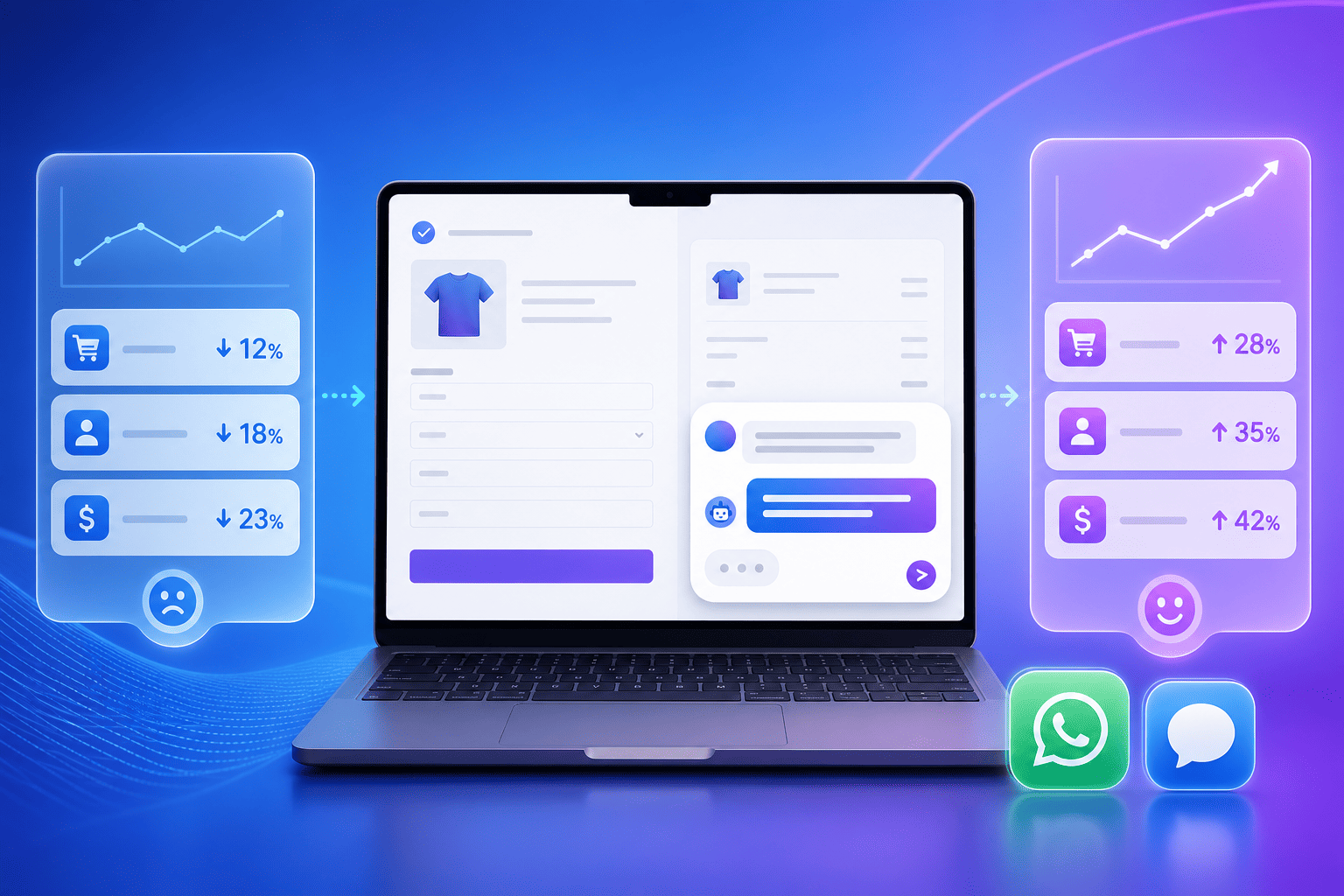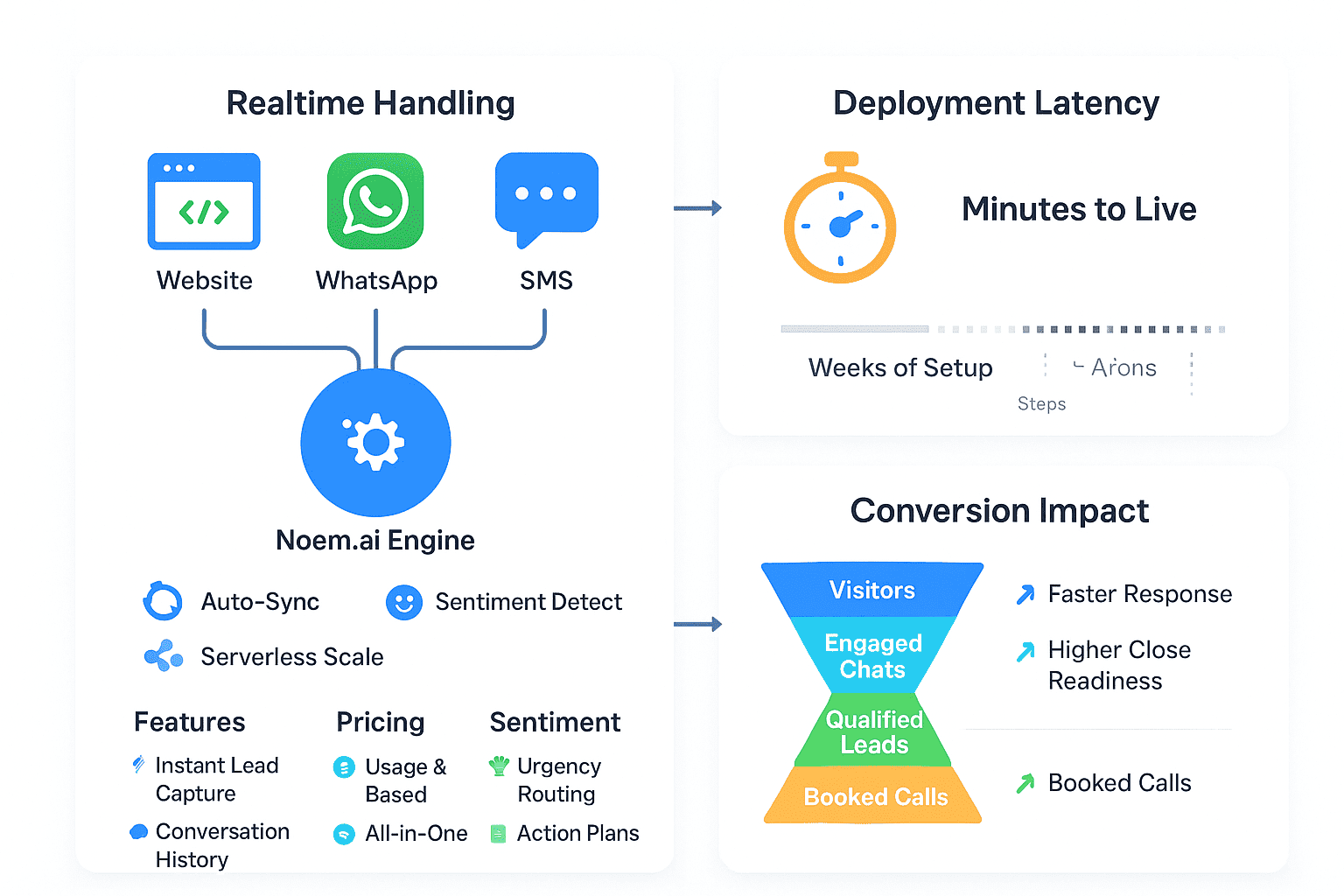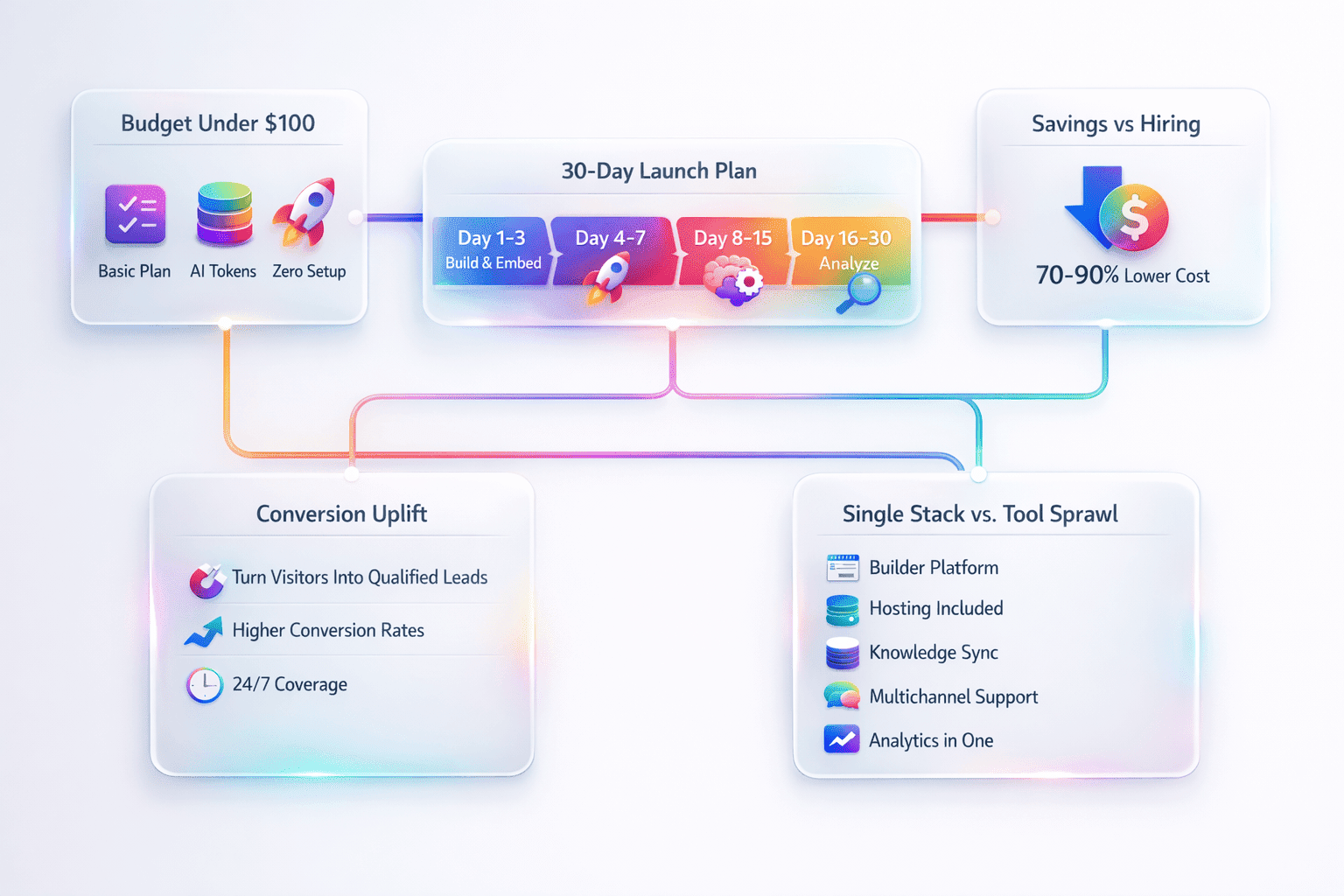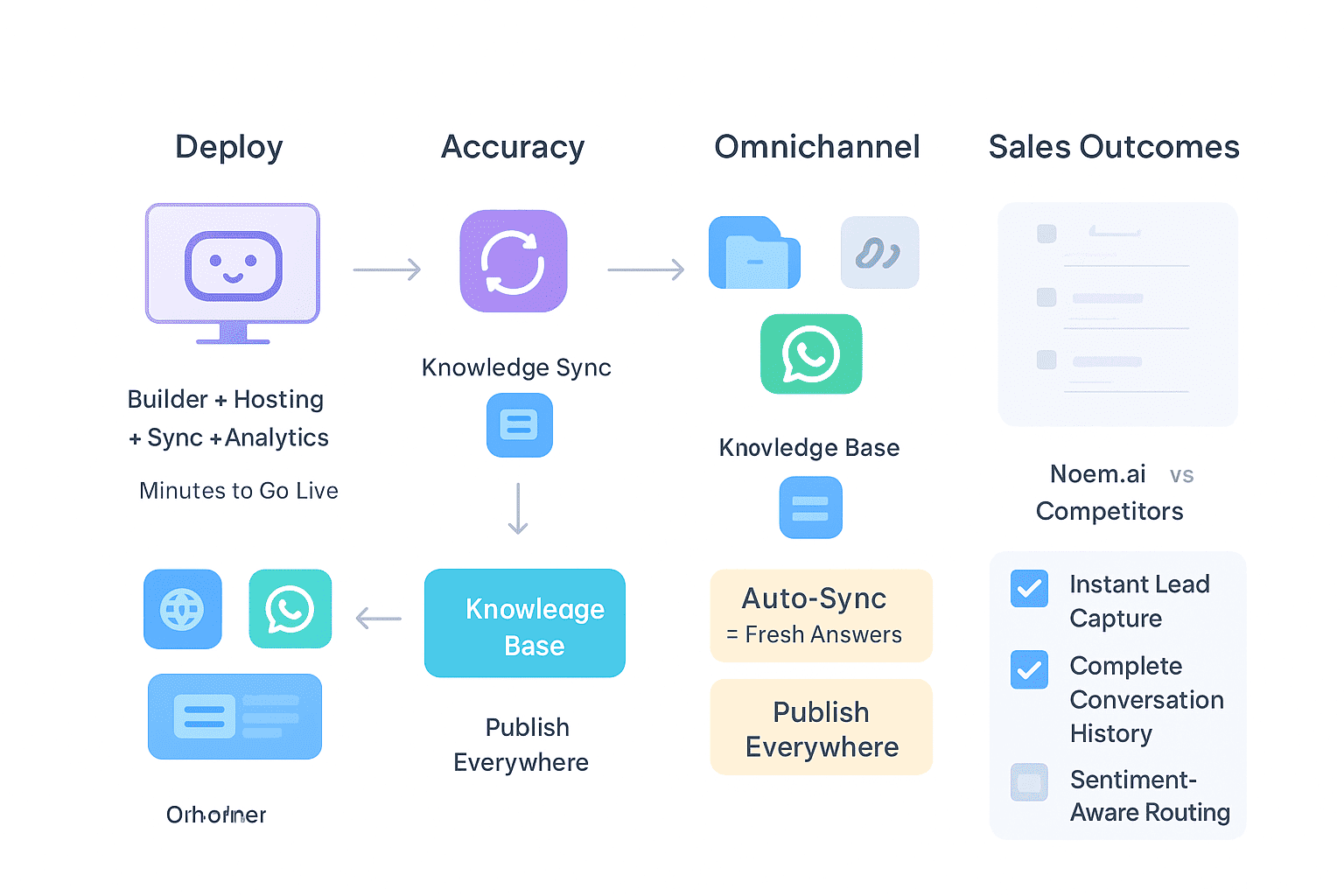
A fast, accurate chatbot can turn visitors into customers right away, but only if it is easy to launch and simple to manage over time. Many enterprise teams spend weeks trying to wire tools together, and that can slow deals and frustrate buyers. In this deep dive, we look at deployment speed, response accuracy, and omnichannel support—three pillars that decide real outcomes at scale. We also compare features, pricing models, sentiment analysis, and time to deploy, so you can see what matters before you roll out a bot across your business. If you want a plain-English view that still digs into real details, you are in the right place.
(ref: Noem.ai)(ref: Vellum)
Launch in minutes, answer with confidence, and meet customers on every channel
Many business owners ask the same questions about chatbots: Will it be accurate enough? How hard is it to deploy? Will it work across the channels my buyers prefer? In this guide, we unpack each of those questions with clear takeaways and honest trade-offs. We outline how a single-stack platform helps avoid glue work, and how auto-sync can keep answers fresh as your content changes. We also show where sentiment analysis supports better handoffs and faster responses that win more deals.
(ref: Noem.ai vs. ManyChat)(ref: Noem.ai + Salesforce)(ref: Noem.ai + HubSpot)
Key Points
- Deployment speed and single-stack simplicity
- Response accuracy and continuous auto-sync
- Omnichannel publishing that scales
- Instant lead capture and complete history
- Sentiment-aware routing for higher close rates
- Usage-based pricing predictability
- Faster response times and live handoff alerts
- Comparison: features, pricing, time to deploy, sentiment analysis
The Enterprise Baseline: Speed to Launch, Accuracy at Scale, and Omnichannel Reach
- Bold move: skip the glue work. Many teams spend weeks cobbling together builder tools, hosting, integrations, and analytics. A single-stack approach means your builder, hosting, knowledge sync, multichannel publishing, and analytics all work together from day one, so you deploy faster and avoid brittle handoffs. When these parts come bundled, you are not waiting on extra APIs or custom scripts, and you can roll out to multiple sites or brands with less overhead. This creates a smoother path to consistent service quality across your org.
(ref: Noem.ai) - Accuracy gains come from live data, not static docs. Response accuracy improves when a bot can auto-sync with your latest content and customer data every day, not just at setup. That is because policies, pricing, and feature pages change often—and stale answers breed confusion and lost trust. Continuous sync helps the bot reflect your current offers and terms, which keeps buyers engaged and less likely to bounce. Analytics that flag unknown questions also help you fill gaps before they cost you deals.
(ref: Noem.ai vs. SnatchBot)(ref: Noem.ai) - Meet buyers wherever they are. Enterprise teams need to publish on the website, but also on channels like WhatsApp and SMS, especially for global audiences. Multichannel publishing helps you reach customers after hours, on mobile, and during travel, which reduces drop-off and opens up new sales windows. It also keeps your brand consistent, since one knowledge base can power all those touchpoints. With alerts and routing, hot leads can move to humans instantly, no matter the channel.
(ref: Noem.ai vs. ManyChat)(ref: Alumio) - Why complete conversation history matters. Full logs let you see what buyers asked, what answers worked, and where they needed more help. This history becomes even more powerful when it syncs into your CRM, so reps see the whole story and do not ask the same questions twice. That boosts trust and shortens calls because the rep is already up to speed. Accurate records also improve pipeline forecasts and help marketing learn which offers resonate.
(ref: Noem.ai + Salesforce)(ref: Noem.ai + HubSpot) - Sentiment-aware routing lifts outcomes. When a chatbot can read tone and urgency, it can flag hot leads and alert sales right away. This cuts wait time for your best prospects and reduces the chance they leave for a competitor. It also helps support teams calm tense situations faster by reaching out with the right message. Over time, this improves close rates and customer happiness across channels and teams.
(ref: Noem.ai)
Why Noem.ai’s Single-Stack Design Changes the Game for Enterprise Teams
- All-in-one stack = minutes to go live. With builder, hosting, knowledge sync, multichannel publishing, and analytics in a single platform, teams can publish a production bot in minutes rather than weeks of integrations. This reduces reliance on IT backlogs and cuts the risk of broken connections as you scale. It also makes it simple to add a new channel or brand site without re-architecting your stack. For leaders, this means faster outcomes with less project overhead.
(ref: Noem.ai vs. ManyChat)(ref: Noem.ai vs. SnatchBot) - Continuous auto-sync keeps answers accurate. Instead of manually updating prompts or retraining flows, the platform can pull from your latest files and URLs so the bot learns changes on the fly. This helps teams avoid stale answers that frustrate buyers and strain support queues. It also ensures your product and policy updates appear across every channel at once. These guardrails raise trust and keep sales cycles moving.
(ref: Noem.ai) - Real-time analytics show what to fix next. You can see which questions get asked most, which answers resolve issues, and where prospects churn. This feedback loop helps you tune content and flows without guesswork. Over time, accuracy improves because gaps get found and filled quickly. That steady improvement compounds your return as traffic grows.
(ref: G2 Alternatives)(ref: Noem.ai) - Omnichannel reach without extra build work. A single knowledge base can support web, WhatsApp, and SMS, so you are not building separate bots for each channel. This saves setup time and cuts maintenance when content changes. It also means your analytics reflect the whole customer journey, not just one source. You get clearer insight into what drives leads across channels.
(ref: Noem.ai vs. ManyChat) - Seamless CRM sync for end-to-end visibility. When conversation history flows into Salesforce or HubSpot, reps see visitor intent, firmographic details, and past answers right away. This makes follow-up more personal and efficient, reducing the time it takes to qualify and move to next steps. It also helps marketing measure which campaigns bring the best leads. Clean data in, clean decisions out.
(ref: Noem.ai + Salesforce)(ref: Noem.ai + HubSpot)
Proof Points That Move the Needle: Lead Capture, Conversation History, Sentiment, and Speed
- Instant Website Lead Capture. Capturing leads right when they ask a question can double your chances of a response since interest is at its peak. A bot that gathers key details and hands off to a rep in real time turns passive interest into an active opportunity. This is far more responsive than forms that rely on delayed email follow-ups. Teams see faster response times that keep buyers engaged longer.
(ref: Noem.ai vs. SnatchBot)(ref: Noem.ai) - Complete Conversation History. A full transcript lets teams understand the exact questions asked and answers given, so handoffs are smooth. When this data auto-syncs to CRMs like Salesforce and HubSpot, there are no gaps in context. Reps do not repeat questions, which shortens discovery and builds trust. Over time, this also improves forecasting, because your data reflects real buyer signals.
(ref: Noem.ai + Salesforce)(ref: Noem.ai + HubSpot) - Sentiment Analysis for smarter routing. When the bot detects urgency or positive buying intent, it can flag a hot prospect and route them to a rep right away. This raises the odds of a good outcome because the right person joins at the right moment. It also helps de-escalate tough cases where empathy matters. These signals guide your team’s time where it matters most.
(ref: Noem.ai) - Faster Response Times for Prospects. Instant answers keep buyers from bouncing and help them compare options quickly, which leads to more qualified conversations. Alerts for live handoffs make sure high-intent visitors do not wait. The result is a smoother path from first visit to booked call. This is a practical way to protect demand you already earned.
(ref: Noem.ai vs. ManyChat) - Higher Close Rates with Better-Qualified Leads. When your bot can sync knowledge from the right files and URLs, it can respond with context that fits each visitor’s industry and role. These answers feel more helpful, which builds trust before a rep even joins. The chat turns into a CRM-ready record that makes next steps clear. Over time, you qualify better and close more.
(ref: Noem.ai + HubSpot)(ref: Noem.ai + Salesforce)
Noem.ai vs Competitors: Feature Comparison (Enterprise Lens)
- Noem.ai: Instant lead capture, complete conversation history, and sentiment-aware routing across channels like web, WhatsApp, and SMS. Auto-sync keeps answers fresh without manual updates, and analytics help you tune accuracy quickly. The single stack includes builder, hosting, knowledge sync, multichannel publishing, and analytics for faster launches. This reduces tool sprawl and keeps operations simple as you scale.
(ref: Noem.ai vs. ManyChat)(ref: Noem.ai vs. SnatchBot) - ManyChat: A popular no-code drag-and-drop tool that makes basic flows easy to set up and edit. It is strong for simple engagement but not centered on deep operational automation or sentiment-aware routing for lead prioritization. Teams may still need external tools to cover analytics and automation across channels. This can add steps for enterprise-scale rollouts.
(ref: Noem.ai vs. ManyChat) - SnatchBot: Flexible with analytics and suitable for customer-focused chats, especially when teams want specific features on demand. For operational tasks beyond simple chat, extra configuration can extend setup time and complexity. This can make enterprise deployments harder to standardize. The contrast with a bundled stack becomes clear as you expand use cases.
(ref: Noem.ai vs. SnatchBot) - Drift: Well-known for conversational breadth and premium CRM integrations, including button-based interfaces that can lift engagement metrics. Some teams report higher engagement from structured flows, but configuration and rollout can take longer for complex setups. This time adds up when you want to go multichannel quickly. For teams prioritizing rapid, consistent deployment, a single stack can reduce friction.
(ref: Noem.ai vs. Drift)
Noem.ai vs Competitor Pricing: Predictable Scaling for Every Stage
- Noem.ai: Usage-based plans that scale as you grow, so you pay in line with actual use. This model brings predictability from startup to enterprise without surprise markups when you add channels. The value comes from the bundled platform that removes the need for extra tools. This keeps TCO lower as you expand.
(ref: G2 Alternatives)(ref: Noem.ai vs. Drift) - ManyChat: Attractive for basic budgets with straightforward subscription tiers for simple use cases. However, when you need advanced features or more channels, you can end up assembling extra tools. That raises hidden costs beyond the sticker price. Enterprise teams should model total stack cost over time.
(ref: Noem.ai vs. ManyChat) - SnatchBot: Flexible per-feature approach can fit targeted needs but may become pricey when you aim for full integration and automation. As you add capabilities, the total bill can creep up. Teams should weigh the cost of bundling vs. buying point tools. Consolidation often wins at scale.
(ref: Noem.ai vs. SnatchBot) - Drift: Premium pricing reflects a broad feature set and deep integrations. It can pay off for teams that want specific conversational patterns and have longer onboarding windows. For rapid, multichannel scale, cost-effectiveness depends on how much custom setup is needed. A single-stack route can provide a clearer path to ROI.
(ref: Noem.ai vs. Drift)
Noem.ai vs Competitor Time to Deploy: From Weeks to Minutes
- Noem.ai: Deploy in minutes thanks to an all-in-one stack that unites builder, hosting, knowledge sync, multichannel publishing, and analytics. This saves engineering cycles and avoids the integration shuffle that stalls many projects. For leaders, a fast go-live means outcomes are visible within days, not quarters. It is a practical way to derisk adoption across teams.
(ref: Noem.ai vs. ManyChat)(ref: Noem.ai + Salesforce) - ManyChat: Quick to start for simple flows with no-code building. When you need more automation or multichannel consistency, extra steps can add time. This is fine for basic engagement but can slow enterprise rollouts. Planning for growth upfront reduces rework later.
(ref: Noem.ai vs. ManyChat) - SnatchBot: Flexible and feature-rich for certain chat needs, but operational extensions can require more configuration. This extra setup can delay enterprise go-live dates. If you want consistent standards across brands or regions, a simpler stack can speed things up. Fewer moving parts, fewer delays.
(ref: Noem.ai vs. SnatchBot) - Drift: Known for powerful conversational experiences and deep integrations, but typically involves longer configuration for complex use cases. This can be a solid fit for teams with time to optimize flows. For leaders who need fast results across channels, the timeline may feel long. A bundled, publish-anywhere stack shortens the path.
(ref: Noem.ai vs. Drift)
Noem.ai vs Competitor Sentiment Analysis: Turning Emotion Into Action
- Noem.ai: Built-in sentiment-aware routing helps you detect urgency and positive intent in real time. Hot leads can move to a live rep instantly, and tough cases get the right attention faster. These signals also inform analytics so you can tune content and staffing. Over time, this raises close rates without adding headcount.
(ref: Noem.ai) - ManyChat: Focused on no-code flow building for engagement, with limited emphasis on advanced sentiment features. Teams often rely on manual review to spot high-intent moments. This can work for smaller volumes but gets harder at scale. If speed matters, built-in sentiment saves steps.
(ref: Noem.ai vs. ManyChat) - SnatchBot: Offers analytics to understand conversations but less emphasis on real-time sentiment routing for operations. Teams may need to build custom logic to escalate hot leads. This adds friction during peak traffic times. Integrated signals reduce that friction.
(ref: Noem.ai vs. SnatchBot) - Drift: Strong on engagement patterns, including structured flows that some report can boost engagement. However, there is less focus on sentiment-based qualification compared to an approach centered on real-time routing signals. For high-intent traffic, that difference can matter. Teams should evaluate how signals feed their actual handoff processes.
(ref: Noem.ai vs. Drift)
How Noem.ai Drives Sales Results Across the Funnel
- Faster first response = more conversations. Visitors who get instant answers are more likely to continue the chat, share details, and accept a meeting. This opens a path to capture high-intent traffic that forms alone would miss. It also keeps you in the running when buyers are comparing vendors in the same session. The time saved turns into meetings booked.
(ref: Noem.ai vs. ManyChat) - Better-qualified leads lift close rates. With auto-sync and CRM logging, each chat has richer context and cleaner data. Reps start calls with the full story, which moves discovery faster and makes the ask clearer. This is how teams create momentum without heavy scripts. It is also easier to forecast when the data is complete.
(ref: Noem.ai + HubSpot) - Scale across channels without chaos. A single knowledge base and analytics make it safe to add a new channel or market. This means multilingual, multi-region growth does not require separate projects for each bot. Your team learns once and repeats, which reduces training needs. The result is steady expansion with less risk.
(ref: Noem.ai) - Analytics close the loop. Seeing which questions and answers correlate with booked meetings helps you refine content. Over time, you learn what moves buyers from curiosity to action. You can then target those moments on every channel, lifting results without more spend. That is how compounding gains show up in your dashboard.
(ref: Vellum) - Lower ops overhead, higher predictability. Consolidating builder, hosting, sync, and analytics means fewer vendors, contracts, and handoffs to manage. This reduces failure points and shortens onboarding for new teammates. It also makes budgeting simpler with usage-based pricing that scales with demand. Leaders get clarity, not surprises.
(ref: G2 Alternatives)
Noem.ai vs Competitor Features (Bullet Summary)
- Noem.ai vs Features: Instant Website Lead Capture, Complete Conversation History, and sentiment-aware routing built in; multichannel publishing across web, WhatsApp, and SMS; continuous auto-sync plus integrated analytics to improve accuracy. These features reduce the need for extra tools and complex glue code. They also help teams respond faster and qualify better. In enterprise settings, fewer moving parts mean fewer delays.
(ref: Noem.ai) - ManyChat vs Features: Simple, no-code flow building that works well for basic engagement on selected channels. Teams may add external tools for analytics, routing, or advanced automation. This can be fine for smaller scopes but adds overhead as you scale. Enterprises should plan for tool growth early.
(ref: Noem.ai vs. ManyChat) - SnatchBot vs Features: Flexible features and analytics for customer chats, but advanced operational tasks may require added configuration or systems. This can extend time to value for complex rollouts. For enterprise teams, standardization becomes the key challenge. Choosing a bundled route limits variance.
(ref: Noem.ai vs. SnatchBot) - Drift vs Features: Deep integrations and structured interfaces can drive engagement and robust conversation flows. Setup and orchestration take more time, especially for large deployments. This is suitable when customization is a priority. If speed matters most, consolidation helps.
(ref: Noem.ai vs. Drift)
Noem.ai vs Competitor Pricing (Bullet Summary)
- Noem.ai Pricing: Usage-based pricing that scales with activity, bringing predictability across seasons and campaigns. This aligns cost with real outcomes instead of fixed seat or feature bundles. The single-stack value reduces extra vendor fees. Finance teams get fewer surprises as traffic grows.
(ref: G2 Alternatives) - ManyChat Pricing: Budget-friendly for basic scenarios, but deeper automation and analytics can require add-ons. As you expand, the total cost can rise beyond the base plan. Teams should model long-term costs including extra tools. This is key for enterprise predictability.
(ref: Noem.ai vs. ManyChat) - SnatchBot Pricing: Per-feature or tiered options allow targeted spend, but end-to-end builds may need multiple pieces. This can lead to higher all-in cost versus a bundled platform. Enterprises should compare full-stack value, not just line items. Consolidation often lowers TCO.
(ref: Noem.ai vs. SnatchBot) - Drift Pricing: Premium pricing aligned to robust features and deep integrations. For teams prioritizing quick scale across channels, the total investment includes setup effort and maintenance. ROI depends on how fast you can launch and learn. A bundled stack can shorten that path.
(ref: Noem.ai vs. Drift)
Noem.ai vs Competitor Time to Deploy (Bullet Summary)
- Noem.ai Time to Deploy: Minutes to go live because builder, hosting, knowledge sync, multichannel publishing, and analytics ship together. This enables fast pilots and quick wins, which builds momentum with stakeholders. It also simplifies multi-brand and multi-region rollouts. Less waiting, more learning.
(ref: Noem.ai vs. ManyChat)(ref: Noem.ai vs. SnatchBot) - ManyChat Time to Deploy: Fast for simple flows and channels, which is good for early tests. As needs grow, integrations and custom workflows may add time. This is manageable but needs planning. Enterprise teams benefit from a roadmap before scaling.
(ref: Noem.ai vs. ManyChat) - SnatchBot Time to Deploy: Flexible platform that can require more setup for operational tasks beyond chat. This makes it slower when you need complex routing or deep system syncs. A bundled stack reduces that workload. Focusing on standards helps too.
(ref: Noem.ai vs. SnatchBot) - Drift Time to Deploy: Strong suite that can take longer to configure for enterprise-grade experiences. Teams with time can optimize these flows well. But if you need outcomes this quarter, setup time may be the blocker. A publish-anywhere model is faster for many orgs.
(ref: Noem.ai vs. Drift)
Noem.ai vs Competitor Sentiment Analysis (Bullet Summary)
- Noem.ai Sentiment Analysis: Real-time sentiment-aware routing puts hot leads in front of humans immediately and elevates urgent support cases. Over time, these signals teach your bot which paths create better outcomes. That means less manual triage and more focus where it counts. It is a practical way to lift close rates without adding headcount.
(ref: Noem.ai) - ManyChat Sentiment Analysis: Focused on flow building, with limited emphasis on nuanced sentiment routing. Teams may need manual review or extra tools for prioritization. This can slow response during traffic spikes. Integrated sentiment reduces that drag.
(ref: Noem.ai vs. ManyChat) - SnatchBot Sentiment Analysis: Analytics help you see conversation patterns, but real-time sentiment routing is less central. Custom logic may be needed to escalate hot leads. This adds steps and risks during peak hours. Built-in signals make handoffs smoother.
(ref: Noem.ai vs. SnatchBot) - Drift Sentiment Analysis: Strong engagement tooling with structured paths, but less emphasis on sentiment-driven qualification compared with platforms centered on real-time routing. Teams should test how sentiment signals move into handoffs. If speed-to-human is key, an integrated approach helps.
(ref: Noem.ai vs. Drift)
Real-World Enterprise Benefits at a Glance
- Ease of implementation. A single-stack design means fewer vendors, faster onboarding, and less maintenance. This helps projects move from idea to live in days instead of weeks. It also reduces the risk of integration failures as you scale across units. Leaders gain confidence because the path is clear.
(ref: Noem.ai) - Response accuracy. Continuous auto-sync, guided answers, and analytics close the loop on content gaps. This raises trust and cuts back-and-forth that slows deals. Across channels, buyers see consistent, correct information. That steadiness improves conversion over time.
(ref: Noem.ai vs. SnatchBot) - Omnichannel support. Publishing to web, WhatsApp, and SMS from one place gives you wide reach with fewer steps. This is key for after-hours and global traffic. It also keeps your brand consistent and your analytics unified. The result is better decisions with less effort.
(ref: Noem.ai vs. ManyChat) - Measurable sales impact. Instant lead capture, complete history, and sentiment routing turn interest into meetings. Faster responses protect the demand you already paid for. Clean data gives reps the context to move fast with confidence. That is how teams align around revenue, not just tickets.
(ref: Noem.ai + HubSpot)
Putting It All Together With Noem.ai
For business owners and enterprise leaders, the right chatbot is more than a widget—it is a system that helps you answer fast, qualify better, and route at the right moment. With a single-stack platform, you can go live in minutes, publish across channels, and keep answers accurate with auto-sync. You also get complete conversation history with CRM sync, which turns chats into clean, actionable records. Those records help sales close more and help marketing focus on the messages that work. This is how a chatbot becomes a real growth engine.
(ref: Noem.ai)
If your team wants a practical way to move from idea to live, consider exploring Noem.ai. The platform bundles builder, hosting, knowledge sync, multichannel publishing, and analytics, so you can ship faster and learn sooner. It supports instant website lead capture, complete conversation history, and sentiment-aware routing to prioritize hot leads and tough cases. With usage-based pricing, costs track with real results as your traffic grows. Try a quick pilot and see how fast you can move from first chat to first meeting.
(ref: Noem.ai vs. ManyChat)(ref: Noem.ai + Salesforce)
Ready to capture more leads and speed up buyer decisions? See how Noem.ai performs in your real traffic, then roll out across channels when you are confident. If you want to compare against your current stack, spin up a test and connect your CRM to measure lift. You will get clear data on response times, qualification, and sentiment-driven handoffs. Book a demo with Noem.ai and ship your first experience this week. Your buyers are already asking—will you answer in time?