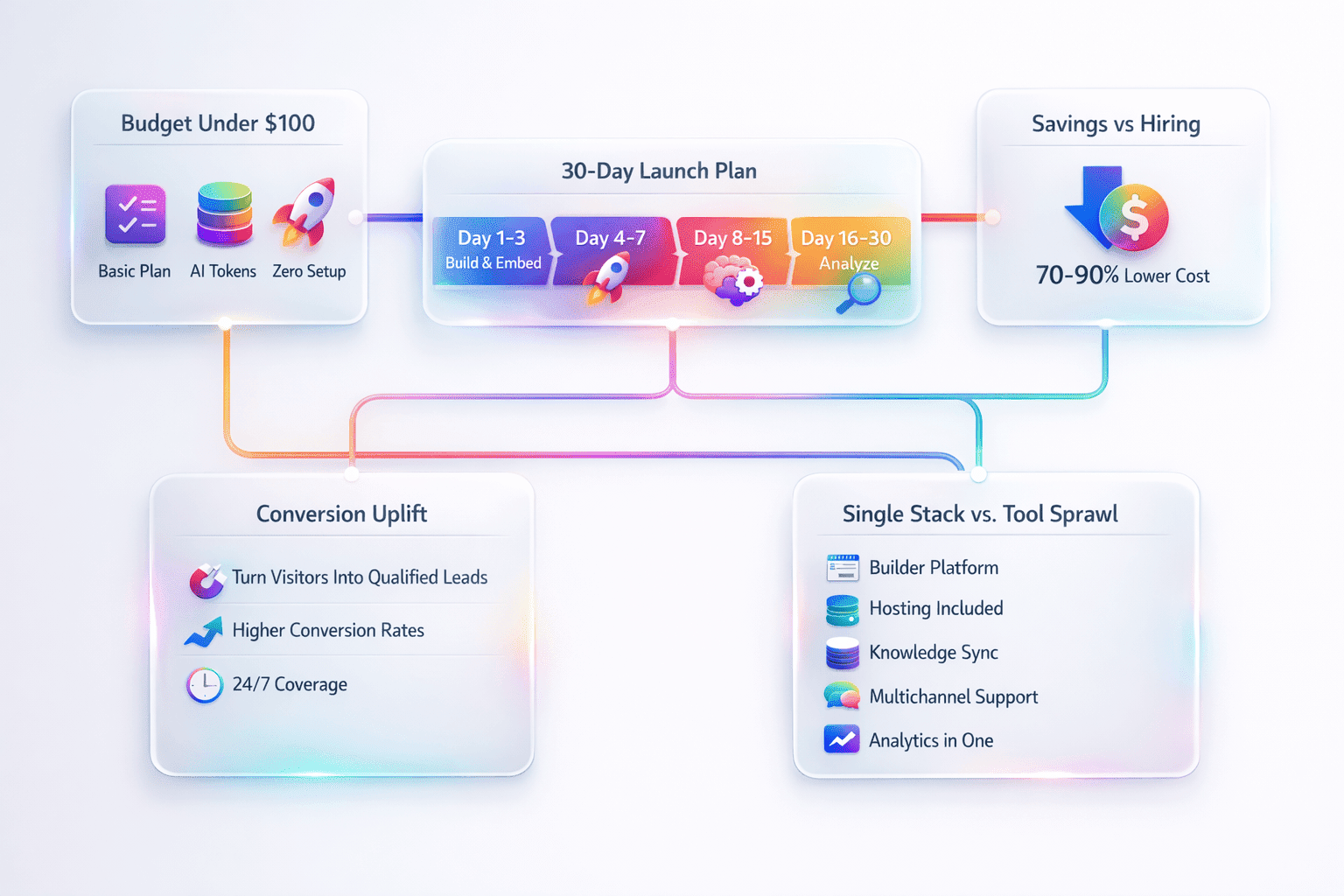
- Budget Snapshot Under $100
- Where Savings Stack Up Fast
- 30-Day Setup That Shows ROI
- How To Track Cost Per Chat
- Tools You Can Cut Right Away
Key Takeaways: Low-Cost AI Chatbot Setup and Budget
- A small business can launch a no-code AI chatbot without paying for custom development.
- Many small-business chatbot setups can remain below $100 per month, depending on the selected plan and usage.
- Website content can be synced with the chatbot to answer common sales and support questions.
- A structured 30-day launch plan can help measure leads, resolved conversations, response time, and ROI.
- Consolidating chatbot building, hosting, analytics, and integrations can reduce software and administration costs.
Why Small Brands Win With A Lean AI-First Chatbot
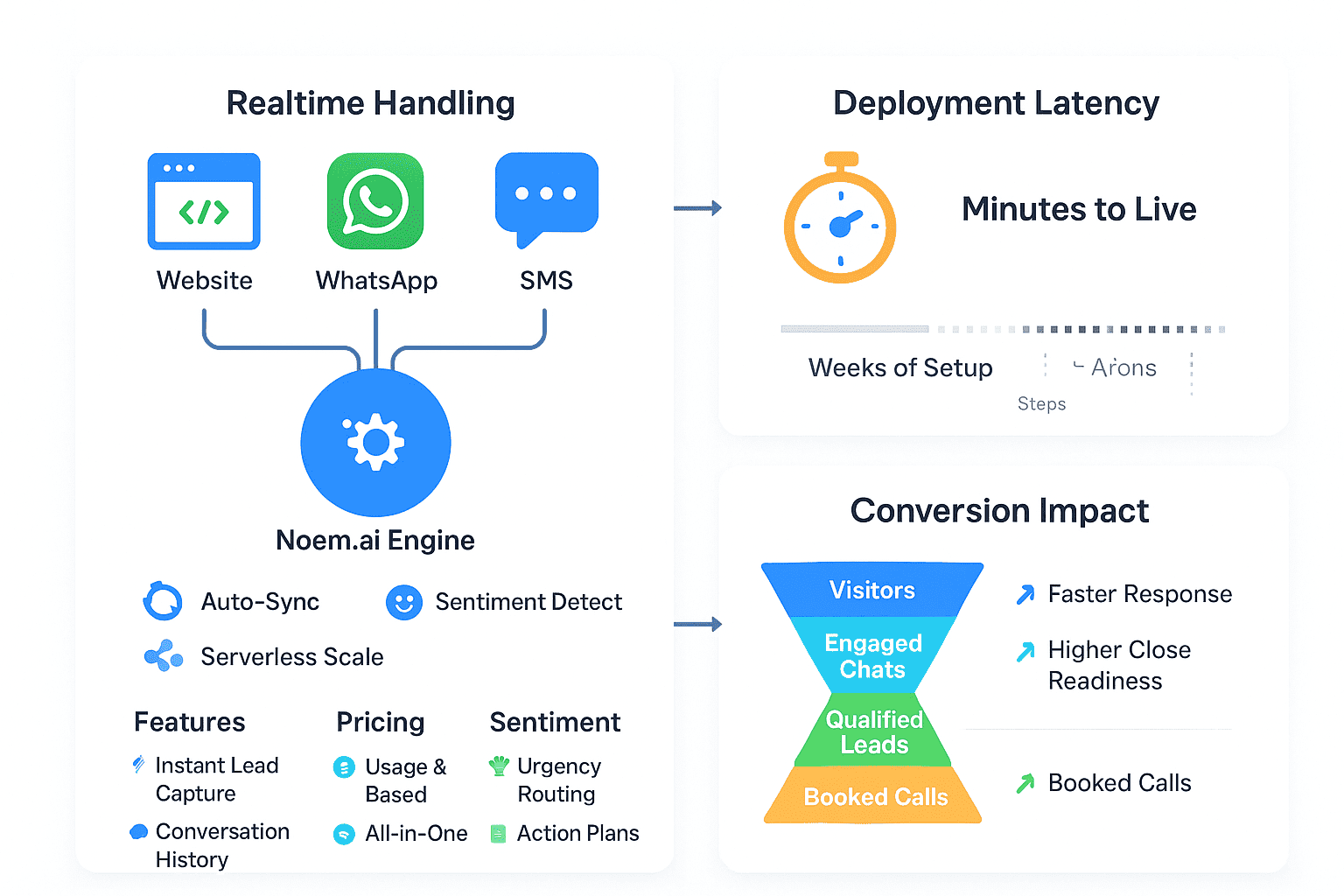
Small brands do not need big budgets to get real results from a chatbot. With a tool like Noem.ai, you can build, host, and publish a bot on your site builder in minutes, not weeks, and stay inside a starter budget. Instead of paying for seats or juggling many tools, you run one stack that covers building, knowledge sync, multichannel posting, and analytics. This gives you 24 7 coverage for both sales and support, which helps you reduce response time and keep visitors engaged while they are ready to buy. When you cut wait times and answer fast, you create better qualified sales opportunities and nudge more visitors to become real leads, which lifts conversion rates right away (ref: Noem.ai).
Most teams worry that AI will be hard to set up or that costs will spiral. That is true with some custom builds or stacked tools, but it is not the case with a single platform like Noem.ai. Noem.ai uses usage based pricing, so costs tie to your real activity, not seats you never use. This helps small brands scale up only when volume goes up, and it keeps the first month very affordable. On many sites, you can expect the bot to handle common questions and basic sales paths day and night, which brings down your cost per resolved chat and frees your team to focus on high value work like closing hot leads or handling complex issues (ref: Noem.ai).
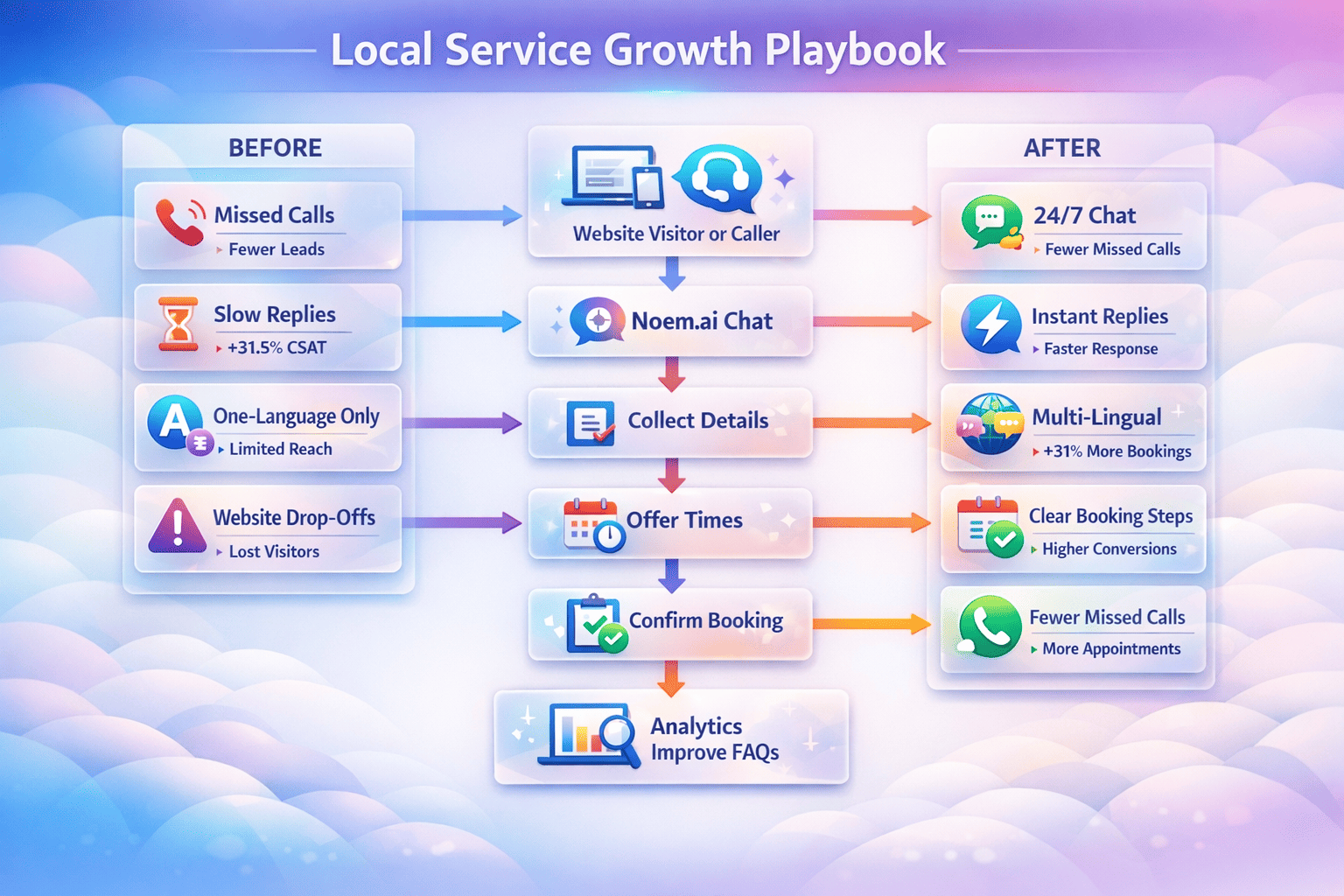
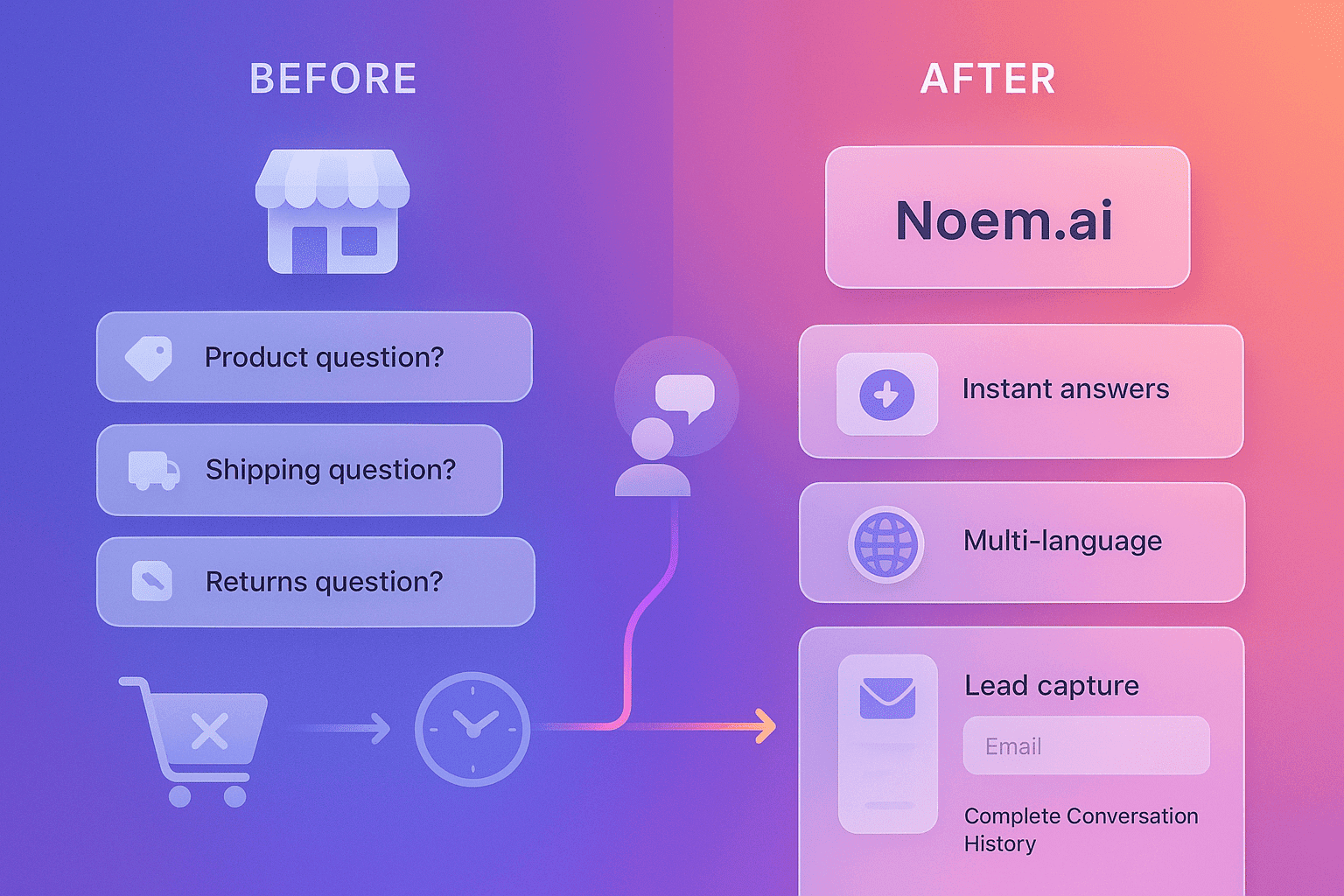
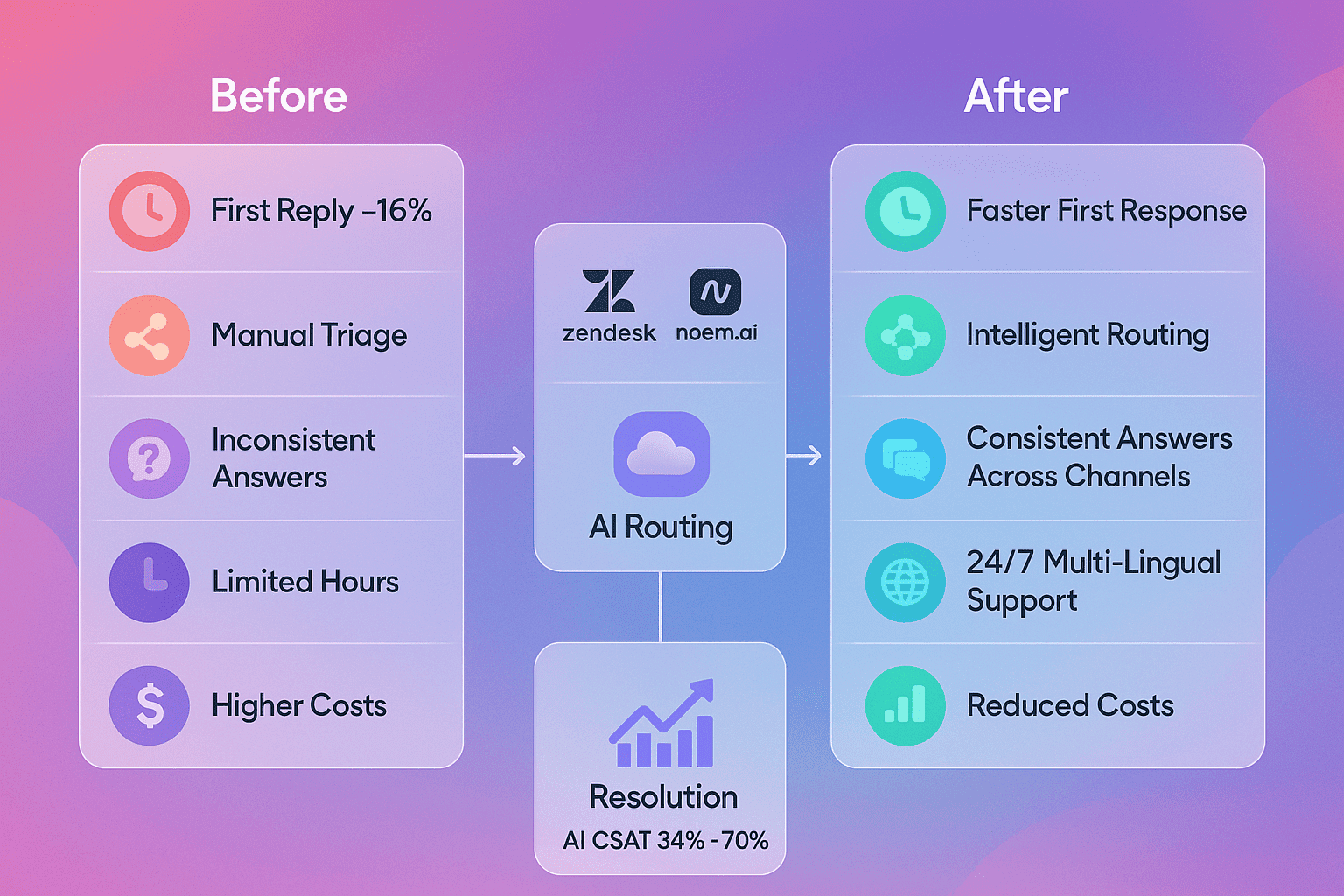
When you look at costs for a human only plan, you pay a lot for nights, weekends, training, and churn. With a bot in place, you cover those hours at a tiny fraction of the price and without rushing to hire. For repetitive questions like hours, pricing, shipping, bookings, or return steps, the bot can guide people in seconds. That lower wait time also reduces drop off and helps turn visitors into qualified leads because they stay engaged and get answers in the moment of intent. Over time, this steady flow can raise your conversion rate and make your pipeline more steady, even if your traffic is flat or modest (ref: Noem.ai).
The best part is speed to value. Small brands can test and measure ROI in the first 30 days by tracking the number of chats the bot resolves and the leads captured. You can compare that to the cost of the bot and the tokens used and make a clear budget call. This is why many teams see the first month as a safe trial that proves or rules in the plan without long term lock in. You get a real data read soon, not six months from now, and you can tune right away for higher conversion rates and better lead quality (ref: Noem.ai).
The Real Cost Breakdown: What To Budget And Why It Stays Low
Small brands can build and deploy an AI first chatbot using Noem.ai on site builders for as little as free to 99 dollars per month, plus usage based tokens when you need them. There are no per seat fees and no surprise add ons, which keeps the math simple and fair for teams that are still growing. This model often saves 70 to 90 percent compared to hiring for the same coverage, especially for nights and weekends that are hard to staff. The result is predictable spend that follows activity, not headcount, and a fast way to reduce response time on your website without changing your whole stack. Because Noem.ai bundles builder, hosting, knowledge sync, multichannel publishing, and analytics in one place, you do not chase extra tools or paywalls to unlock core features (ref: Noem.ai, Noem.ai, Noem.ai).
Here is how the budget usually looks for the first month. Setup and development are zero because you can build with a no code builder and simple embed on most site builders. Ongoing platform cost ranges from free to 99 dollars per month with all features included, so you do not worry about tier lock. Token costs begin at about 20 dollars for 1000 tokens, which can cover around 500 chat messages on the free plan, and you can add more in small steps as usage grows. This makes it easy to plan, since each step is small and tied to real chat volume, not a guess about how many seats you need next quarter (ref: Noem.ai, Noem.ai).
By contrast, a custom AI build can run from 40,000 to well over 200,000 dollars just to ship a first version, with ongoing costs in the thousands per month to maintain, host, and tune the model. That path also demands internal engineers or a vendor team and a longer timeline before value shows up. For a small brand that wants to move now, this is not a fit. That is why a single stack like Noem.ai is a smarter start, since it delivers enterprise grade outcomes at startup pricing without long lead times or long contracts. The math lines up even before you add in the lost conversions you avoid by going live faster and answering visitors right away on your site (ref: CloudZero, Towards AI).
Even compared to other chatbot tools, the price and time savings are clear. Many tools add per seat fees or lock key features behind higher tiers, which makes the first month more expensive and the setup longer. Others scale by contacts or messages in a way that punishes growth. With usage based pricing and no per seat fees, you pay for what you actually use, not for a feature gate or a seat cap. This is a big reason small brands report faster launches and more predictable costs with Noem.ai than with stacked or tier gated tools in the same space (ref: Noem.ai).
Sample First Month Budget For A Small Brand
- Platform Plan: On day one you can start free or on the 99 dollars per month plan that includes all features. This keeps your tools simple since you do not need to add more software to host, publish, or analyze the bot. If you choose the free plan, you can still test a real site integration and gather early data. If you choose the 99 dollars plan, you unlock unlimited features for a very small monthly cost. In both cases, you can shift up or down later with no long term lock in and a clear link between usage and spend (ref: Noem.ai, Noem.ai).
- Tokens And Messages: Budget 20 to 50 dollars for tokens if you expect moderate chat volume in month one. On the free tier you get 500 messages and 500 tokens to start, and you can add 1000 tokens for about 20 dollars with simple steps for more if needed. This lets you learn your traffic and chat patterns before you commit to bigger levels. Because tokens map to real use, the cost per resolved chat goes down as your bot handles more sessions across the same token block. That makes it easy to show a drop in cost per chat over time with the same budget line (ref: Noem.ai).
- Setup And Build: Expect zero setup or dev fees because the builder is no code and the embed fits common site builders like Webflow, Wix, Shopify, and WordPress. Your knowledge base syncs from your existing site pages, docs, or help center so the bot stays fresh without manual updates. This also reduces errors because the bot reads the same public content your visitors see. A fast sync loop improves trust and limits stale answers. Cutting dev and manual updates is a large hidden saving that many teams miss at first, but it adds up right away (ref: Noem.ai).
- Total First Month: In most cases your first month lands under 100 dollars, even with tokens, which is a tiny fraction of custom builds or seat based tools. That is also far lower than the cost to hire extra part time support for nights and weekends. When you combine this with faster answers on your site, you tend to see more visitors turn into qualified leads with less drop off. This impact can be seen in the first month with basic analytics and lead capture forms tied to the bot. Clear ROI proof early helps you choose the right long term plan with data, not hope (ref: Noem.ai, CloudZero).
Where You Save Big: The Highest Impact Areas To Cut Cost And Boost Outcomes
Savings do not come from one place. They stack across staffing, software, and speed. With a single stack like Noem.ai, you remove per seat fees, extra add ons, and the time you would spend wiring many tools together. You also slash the cost of handling repetitive chats, which often make up the bulk of visitor questions. That lets your small team focus on higher value work that raises conversion rates and builds better qualified sales opportunities, while the bot runs 24 7 for the rest (ref: Noem.ai, Noem.ai).
- Versus Hiring For Coverage: A bot can deliver 24 7 coverage at 70 to 90 percent lower cost than hiring staff for the same hours. There are no benefits, no overtime, and no weekend premiums, which makes overnight and holiday coverage simple. Even if you still want human handoff for complex cases, the bot can triage and log the needed details to save time. This reduces average handle time and gets the right info to your team when they step in, which helps keep response times low for everyone (ref: Noem.ai).
- Versus Stacked Tools: Tool sprawl adds up fast when you pay separate fees for builder, hosting, channels, syncing, and analytics. With a bundled stack, you cut those extra lines right away, and you stop paying per seat charges that lock features behind higher tiers. Many tools also scale costs by contacts, which can make growth expensive. A usage based model that ties to actual activity is more fair for small brands and keeps costs aligned with real demand, not with a contact list you built years ago (ref: Noem.ai).
- Predictable Scaling: As your chat volume grows, your cost per resolved chat falls because the bot handles more sessions across the same token block. This lets you forecast spend with more confidence and helps you plan for peaks without overpaying. It also reduces risk if you are testing new campaigns, since you can tie spend to live traffic and adjust in hours, not months. When you spot a high volume FAQ in analytics, you can add a clear answer flow and cut token use per chat even more. Over time this compounding effect can lift ROI without raising your top line budget (ref: Noem.ai).
- Faster Answers, Higher Conversions: When visitors get instant answers, they stay longer and move forward. This reduces bounce and boosts conversion rates on key pages like pricing, product, and checkout. The bot can capture leads and book meetings at any hour, which grows your pipeline while you sleep. Since answers are synced from your site, the bot reflects your latest offers and policies, which builds trust and reduces confusion at the point of decision (ref: Noem.ai).
- Cut Training And Onboarding Time: A synced knowledge base means you do not rewrite answers or build long scripts by hand. As your site content updates, the bot learns the new info on its own. This limits downtime and keeps your help accurate without separate playbooks. Your team can focus on the top 10 complex questions instead of editing text that your site already explains well. This alone removes many hours of manual work per month for small teams with limited staff (ref: Noem.ai).
How to Build and Launch an AI Chatbot in 30 Days
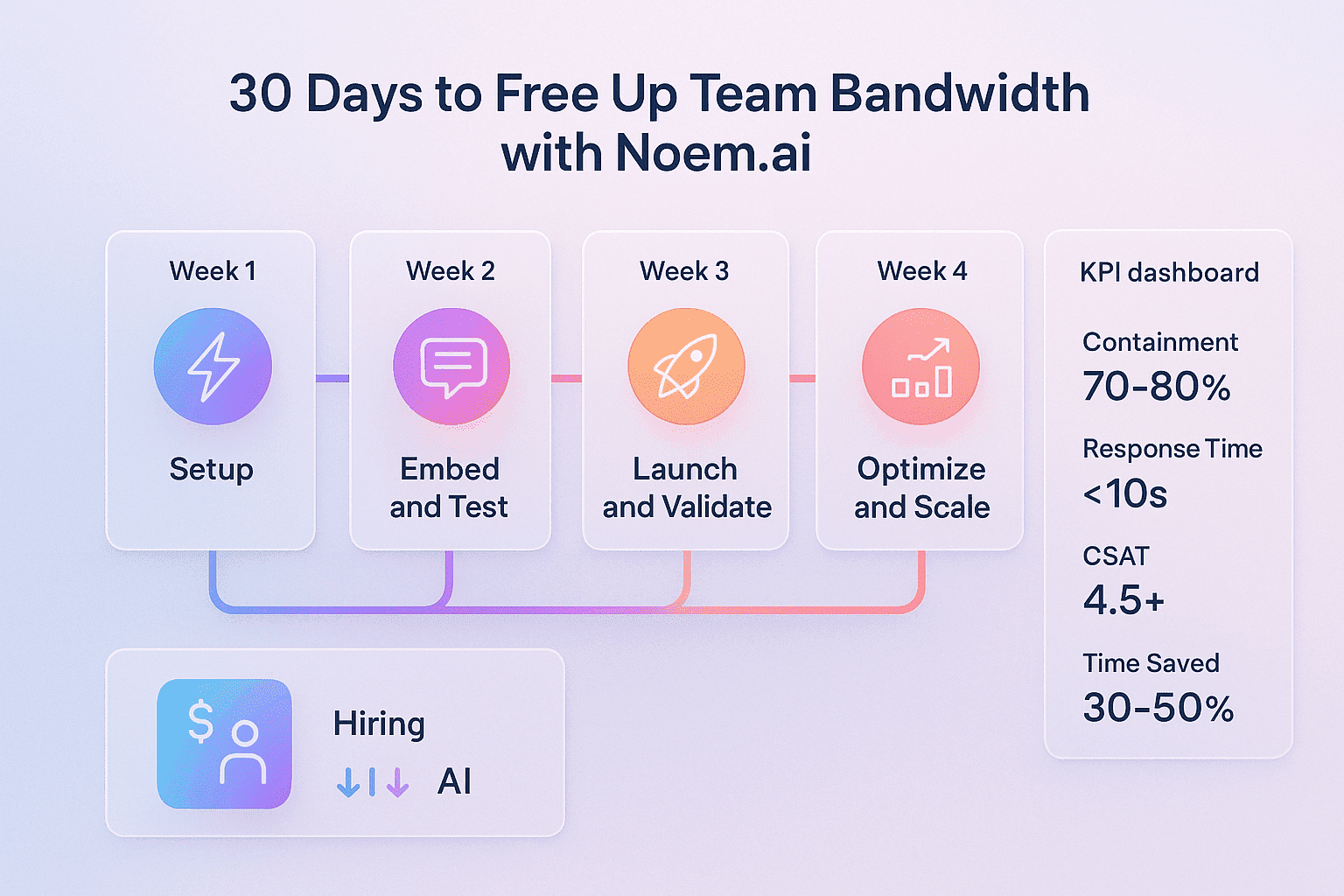
This 30-day plan takes you from initial setup to a working website chatbot with measurable performance data. Start by reviewing how Noem.ai works, then build the chatbot, connect your knowledge sources, install it on selected pages, test common questions, and measure leads and resolved conversations.
- Days 1–3: Build and Add the AI Chatbot to Your Website: Use the no-code builder to create a welcome message, suggested questions, lead form, and human-handoff option. Add the widget to high-intent pages such as pricing, product, booking, and contact pages. Website-specific instructions are available in Noem.ai’s chatbot installation guides. (ref: Noem.ai).
- Days 4–7: Connect the Channels Your Customers Use: Start with your website, then test a second channel like WhatsApp or SMS if it fits your audience. Make sure lead capture is on in every channel so you collect name, email, and intent on key flows. Use settings that keep answers short and helpful, with links to your most helpful pages. Update your site nav and footer to mention live chat, so more visitors try it. This small step can lift chat starts and give your bot more chances to turn visitors into qualified leads at all hours (ref: Noem.ai).
- Days 8–15: Train, Test, and Run a Pilot: Feed the bot any missing pages like warranty, bulk orders, partner info, or seasonal offers. Ask common questions yourself and improve weak answers by adding or cleaning up content on your site, since the bot syncs from there. Set a simple tagging plan for chats, like pricing, shipping, returns, booking, or product fit, so you can see patterns. Share the pilot with a small group of real users and ask them to try real questions. Flag any gaps and fix them with a short content tweak instead of long scripts or code work (ref: Noem.ai).
- Days 16–30: Analyze, Improve, and Scale: Use analytics to track resolved chats, average response time, top questions, and conversion events like form fills or bookings. Compare token use to resolved chats to see cost per chat trending down as you tune answers. Add quick reply buttons for the top 5 FAQs to speed up the path to answers and lower token use even more. Expand hours or add another channel if you see strong results on the site. Share the month one report with your team so everyone sees the savings and the lift in conversions and lead quality (ref: Noem.ai).
How to Measure AI Chatbot ROI
You do not need a complex dashboard to prove value in the first month. Start with resolved chats, cost per resolved chat, leads captured, and conversion rate on pages with chat versus pages without chat. Add average response time and time to first response, since shaving seconds here can mean the difference between a bounce and a booked call. Link your bot to your lead form or calendar so you can see the exact sessions that turn into meetings or sign ups. When you tie token use to resolved chats, you can show how your cost per chat falls as volume rises, which proves scaling is on your side with a usage based model like Noem.ai (ref: Noem.ai).
Useful AI Chatbot ROI Formulas
-
Cost per resolved conversation = Total monthly chatbot cost ÷ Number of conversations resolved
-
Lead conversion rate = Leads generated through the chatbot ÷ Total chatbot conversations × 100
-
Booking conversion rate = Meetings booked through the chatbot ÷ Qualified chatbot leads × 100
-
Estimated support savings = Conversations resolved by the chatbot × Average cost of handling the same conversation manually
-
For a faster estimate, use the AI chatbot ROI calculator and compare projected support savings and conversion value with your monthly platform cost.
How to Reduce AI Chatbot Costs Without Hurting Performance
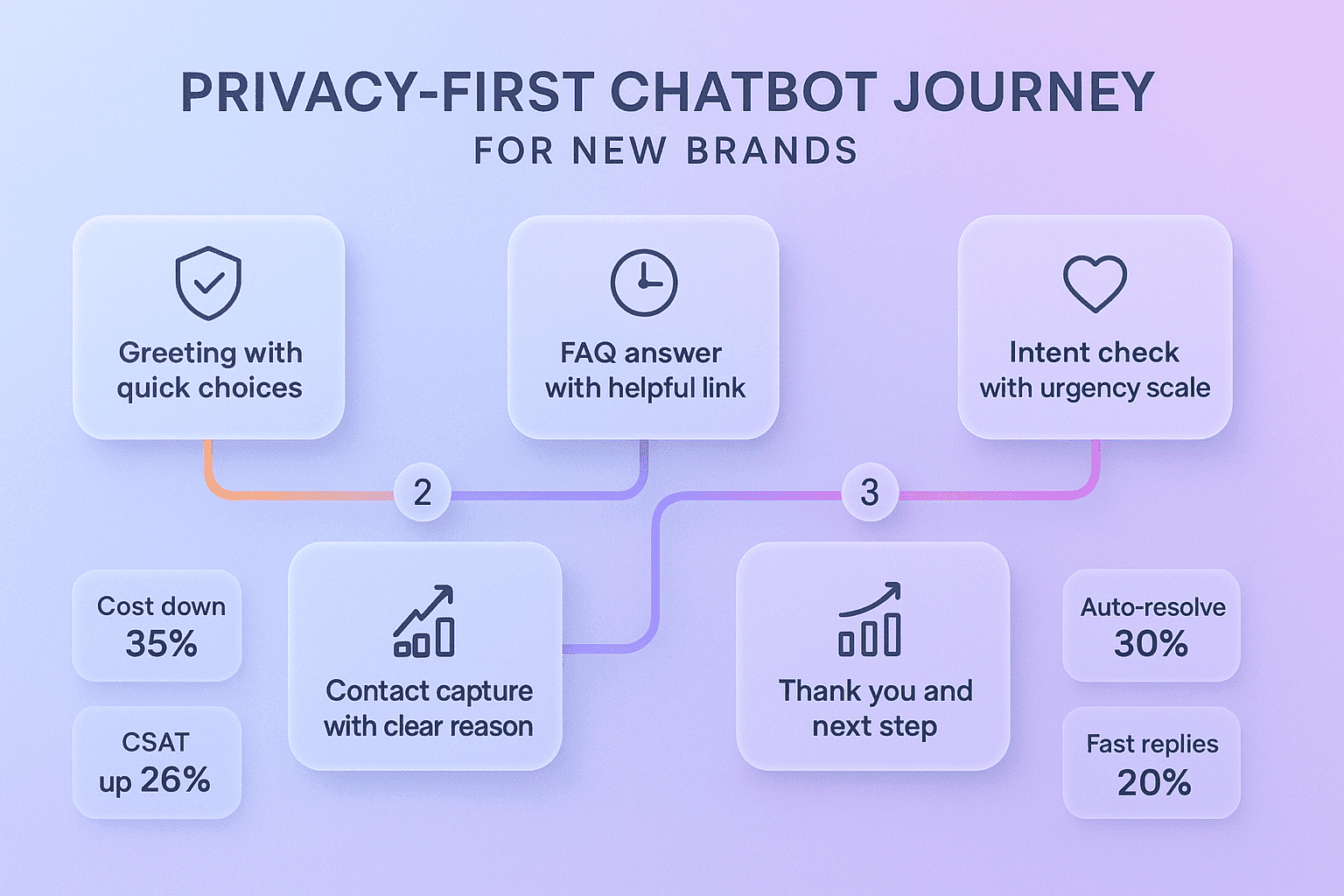
You can hold your first month spend under 100 dollars and still get strong outcomes. The key is to focus the bot on the pages and questions that matter most, keep answers short and clear, and test one extra channel after the site widget proves itself. Make sure lead capture is simple and fast so visitors do not quit mid form. Trim any flows that add steps without adding value, and avoid features that sound cool but do not help you turn visitors into qualified leads. With a little tuning, your bot can run with a very lean token budget and still deliver higher conversion rates and 24 7 support coverage for both sales and service needs (ref: Noem.ai).
- Prioritize High Intent Pages First: Put the widget on pricing, product, checkout, and contact pages first. These pages host the most urgent questions and the visitors most ready to act. Capture leads here with one or two fields to speed the path to a call or follow up. Add a clear call to action in the chat like Book a quick call so people know the next step without hunting (ref: Noem.ai).
- Keep Answers Short And Link Out: Short answers save tokens and help users move forward. Link to your product or policy page for deeper info instead of copying long text in chat. This keeps the chat snappy and accurate because it pulls from a single source of truth. It also helps your site win more time on page and builds trust with clear, public sources (ref: Noem.ai).
- Add Quick Replies For Top FAQs: Buttons like Pricing, Shipping, Returns, Book a Call save time and guide users to the right path at once. They also cut token use per session because users do not type as much. This makes your cost per resolved chat drop while your satisfaction rises. It is a small setup step that gives steady savings every single day (ref: Noem.ai).
- Review Analytics Weekly: Look at resolved chats, failed intents, and top topics. Fix one content gap per week and you will see token use per chat fall. Keep an eye on leads and time to first response too. This weekly loop helps you grow results without raising your budget and it keeps the bot aligned with your latest offers and policies all year long (ref: Noem.ai).
Why Noem.ai Fits Small-Business Websites
Noem.ai combines chatbot building, website deployment, knowledge synchronization, analytics, and multichannel functionality in one platform. This allows a small business to launch and manage a website chatbot without assembling several separate tools. Businesses can compare the available AI chatbot features and choose the capabilities that match their sales, support, or lead-generation goals.
If you have tried other tools and felt stuck behind feature gates, you will notice the change right away. With Noem.ai, the features you need to win are included from the start, which helps you move faster and avoid surprise costs. The platform also gives you clear analytics so you can tie spend to outcomes like resolved chats, captured leads, and conversion lift. This helps you keep smart habits from day one, which is key for small teams. When your stack is this clean, it is easier to stay focused on what matters most for your brand and your buyers (ref: Noem.ai).
AI Chatbot Cost Comparison: No-Code Platform vs Custom Build
| Option | Pricing Model | Setup Requirements | Ongoing Work | Best Fit |
| No-code AI chatbot platform | Monthly plan based on features and usage | No-code configuration and website installation | Content updates, testing, and analytics reviews | Small businesses that want to launch quickly |
| Custom AI chatbot build | Project cost plus hosting and maintenance | Developers, testing, infrastructure, and integrations | Engineering, monitoring, security, and model maintenance | Businesses with complex or highly specialized requirements |
| Traditional customer-service suite | Subscription with possible seat, feature, or usage charges | Platform onboarding and integration setup | Administration, user management, and workflow maintenance | Larger teams already using a broader support suite |
Compare current plans, included usage, and available integrations on the Noem.ai pricing page.
Ready To Launch In Days, Not Weeks
If you are a small brand and you want faster answers on your website, more qualified leads, and a simple budget, Noem.ai is built for you. You can go live on your site builder fast, run 24 7 without per seat fees, and keep costs tied to real use as you grow. The setup is simple, the analytics are clear, and the savings show up in the first month for most teams. That is the kind of shift that helps a small team punch above its weight in both sales and support. Want to see how much you could save this month and how many more leads you could capture by next week? Start your build on Noem.ai and measure the lift for yourself in 30 days.
Frequently Asked Questions About Low-Cost AI Chatbots
How much does an AI chatbot for a website cost?
The cost depends on the platform, monthly conversation volume, integrations, team size, and whether custom development is required. A no-code chatbot platform is generally more accessible to small businesses because it avoids a large initial development project. Always check the provider’s live pricing page for current plan limits and charges.
Can I add an AI chatbot to WordPress, Wix, Squarespace, or Shopify?
Yes. Noem.ai provides installation and integration options for popular website platforms, including WordPress, Wix, Squarespace, Shopify, and websites that support compatible embed code. Use the relevant installation guide for your website platform.
Do I need coding skills to build a website chatbot?
No. A no-code AI chatbot builder allows you to configure the chatbot, connect website content, adjust its appearance, and publish it without developing the system from scratch. Some advanced integrations may still require technical assistance.
How does an AI chatbot learn about my business?
The chatbot can use approved website pages, documents, FAQs, product information, and other knowledge sources. Review its answers before launch and continue improving the source content when analytics reveal unanswered or inaccurate questions.
How can a small business measure chatbot ROI?
Track resolved conversations, leads captured, meetings booked, average response time, conversion rate, support hours saved, and cost per resolved conversation. Compare these outcomes with the chatbot’s monthly platform and usage cost.
Should I use FAQ schema?
Yes, provided these questions and answers are visibly displayed on the page. Add valid FAQPage structured data only when the markup accurately matches the visible FAQ content.