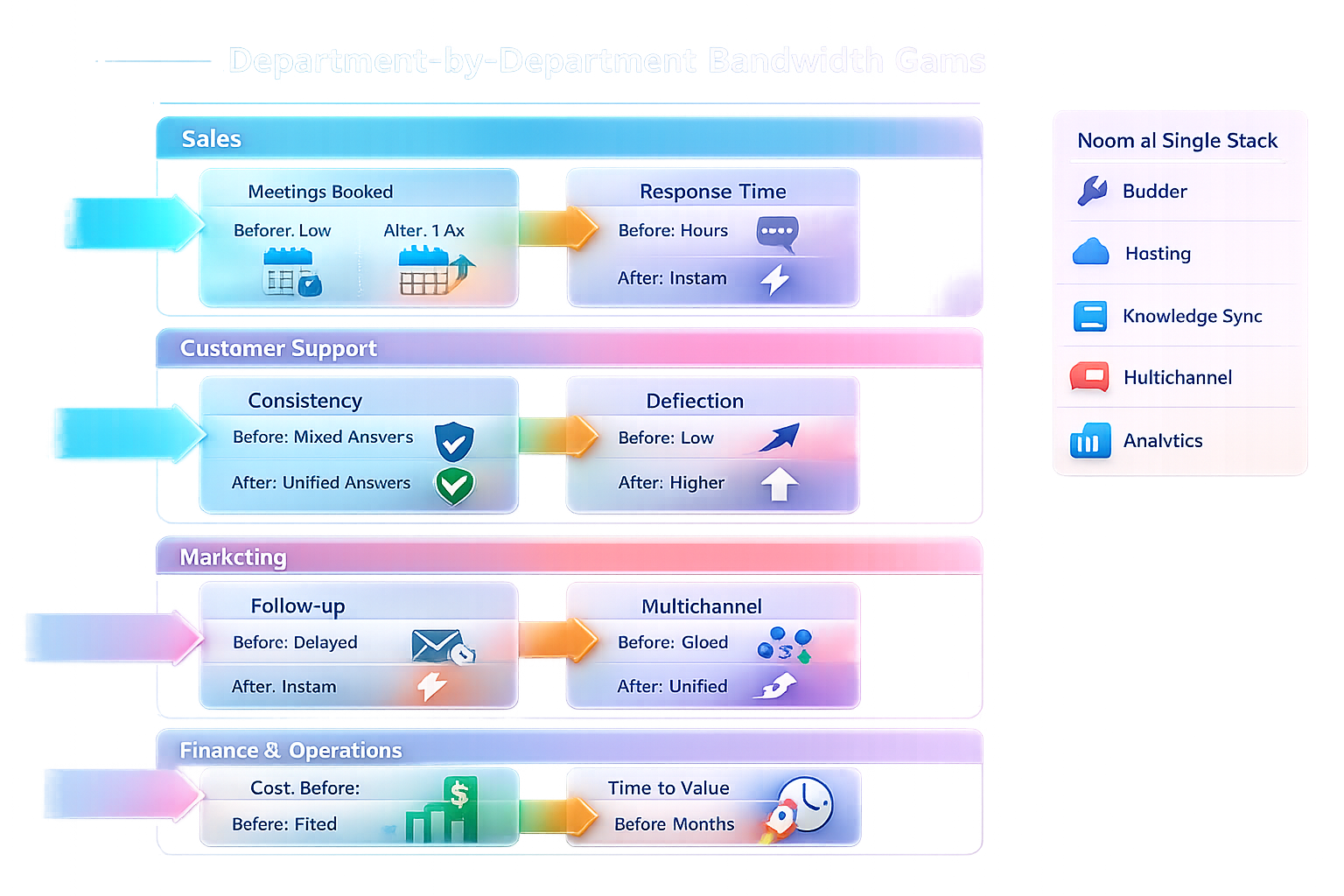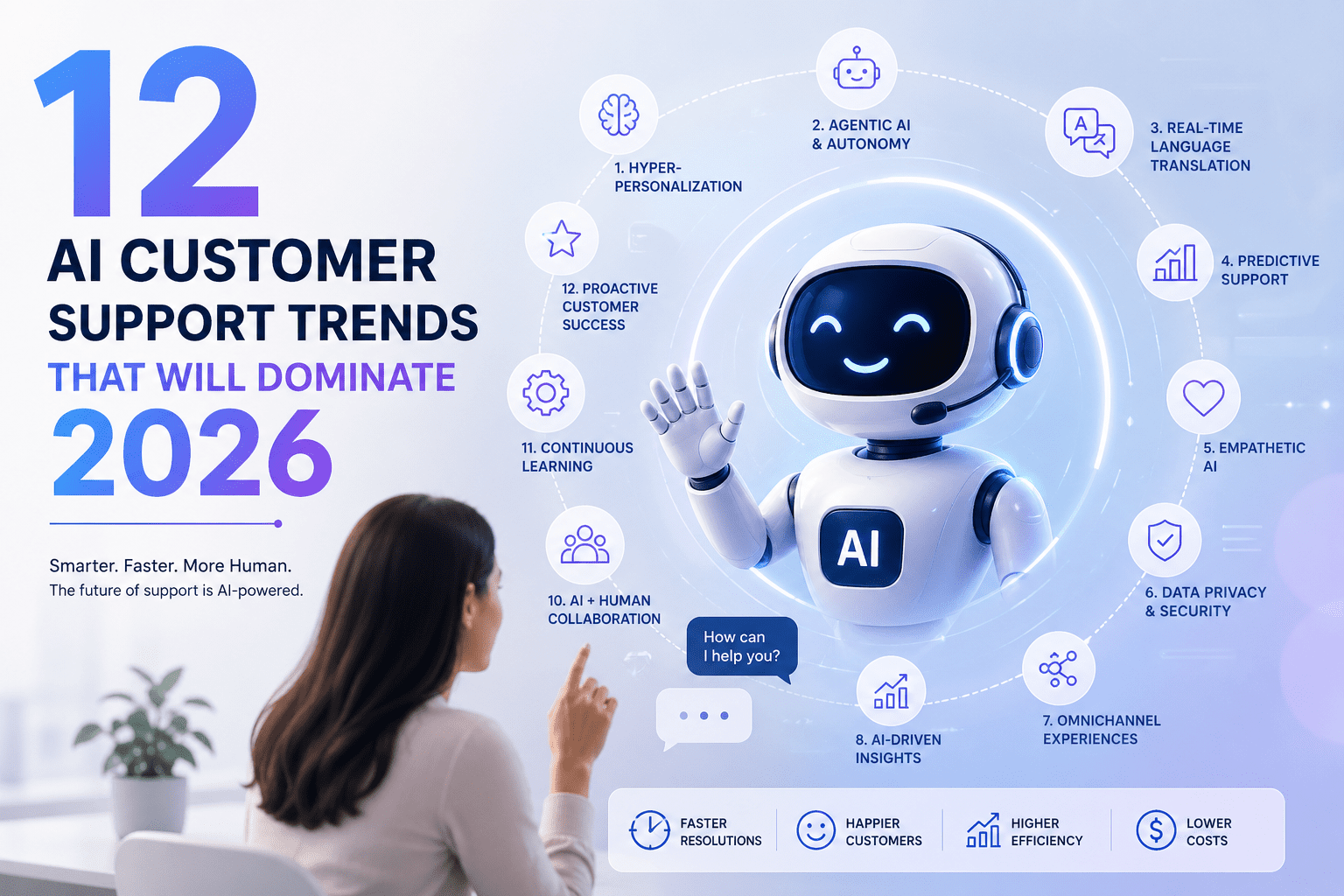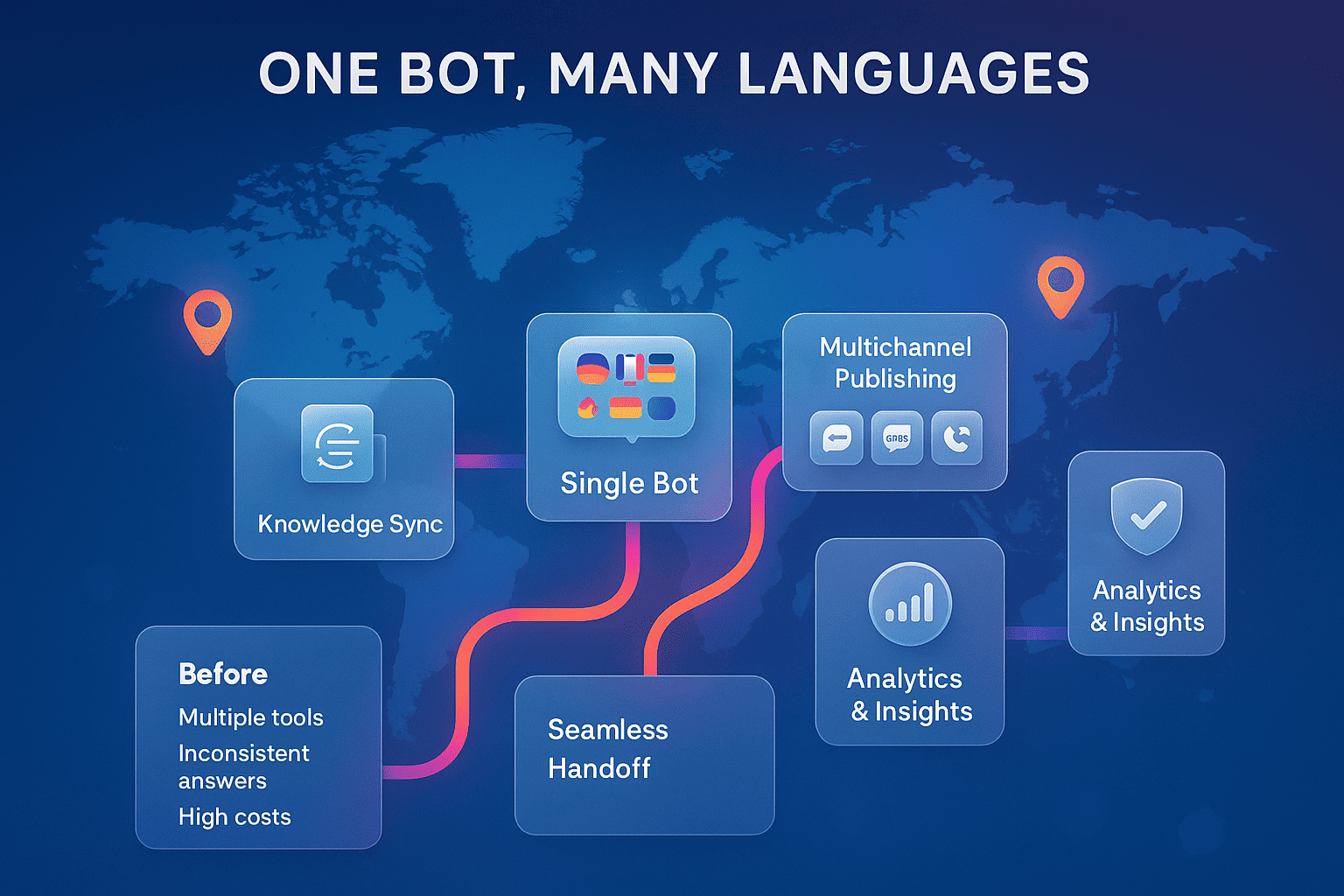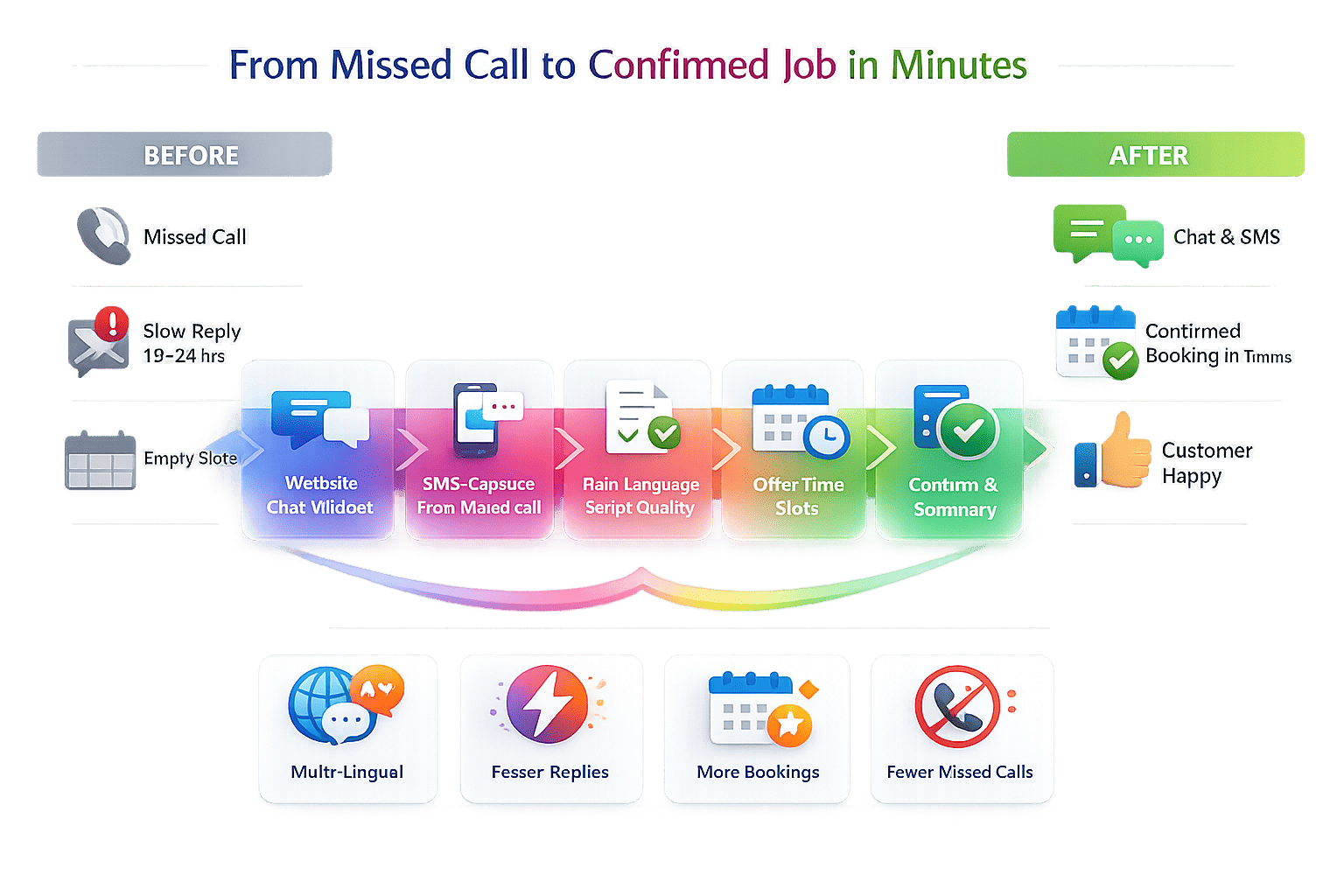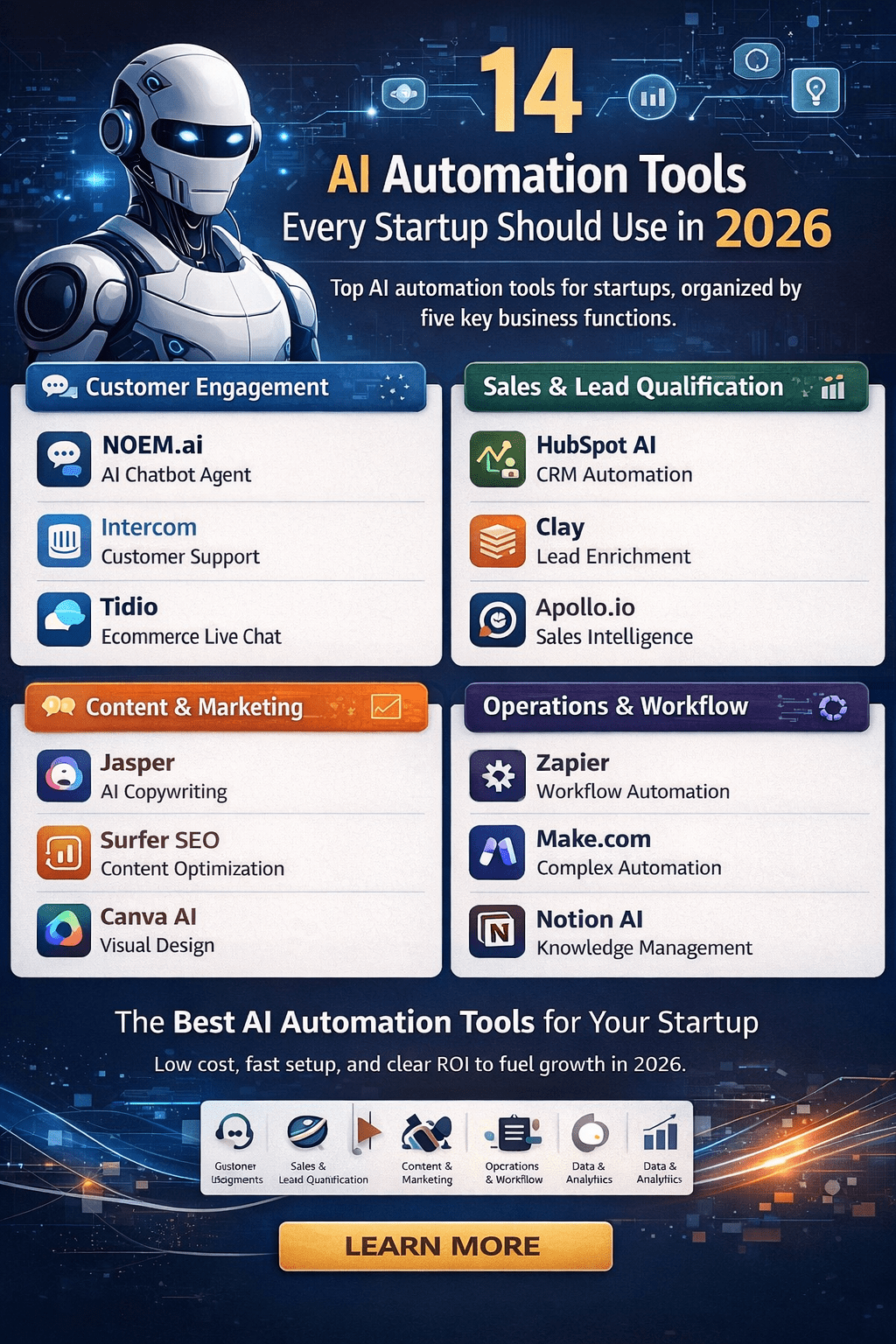
The best AI automation tools for startups in 2026 cover five business functions: customer engagement, sales and lead qualification, content and marketing, operations and workflow, and data and analytics. NOEM.ai leads the customer-facing layer by combining 24/7 AI chatbots, multi-channel deployment, and weekly sentiment analysis into one platform priced from free to $350/month. Alongside it, tools like HubSpot AI, Zapier, Clay, and Notion AI cover the rest of the stack. This guide covers the 14 best AI automation tools for startups, organized by the five business functions they serve. Each tool is selected on startup fit: low implementation cost, fast time-to-value, and clear ROI.
What Are the Best AI Automation Tools for Business in 2026?
Startups don’t lose to competitors with bigger teams. They lose to competitors with better systems.
According to McKinsey’s 2025 State of AI survey, 88 percent of organizations now use AI in at least one business function, up 10 percentage points from the year before. Gartner has confirmed that 40 percent of enterprise applications will integrate task-specific AI agents by the end of 2026, up from less than 5 percent in 2025.
The window between early movers and late adopters is closing. Startups that build their AI automation stack now will compound that advantage every quarter that follows.
How to Build Your AI Automation Stack
Before selecting tools, map your startup’s work across five layers:
- Customer engagement: how prospects and customers interact with your brand in real time
- Sales and qualification: how leads move from interest to closed deal
- Content and marketing: how you produce and distribute content at scale
- Operations and workflow: how tasks and processes move between people and tools
- Data and analytics: how raw numbers become decisions
The 14 tools in this guide map directly to those five layers. Start with the layer where your team spends the most time on repetitive work. For most startups, that is customer engagement, and resolving it first creates immediate capacity to fund every automation that follows.
Quick Reference: All 14 Tools at a Glance
| Tool | Function | Best For | Starting Price | |
| 1 | NOEM.ai | Customer Chat + Intelligence | All startups — customer engagement layer | Free |
| 2 | Intercom | Customer Support + Messaging | SaaS with in-app support needs | $74/mo+ |
| 3 | Tidio | eCommerce Live Chat | Shopify / WooCommerce brands | Free tier |
| 4 | HubSpot AI | CRM + Sales Automation | Startups with a defined sales process | Free CRM |
| 5 | Clay | Lead Enrichment | Outbound B2B sales teams | $149/mo |
| 6 | Apollo.io | Sales Intelligence + Sequencing | Founder-led sales and SDR teams | $49/mo |
| 7 | Jasper | AI Copywriting | High-volume content teams | $49/mo |
| 8 | Surfer SEO | Content SEO Optimization | Organic search acquisition | $89/mo |
| 9 | Canva AI | Visual Design | Startups without in-house designers | Free tier |
| 10 | Zapier | Workflow Automation | Connecting tools without code | Free tier |
| 11 | Make.com | Advanced Workflow Automation | Complex conditional workflows | $9/mo |
| 12 | Notion AI | Internal Knowledge Management | Growing teams with docs sprawl | $10/mo |
| 13 | Tableau + Einstein | Business Analytics | Data-rich startups | $70/mo |
| 14 | Fireflies.ai | Meeting Intelligence | Sales-heavy teams on video calls | Free tier |
Layer 1: Customer Engagement and Chat
-
NOEM.ai: AI Chatbot Agent and Customer Intelligence Platform
Best for: Startups that want one tool to handle customer support, sales conversations, and strategic insights without hiring additional staff.
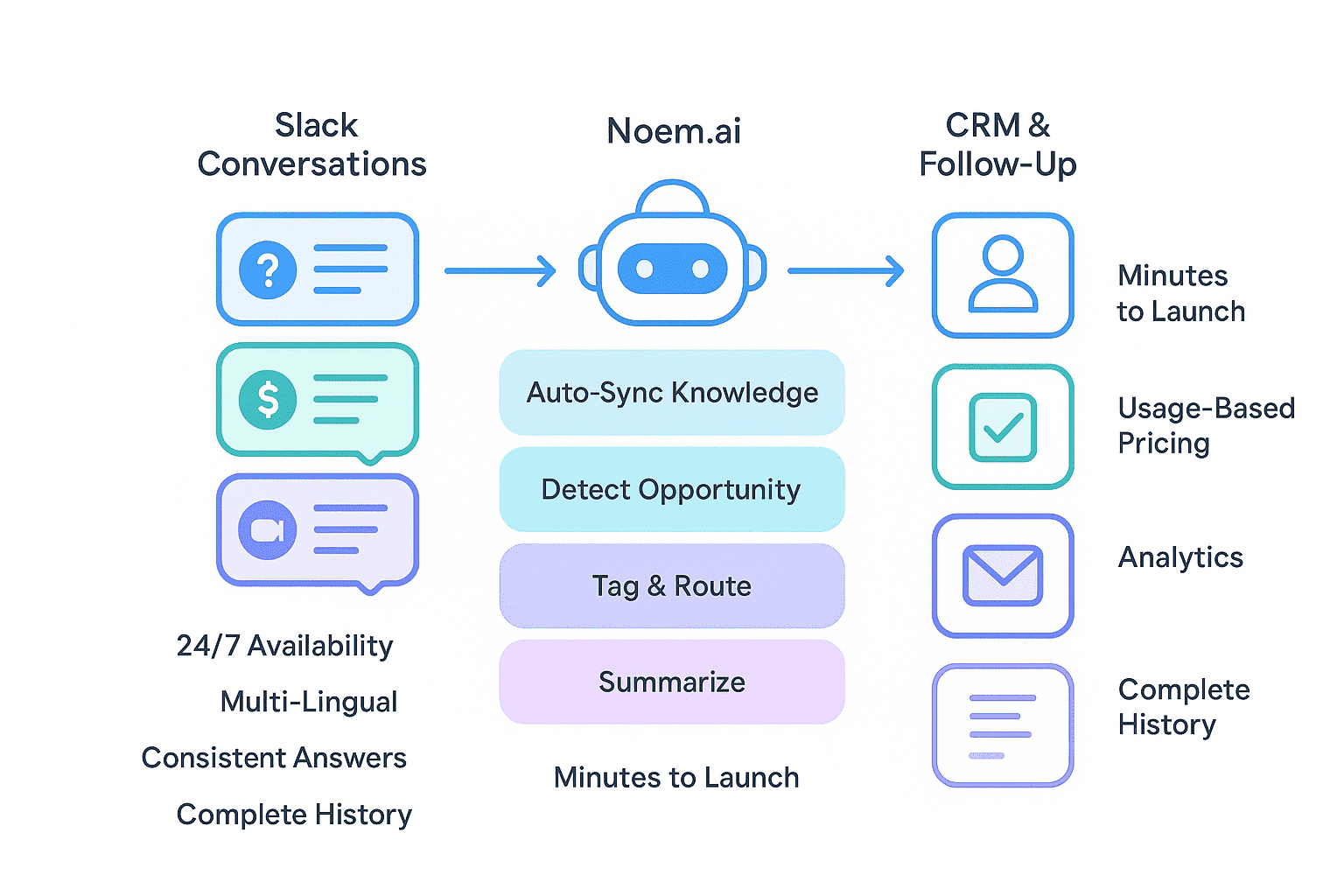
NOEM.ai builds AI chatbot agents that deploy across web, SMS, voice, WhatsApp, and Shopify in under 30 minutes. Unlike rule-based chatbots that follow rigid decision trees, NOEM.ai’s agents reason in real time and adapt based on conversation context. The platform can be set up at app.noem.ai/buildMyBot with no credit card required.
If conversion is your primary goal, see how AI chatbots increase website conversions across the full visitor journey, from first click to confirmed sale.
What separates NOEM.ai from standard customer service tools is the combination of front-end chat and back-end intelligence. Every conversation the chatbot handles is analyzed for sentiment, patterns, and conversion signals. Those insights are compiled into a weekly action report sent directly to the business owner, a feature the platform calls Growth Strategy Reporting.
The results from real clients are specific. Ryan Davis, founder of Bambw App, described NOEM.ai as saving him significant time and money while adding real value to his users and significantly reducing customer service costs. David Ashley, CFO of Interactive Life Force, noted that replicating NOEM.ai’s 24/7 multilingual support with human agents would require multiple call centers with at least 50 agents at premium salary brackets.
Chris Burres, co-founder of supplement brand MyVitalC, set the platform up on a Sunday. By Monday, the chatbot had already handled a lengthy customer conversation that would otherwise have gone entirely into the support ticketing queue.
For a closer look at what scaling support without hiring actually looks like in practice, read how 24/7 AI support scales without additional headcount.
Pricing ranges from free (no credit card required) to $350/month for all features, with no per-seat fees. Integrations include Zapier, Make.com, Shopify, Zendesk, WhatsApp, and Google Sheets.
→ Build your chatbot free at noem.ai
-
Intercom: Conversational Support for SaaS
Best for: SaaS startups with in-app support needs and an existing support team.
Intercom combines live chat, a help center, and an AI agent, Fin, that answers customer questions directly from documentation. It works best when a startup has existing content to train on and staff to handle escalations. The main limitation for early-stage teams is cost: entry pricing starts at $74/month per seat, with AI features gated at higher tiers. Compared to NOEM.ai’s flat $99/month for all features, Intercom’s pricing scales quickly as headcount grows.
-
Tidio: Live Chat for eCommerce
Best for: Shopify and WooCommerce brands with moderate chat volumes.
Tidio offers a live chat widget with an AI layer, Lyro, to handle basic customer queries. It integrates cleanly with Shopify and WooCommerce and provides a fast deployment path for product-focused brands. It does not offer the multi-channel depth or sentiment reporting available in NOEM.ai, but it is a straightforward entry point for brands testing AI chat for the first time.
Layer 2: Sales and Lead Qualification
For founders who want to understand the handoff between chatbot conversations and the sales pipeline, “Turning Every Click into a Qualified Lead” walks through exactly how that qualification loop works.
-
HubSpot AI: CRM with Embedded Sales Automation
Best for: Startups with a defined sales process that need a CRM and AI sales tools in one place.
HubSpot’s AI features include predictive lead scoring, AI-generated email sequences, deal stage automation, and call transcription with follow-up suggestions. For startups already using HubSpot, enabling the AI layer is a configuration change, not a new implementation. NOEM.ai integrates with HubSpot via Zapier, allowing chatbot-captured leads to flow directly into HubSpot sequences. The two tools cover the full journey: from awareness to conversation via NOEM.ai, and from conversation to close via HubSpot.
-
Clay: AI-Powered Lead Enrichment
Best for: B2B startups running outbound sales campaigns.
Clay pulls data from over 50 sources to automatically build lead profiles, then uses AI to write personalized outreach for each prospect. It replaces the manual research step that typically consumes the majority of a sales rep’s prospecting time. For startups doing outbound, it is one of the most targeted and best AI sales automation tools available.
-
Apollo.io: Sales Intelligence and Sequence Automation
Best for: Founder-led sales teams that need a combined prospecting database and outreach platform.
Apollo.io gives sales teams access to a database of over 275 million verified contacts, paired with AI-assisted email sequencing, call transcription, and deal tracking. Its AI-generated sequence suggestions adapt based on engagement signals. For early-stage teams running outbound without a large SDR function, Apollo provides coverage at a price point that scales with headcount.
Layer 3: Content and Marketing Automation
-
Jasper: AI Writing for Marketing Teams
Best for: Content teams producing high volumes of blog posts, ad copy, and email campaigns.
Jasper trains on brand voice documents and generates on-brand content across formats, including blog intros, product descriptions, and landing page copy. It does not replace editorial judgment. It compresses the time required to produce a first draft from hours to minutes.
-
Surfer SEO: AI Content Optimization
Best for: Startups investing in organic search as a primary acquisition channel.
Surfer SEO analyzes the top-ranking pages for any keyword and provides a real-time content score based on semantic relevance, heading structure, and keyword usage. For startups producing pillar content like this article, Surfer SEO provides the data layer that turns a well-written piece into one that ranks.
-
Canva AI: Visual Content at Scale
Best for: Startups without in-house design resources.
Canva’s AI features include background removal, image generation, and Brand Kit enforcement across all designs. For social media, ads, and pitch decks, Canva AI removes the design bottleneck without requiring a designer. It integrates with scheduling tools to push content directly to social channels.
Layer 4: Operations and Workflow Automation
-
Zapier: No-Code Workflow Automation
Best for: Any startup that needs to connect tools without developer resources.
Zapier connects over 6,000 apps through automated triggers and actions. Its AI layer allows users to describe a workflow in plain language and have it built automatically. For startups running NOEM.ai, Zapier is the connective tissue that routes chatbot-captured data to HubSpot, Google Sheets, Slack, and Asana. The integration is native and requires no code.
-
Make.com: Advanced Automation for Complex Workflows
Best for: Startups with multi-step, conditional workflows that exceed Zapier’s linear model.
Make.com uses a visual canvas with branching logic, error handling, and data transformation between steps. For workflows that need to split based on deal size, lead score, or conversation outcome, Make.com handles the conditional logic that simpler automation tools cannot.
-
Notion AI: Internal Knowledge Management
Best for: Growing teams with documentation scattered across Slack threads and email chains.
Notion AI summarizes meeting notes, drafts SOPs from bullet points, and answers questions from existing documents. It converts institutional knowledge fragments into searchable, structured documentation without requiring anyone to become a full-time knowledge manager.
Layer 5: Data and Analytics
-
Tableau with Einstein AI: Visual Analytics
Best for: Data-rich startups that need automated insight generation without a dedicated analyst.
Tableau’s Einstein Discovery layer identifies statistical patterns in business data and surfaces plain-language explanations of what is driving a metric. For a startup tracking cohort retention or unit economics, it flags which variables have the highest predictive impact on a given outcome without requiring a custom-built query.
-
Fireflies.ai: Meeting Intelligence
Best for: Sales-heavy teams spending significant time on video calls with customers and prospects.
Fireflies.ai transcribes meetings in real time, identifies action items, and sends a post-call summary to every attendee. For founder-led sales calls, it captures every commitment and follow-up. Integrated with HubSpot or Salesforce, it automatically logs call summaries to the relevant deal record.
Frequently Asked Questions
What are the best AI automation tools for a startup with no technical team?
NOEM.ai, Zapier, Canva AI, and Notion AI. All four are no-code tools built for non-technical users. NOEM.ai deploys in under 30 minutes. Zapier connects existing tools through a point-and-click interface. Canva AI handles design without Figma skills. Notion AI organizes documentation through plain-language prompts.
What is the difference between an AI chatbot and an AI automation tool?
An AI chatbot is one type of AI automation tool, one focused on conversation. AI automation tools as a category include anything that replaces repetitive human tasks with software: email sequencing, data enrichment, content generation, workflow routing, and analytics summarization. The distinction matters because startups often underinvest in non-chat automation layers that generate equal or greater time savings.
What are the best AI sales automation tools for a small team?
Clay for lead enrichment, Apollo.io for prospecting and sequencing, HubSpot AI for pipeline management, and NOEM.ai for front-end lead capture via chat. The most important decision is which tool owns the lead before it enters the CRM. For startups with a web or Shopify presence, NOEM.ai qualifies visitors 24/7 before any human sales motion begins.
The Bottom Line
The best AI automation tools for startups in 2026 are not the most sophisticated ones. They are the ones your team actually deploys, integrates with what you already use, and delivers measurable ROI within 30 days.
Start with the customer engagement layer. It is the fastest to deploy, the most immediately measurable, and the richest data source for every automation decision that follows.
NOEM.ai is free to start, takes less than 30 minutes to live, and connects to your existing stack via Zapier and Make.com. Your first chatbot can be running today.
→ Build your chatbot free at noem.ai — no credit card required