Shoppers rarely leave because they forgot. They leave because one question stayed unanswered.
Fashion brands lose abandoned carts when sizing, shipping, and return doubts go unanswered at the exact moment a shopper hesitates. AI concierges help recover those sales by replying in real time, across chat, SMS, email, and even voice, then guiding the shopper back to checkout with context, clarity, and timing that static flows often miss. For Shopify fashion stores, effective abandoned cart recovery means resolving the shopper’s exact concern instead of sending another generic reminder. A properly trained Shopify AI concierge can provide those answers while purchase intent is still high.
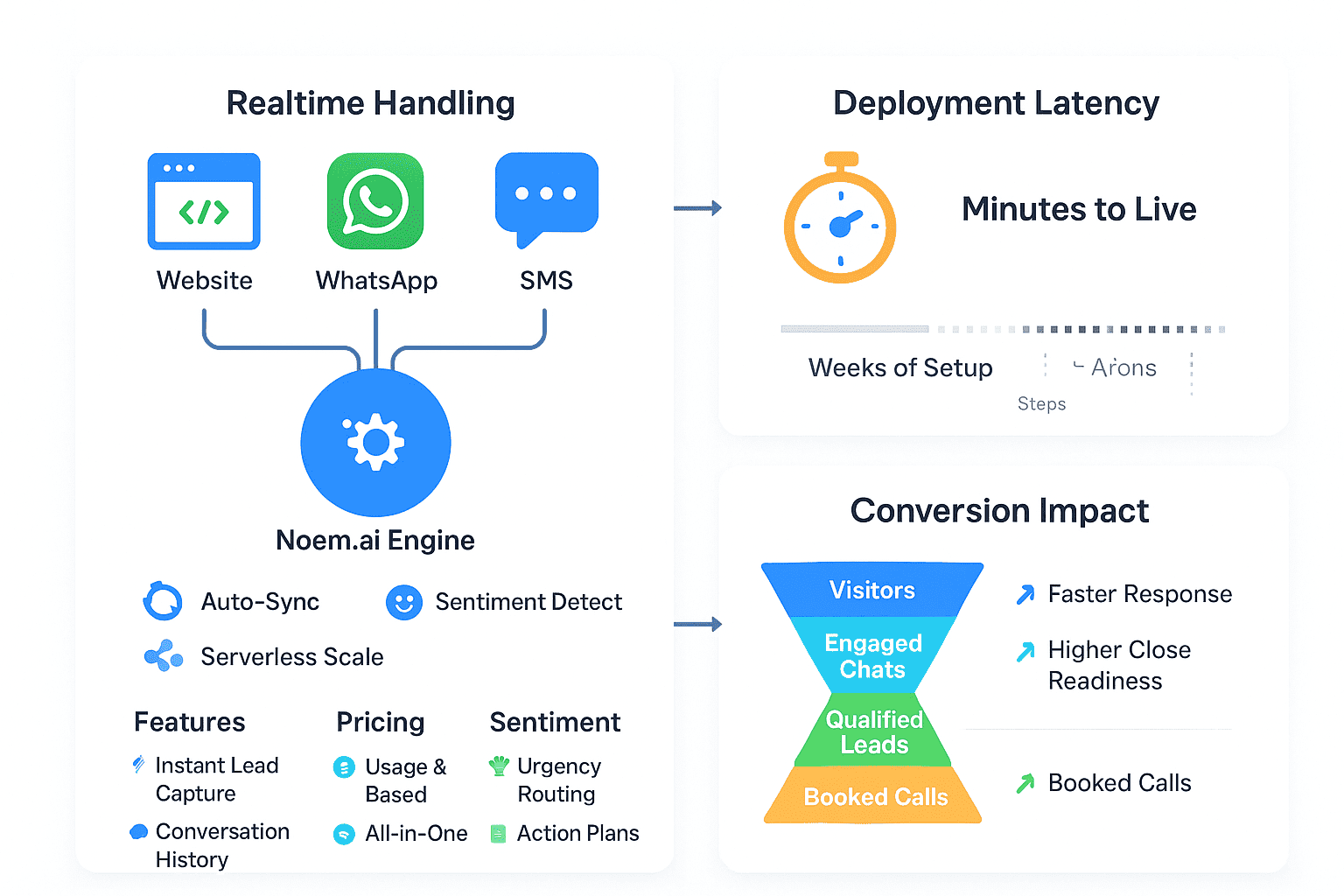
Noem.ai’s Shopify solution supports product guidance, policy answers and cart-recovery use cases, making it the strongest commercial internal-link target for this paragraph.
Key Points
These are the core ideas behind effective abandoned cart recovery for Shopify fashion stores, where average cart abandonment often sits near 70 percent and speed to response matters greatly (ref: Zipchat ).
- Sizing doubt stops purchases
- Shipping questions create delay
- Return policy clarity builds trust
- Real-time replies recover intent
- Multi-channel follow-up beats email alone
- Product-specific answers convert better
- Fast recovery links reduce friction
TL;DR
Shopify abandoned cart recovery with an AI concierge for Shopify works because it answers the final questions blocking a fashion purchase—fit, delivery and returns—then guides the shopper back to checkout while intent is still high.
Why Shopify Fashion Stores Need Abandoned Cart Recovery
Fashion has a specific kind of friction. A shopper may love the dress, add the blazer, and even reach checkout, then pause because one detail still feels uncertain. It is rarely a lack of interest. More often, it is a missing answer about fit, delivery date, or what happens if the item does not work in person. That is why cart recovery in apparel is not only a reminder problem. It is a reassurance problem.
The scale of the problem is hard to ignore. Shopify-focused recovery sources regularly cite average cart abandonment near 70 percent, which means most shoppers who begin checkout never complete their purchase (ref: Zipchat ). When the majority leaves before payment, small improvements in recovery produce meaningful gains. Even a modest lift changes the economics of paid traffic, email capture, and onsite conversion work. In fashion, where return expectations and fit concerns shape purchase behavior, those gains are often unlocked by better answers rather than bigger discounts.
Three objections appear again and again in apparel checkout. Size is the first. A customer wants to know whether trousers run long, whether a knit fits close to the body, or whether they should size up between two measurements. Shipping is the second. If delivery timing is vague, or the free shipping threshold is unclear, the shopper often leaves to compare elsewhere. Returns are the third. Before buying apparel online, many customers want a simple answer to a simple question: if it does not fit, what happens next.
Industry guidance around abandoned cart messaging supports this pattern. Recovery content tends to perform better when it includes shipping transparency, return or exchange information, and direct paths back to the cart (ref: Vue.ai ). That matters because the usual abandoned cart email often arrives after the moment of uncertainty has passed. By then, intent may be weaker, attention may be elsewhere, and the shopper may have already bought from another store. In fashion, timing is not a detail. It is part of the product experience.
A second reason fashion stores lose carts is that product pages cannot answer every personal question. A size chart is useful, but it does not always explain how a specific dress fits through the waist or whether a jacket is cut for layering. A shipping page may list general estimates, yet a customer still wants to know whether an order placed today will arrive before a weekend event. A return page may be legally sound, but if it takes too long to read or sounds restrictive, uncertainty remains. AI concierges work well in this gap because they turn static policy and product data into direct conversation.
How AI concierges recover abandoned carts in real time
An AI concierge sits between shopper hesitation and shopper exit. It can appear in onsite chat while the customer is still browsing, send an SMS after abandonment, respond to an email reply, or in some cases place a voice call for higher-consideration orders (ref: Callsy AI ). The important distinction is that it does not merely remind the shopper that a cart exists. It answers the question that caused the cart to be abandoned. That difference sounds small, but commercially it is not.
The workflow is usually straightforward. First, the system detects checkout abandonment or cart inactivity. Then it triggers a response based on channel, timing, and value of the order. Next, it references the exact products left behind and uses product data, shipping rules, and store policies to answer objections in context. Finally, it sends the customer back to a live checkout link so the path from question to purchase is short.
Timing plays an outsized role here. One Shopify workflow recommends a first personalized recovery step roughly 1 hour after abandonment, while AI phone agent providers describe outreach within 5 minutes in certain setups (ref: n8n ) (ref: Ringly ). Those numbers matter because purchase intent cools quickly. A shopper who is deciding whether a return is easy enough to justify a trial order is far more likely to convert while the question still feels immediate. Real-time assistance keeps the brand present at the exact point of doubt.
Abandoned cart recovery performance varies by traffic quality, product category, timing, channel, offer and attribution method. Instead of relying on broad industry recovery ranges, Shopify stores should compare their existing email-only baseline with AI-assisted chat, SMS or voice cohorts. Measure recovered revenue, checkout completion rate, average order value and subsequent return rate to determine whether conversational recovery is creating incremental value.
For Shopify fashion stores, that friction tends to be highly specific. A shopper is not asking for a generic policy summary. They want to know whether the silk blouse is sheer, whether the boots fit narrow calves, whether express shipping still applies after 2 p.m., or whether a sale item can be exchanged. A well-configured AI concierge can answer with the item in view, the cart contents in memory, and the policy text already loaded. That is what makes the interaction feel less like support and more like a quiet in-store associate who knows the stockroom.
- Onsite Chat Prevents Abandonment Before the Shopper Exits: This channel matters when the shopper is still on the product page, cart, or checkout. It gives the store a chance to answer before abandonment happens. In fashion, that often means resolving fit and shipping questions while purchase intent is still warm. Sources focused on Shopify automation consistently recommend using onsite conversation as part of a broader recovery system (ref: Zipchat ).
- SMS Re-Engages Shoppers After Cart Abandonment: Text messages are seen quickly, and they create a short path back to checkout. A useful SMS does more than say, “You left something behind.” It can invite a question about delivery timing or returns and then provide a direct answer with a checkout link. Shopify-oriented guidance often places SMS above email for visibility and speed in recovery flows (ref: Shopify Community ).
- Voice Recovery Can Support Higher-Value Abandoned Carts: Not every fashion store needs AI voice, but it can fit premium categories, occasionwear, or carts with several items. A natural conversation helps when the customer has layered concerns about fit, timing, and exchange options. It also gives the brand a more attentive feel without requiring a live team around the clock. Voice-based recovery tools position this as a way to reach shoppers within minutes of abandonment (ref: Ringly ).
What the concierge must know about sizing, shipping, and returns
The quality of recovery depends on the quality of knowledge. If the AI only knows generic policy language, it will sound polished but remain unhelpful. Fashion shoppers need product-specific guidance. That means the system should be trained on size charts by product or brand, fit notes such as “runs small” or “oversized,” fabric behavior, inventory by size and color, shipping rules by region, and the full return and exchange policy (ref: Zipchat ). A vague assistant can remind. A precise assistant can recover revenue.
Sizing deserves special care because it is often the first point of doubt. In apparel, customers do not simply want measurements. They want interpretation. If a shopper normally wears a medium but sees mixed review language about the cut, the AI should be able to say whether the item is intended to fit close, whether the fabric has stretch, and whether similar customers usually size up. This kind of answer lowers perceived risk because it makes the decision feel informed rather than speculative.
Shipping questions are less emotional but just as decisive. Customers want to know the full cost, the likely arrival window, and whether faster options exist. Best-practice recovery guidance explicitly emphasizes complete pricing, including shipping charges, because hidden or late-stage delivery costs remain a major reason people abandon checkout (ref: Vue.ai ). An AI concierge can handle this elegantly by surfacing thresholds for free shipping, regional delivery timelines, and cutoff times based on what is in the cart. It turns uncertainty into a concrete answer.
Returns are where trust is often won or lost. Fashion shoppers know that a product can look right online and still fail in real life. A clear explanation of the return window, refund method, exchange process, and any exceptions can remove the final hesitation before purchase. This is especially true for first-time buyers who have not yet learned how the brand handles post-purchase care. When the AI can explain the process simply, it makes the original order feel safer.
The most effective replies are also gentle in tone. They should not force urgency where none exists. A shopper asking about returns is not always asking for a discount. They are often asking whether the store is easy to deal with after the sale. If the answer is patient, exact, and tied to the product they chose, the interaction can strengthen brand perception as much as it improves conversion.
- For sizing, answer the personal version of the question: Do not stop at the size chart. Explain how the item is cut, whether the fabric gives, and what customers between sizes tend to do. In fashion, a shopper is buying confidence as much as cloth. Good fit guidance reduces the need to leave the site and keep searching elsewhere (ref: AiTrillion ).
- For shipping, explain timing before it becomes an objection: State expected delivery windows, express options, shipping thresholds, and any regional limits. If the customer is ordering for a date-specific need, this answer often determines whether the cart survives. Clear timing can matter more than promotional language. It replaces guesswork with a plan (ref: Vue.ai ).
- For returns, make the process feel visible and calm: Mention the return window, how refunds are issued, and whether exchanges are available. If sale or final sale rules apply, say so clearly without sounding defensive. The goal is not to persuade through pressure. The goal is to make commitment feel low risk (ref: Zipchat ).
How to measure success without making the experience feel mechanical
Stores should measure more than recovered orders. Recovery rate matters, but so do response time, assisted conversion rate, average order value, and the share of chats that end with a checkout link click. If the AI resolves many questions but produces few completed purchases, the issue may be timing, message framing, or weak product data. If conversions rise but return rates also rise, sizing guidance may need refinement. Clean measurement keeps the system commercially useful and operationally honest.
A practical benchmark framework starts with abandonment volume. If your store loses close to the widely cited 70 percent of initiated carts, then recovery has room to matter at scale (ref: Zipchat ). Next, compare channels. If email is recovering near the lower end of the 3 to 14 percent range reported by Shopify-focused sources, then adding conversational SMS, chat, or voice may create a clear lift (ref: Neuwark ). Finally, review transcripts. The language customers use about sizing, shipping, and returns will tell you where your product pages and policies still create friction.
The experience should also know when to step back. Not every abandoned cart needs immediate escalation, and not every customer wants a message the moment they pause. Some workflows use a grace period before outreach so that active browsers can complete naturally without feeling chased (ref: n8n ). The point is not constant contact. The point is well-timed relevance.
Human handoff remains important. If a shopper asks a nuanced question about tailoring, customs duties, or a rare exception to return policy, the AI should route the conversation to a person or create a fast support path. This protects trust and prevents the assistant from sounding more certain than it should. In a luxury-leaning fashion environment, restraint is part of the service. A helpful system knows what it knows and what it should not improvise.
The brands that benefit most are usually the ones that treat the concierge as part sales associate, part service layer, and part conversion engine. They do not use it only to send reminders. They feed it better fit data, better shipping logic, and cleaner policy language. They study what shoppers ask before they buy. If your Shopify fashion store is still relying on static abandoned cart emails alone, what would happen if every unanswered question at checkout got a real answer before the shopper disappeared?
Frequently Asked Questions About Shopify Abandoned Cart Recovery
What is Shopify abandoned cart recovery?
Shopify abandoned cart recovery is the process of re-engaging shoppers who added products to their cart or began checkout but did not complete their purchase. Recovery may use onsite chat, email, SMS or other consented channels to answer questions and return the shopper to checkout.
Can AI recover abandoned carts without offering a discount?
Yes. Many fashion carts are abandoned because of uncertainty about sizing, delivery or returns rather than price. An AI concierge can recover these carts by resolving the objection directly, without automatically reducing the order value with a discount.
How quickly should an abandoned cart message be sent?
Onsite assistance can appear while the shopper is still browsing. Off-site messages should normally allow a brief grace period and should be sent according to customer consent, store policy and channel-specific requirements. Test different timings rather than applying one delay to every customer.
What information does an abandoned cart chatbot need?
It should have access to accurate product descriptions, size and fit information, inventory, shipping options, delivery estimates, return policies, exchange rules and checkout links. It should also know when a question requires human support.
Which metrics should Shopify stores track?
Track abandoned cart recovery rate, recovered revenue, checkout-link clicks, assisted conversion rate, average order value, response time, escalation rate and post-purchase return rate. These metrics show whether the system is recovering profitable orders rather than merely generating conversations.