When a chatbot gets a question it cannot fully solve, the next move matters a lot. A safe bot-to-human handoff keeps the conversation going, protects your brand, and makes the customer feel heard and helped. If the handoff is clumsy, people get frustrated, repeat the same details, and sometimes leave without answers. Good handoffs protect your agents too, because they pass along the context so nobody starts from zero or scrambles to catch up. Done right, this approach delivers instant answers for common questions, reduces workload for your team, provides consistent guidance across sales and support, and lowers operating costs compared to hiring new staff for every spike in demand (ref: TechTarget).
A strong handoff design is not just a feature. It is a system that blends clear rules, smart detection, and respectful language during the transition. Many businesses use chatbots to handle routine questions and tasks so agents can focus on harder work. With the right setup, support expenses can drop by up to 30 percent while keeping the experience smooth for customers. These savings are real, and they show up fast when you combine automation with thoughtful escalation paths that do not overload your team (ref: GetWeave).
Platforms that pair clear escalation rules with sentiment and confidence checks help teams scale without losing quality. For example, sentiment analysis can detect frustration or urgency and route the conversation to a human before emotions boil over. When the system captures the chat history and customer details for the agent, the person on the other end can jump in with the right tone and context. This means less backtracking, fewer repeats, and faster resolutions that boost trust and loyalty (ref: Noem.ai Blog).
If your goal is smooth growth, safe handoffs are a must-have, not a nice-to-have. They keep your customers moving forward while keeping your team calm and effective. When you combine handoff design with a platform focused on chatbot speed, hosting, knowledge sync, and analytics, you raise the floor and the ceiling for performance. That is where a solution built to streamline both setup and scale can offer the most value for your business (ref: Noem.ai Help Center).
The Building Blocks Of A Safe Handoff System
A safe bot-to-human handoff starts with guardrails. Guardrails make sure the bot knows what it should and should not do, and when to call for help. Setting these rules early gives your team confidence and gives customers clarity. It also prevents slow responses or risky behavior by forcing quick escalation when the bot does not have a safe or accurate answer. With the right setup, teams enjoy instant responses to common questions while avoiding the trap of having the bot guess about sensitive or complex topics it should not touch (ref: TechTarget).
- Define Bot Identity And Boundaries Early: A clear bot identity sets tone, trust, and scope from the first hello. List what the bot can do, such as answering FAQs, and what it cannot do, such as handling billing disputes or secure requests. Write simple safety rules, like never asking for passwords or full credit card numbers. Put these instructions in your platform so the bot follows them on every channel without drift (ref: Noem.ai Help Center).
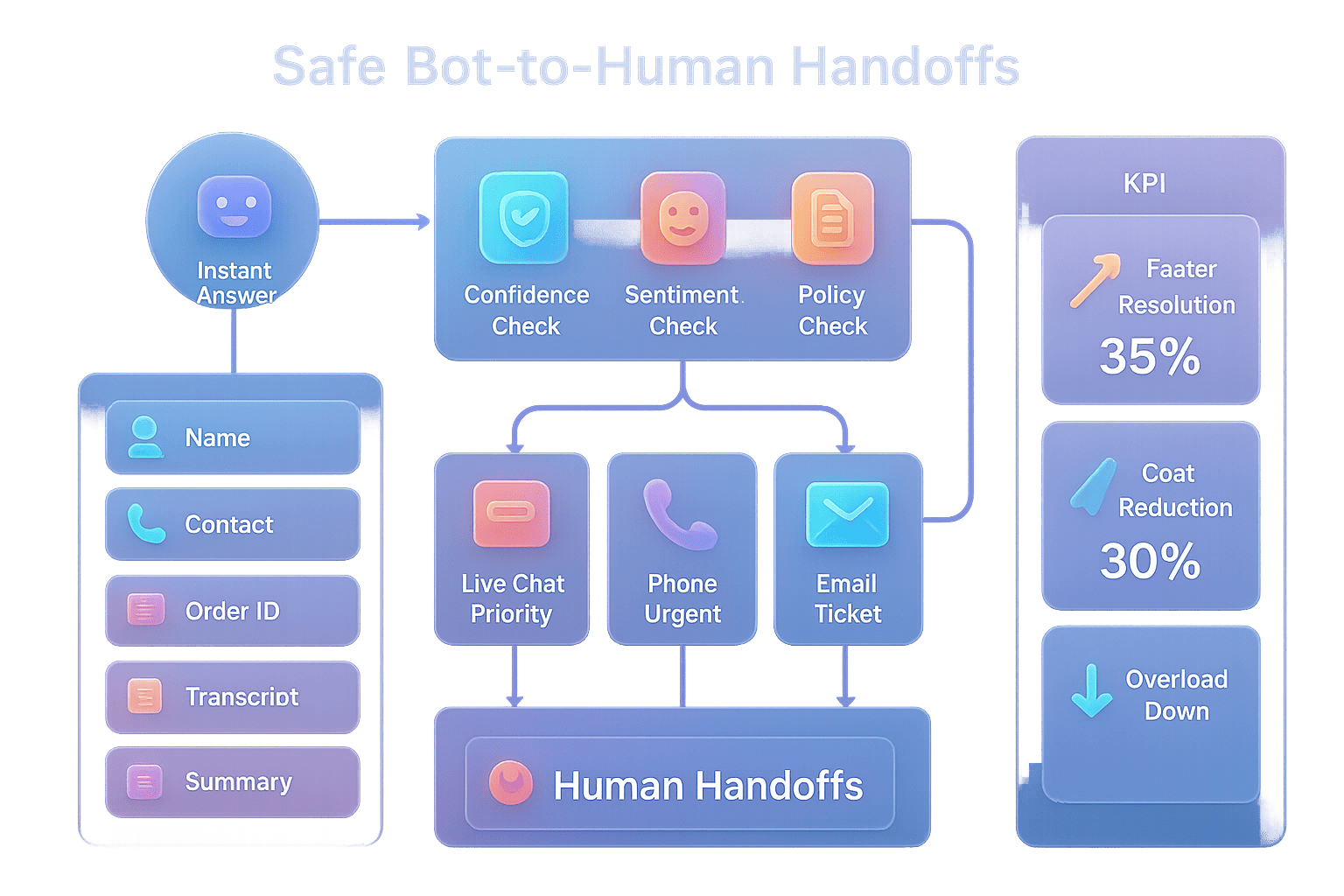
- Implement Proactive Escalation Triggers: Do not wait for the customer to beg for a human. Use signals like low confidence, negative sentiment, repeat questions, or long back and forth to trigger a handoff. Create tiers so urgent or risky cases route to live chat or phone, while routine but complex cases route to email or a ticket queue. This keeps wait times short and agents focused on the right work at the right time (ref: Noem.ai Blog; ref: Exotel).
- Ensure Context Transfer Without Repetition: People hate repeating themselves, so make context transfer a must. Pass the customer name, contact details, order or account ID, and a short summary with the full chat history. Include sentiment notes so the agent can match the tone and be extra helpful if the user is upset. This saves minutes on every handoff and avoids avoidable friction that hurts customer trust (ref: TechTarget).
- Humanize The Transition With Clear Language: Tell the user what is happening and what to expect. Name the channel, the wait time, and the person or team taking over, like Alex from Support. This small touch brings warmth to a digital flow and lowers anxiety during a stressful moment. Clear, kind handoff copy leads to higher satisfaction and fewer abandoned conversations (ref: GetWeave).
- Leverage Sentiment And Compliance Checks: Use sentiment to spot urgency and route quickly to the right agent or tier. Run compliance checks so the bot avoids collecting sensitive data and logs decisions for review. These checks protect your business while speeding up the path to a human when needed. A setup like this builds trust and keeps every step consistent across teams and channels (ref: Noem.ai Blog).
These building blocks hold the handoff together under pressure. When a rush of chats hit at once, your system will keep moving customers forward instead of piling work on agents. Your team gets fewer fires and more focused tasks. Your customers feel guided, not bounced around. And your costs stay stable because automation filters the routine while escalation routes the rest to the right human at the right time (ref: GetWeave).
How To Set Up Handoffs In Noem.ai Without Breaking A Sweat
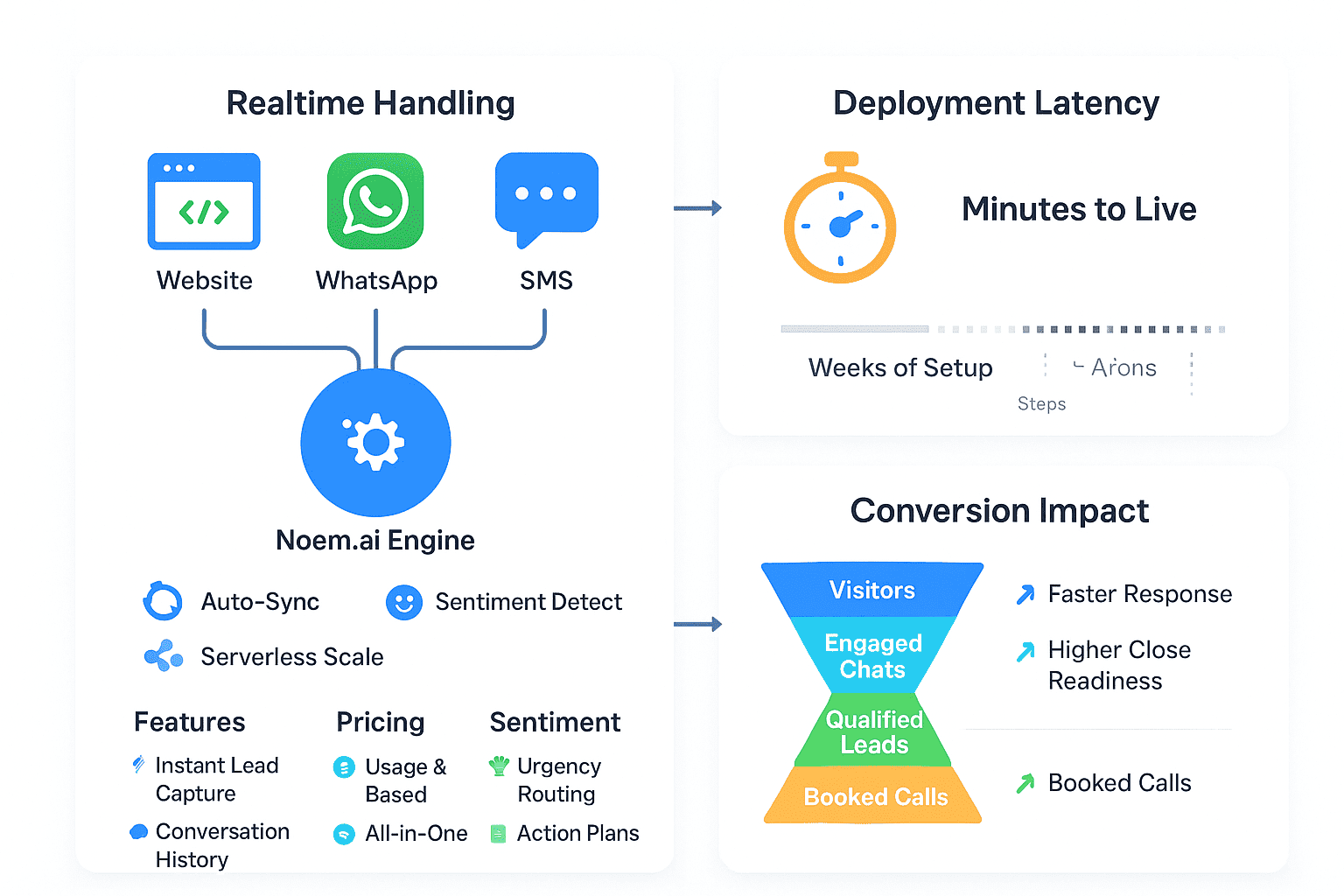
Getting this right does not need to take weeks. You can stand up strong handoffs fast when your platform bundles builder, hosting, knowledge sync, multichannel publishing, and analytics in one stack. That way, teams go live in minutes, and the bot stays up to date as your content changes. You skip brittle custom glue and focus on clear instructions and smart triggers. The result is a bot that responds instantly on day one and keeps pace as your business grows, without pushing extra work onto your agents (ref: Noem.ai Help Center).
- Structure Instructions For Speed And Safety: In your instructions, start with identity, goals, and tone. Add guardrails that define sensitive topics and when to escalate. Include examples for pricing, shipping, or product fit questions so the bot answers clearly, then collects contact info for a smart handoff when needed. This structure keeps answers consistent across sales and support and helps new team members learn faster with low onboarding costs (ref: Noem.ai Help Center).
- Wire Up Proactive Triggers Using Confidence And Sentiment: Map low confidence responses to clarifying questions or safe escalations. Use negative sentiment to raise priority and route to live chat or phone for faster help. This combo reduces repeat chats and lowers stress for both customers and agents. Over time, feedback loops improve the bot so it escalates less but escalates smarter when it should (ref: Noem.ai Blog).
- Capture Details For Seamless Email Or Ticket Handoffs: When routing to email or a ticket, collect name, email, phone, and any order or account IDs. Attach the full transcript and a short summary with next best actions so the agent can resolve the case fast. This is where many teams win back minutes on every request and save hours each day. Faster pick up means fewer escalations later and happier customers now (ref: TechTarget).
- Publish Across Channels While Keeping One Brain: Use one instruction set so the bot speaks the same way on your site, in chat, and in social channels. Single source guardrails and triggers keep answers consistent and reduce drift. This lowers training time for staff and limits the number of fixes needed when policies change. Your customers hear one brand voice and one set of clear promises everywhere they talk to you (ref: Noem.ai Blog).
- Measure And Tune With Analytics: Track trigger rates, handoff volume, time to first human response, and resolution speed by channel. If you see high repeat questions before a handoff, boost content or add a short follow up prompt. If certain topics always escalate, add a smart checklist so the bot captures missing details first. These small moves protect agents from overload and remove dead ends that lead to churn (ref: GetWeave).
To put this playbook into action with a platform built for speed and trust, many teams start with Noem.ai. The platform bundles builder, hosting, knowledge sync, multichannel publishing, and analytics in one place, which means fewer moving parts and fewer surprises. Continuous auto sync keeps the bot current as your help docs, product pages, and offers change. Usage based pricing scales with real demand so you do not pay for idle seats or unused features. This combo makes it simple to test, learn, and improve handoffs without loading extra work on your team (ref: Noem.ai Blog).
Preventing Overload While Improving Speed, Consistency, And Cost
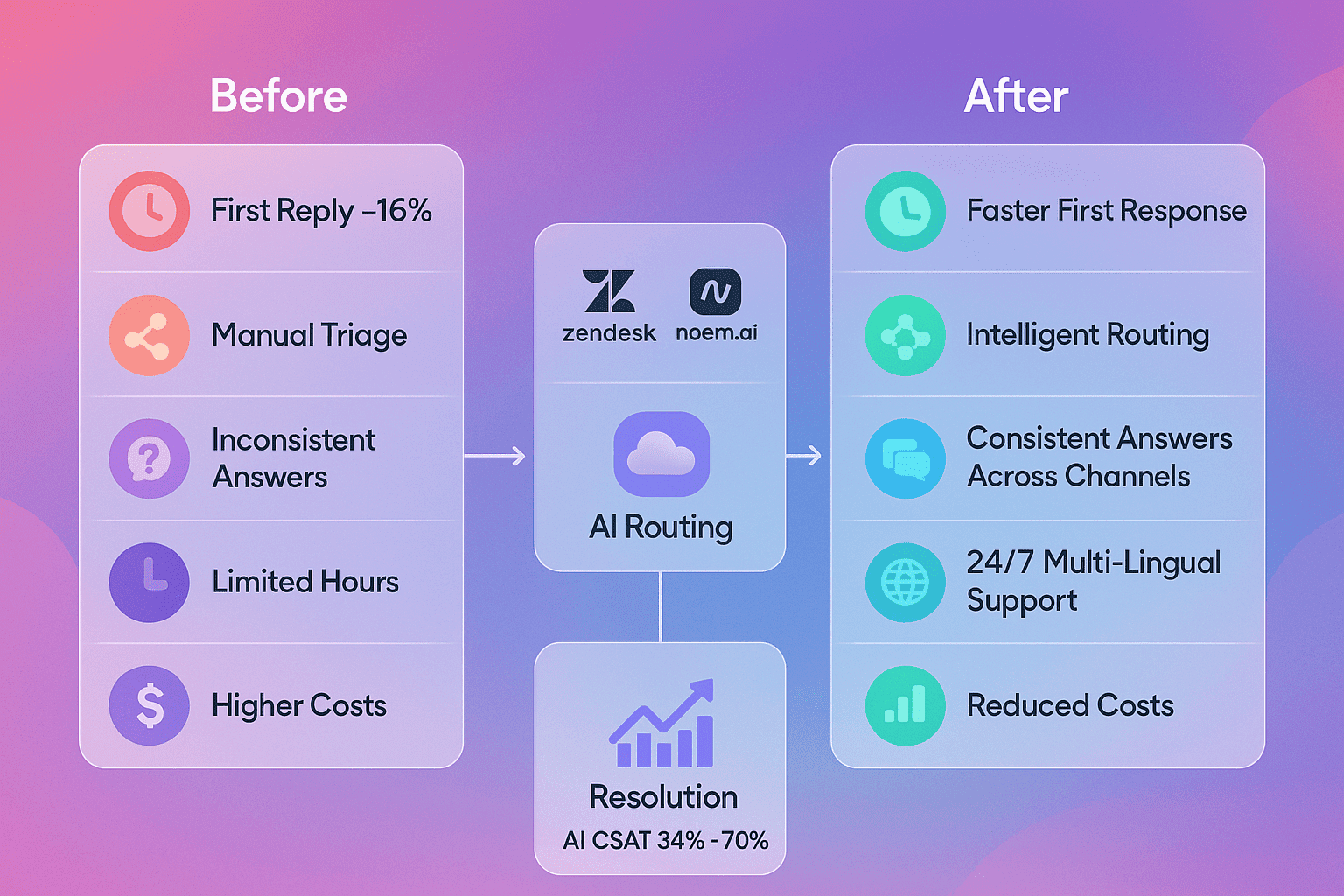
Every leader wants faster responses, lower costs, and happier teams. Safe handoffs help you hit all three at once. When the bot handles routine questions, agents get more time for complex cases and high value conversations. That leads to shorter queues, fewer transfers, and better outcomes. Your customers feel taken care of, and your frontline staff gets the space to do their best work without burnout (ref: GetWeave).
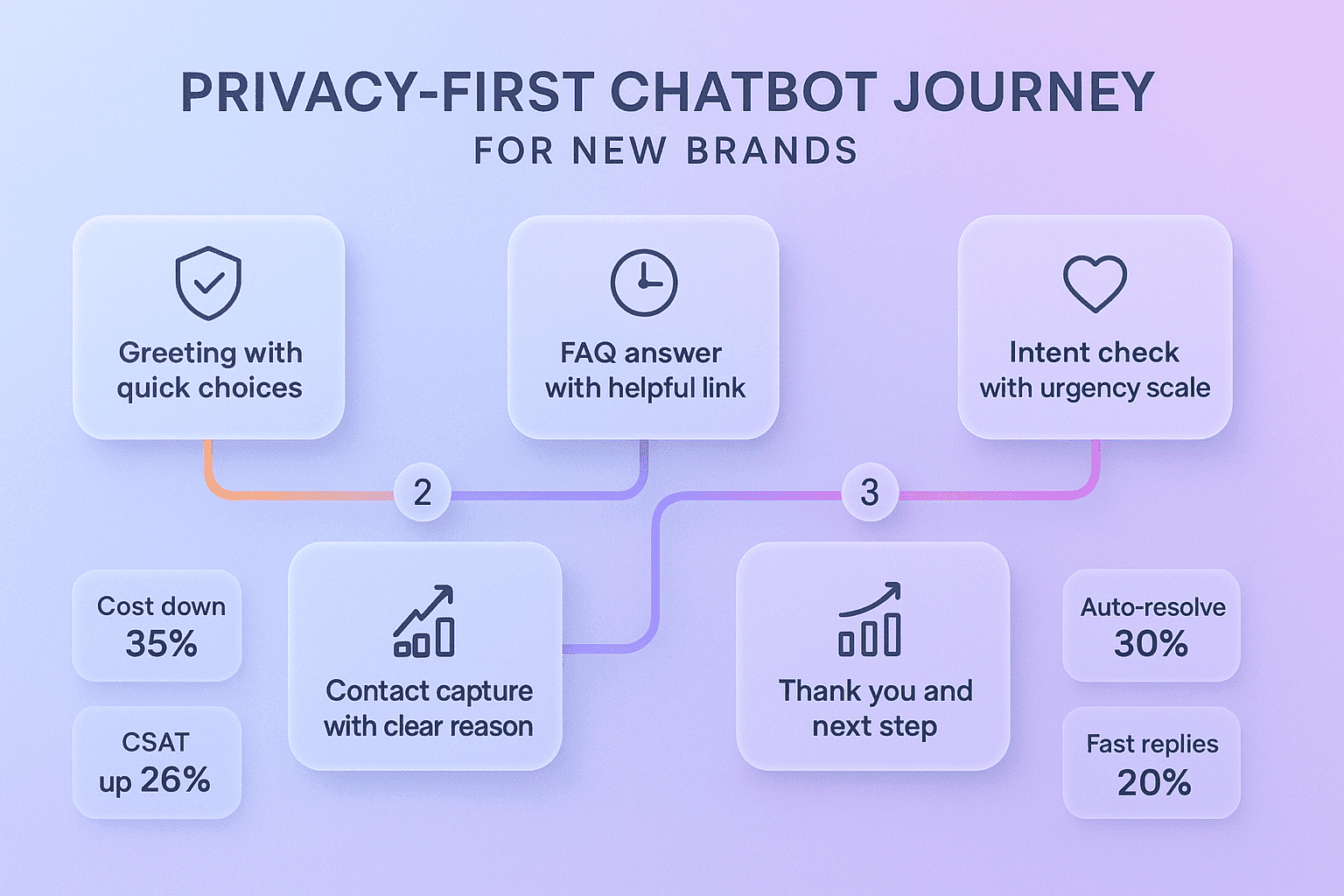
- Instant Responses To Customer And Prospect Questions: Customers reach out at all hours, and they want answers now. A well trained bot greets them in seconds, shares the right steps, and keeps them moving. If a question is beyond scope, the bot gathers the right details and hands off without delay. This keeps leads warm, reduces drop off, and sets up agents for a quick win when they join (ref: TechTarget).
- Reduced Workload For Existing Teams: By answering common questions and handling data capture, the bot shrinks the pile of tasks that steal focus. Agents spend more time on tricky issues and less on repeat steps. With predictive routing and good summaries, they jump in where they add the most value. This balance reduces stress and improves retention on teams that used to face constant overload (ref: Exotel).
- Consistent Answers Across Sales And Support: One brain across all channels means fewer mixed messages and fewer make goods. When instructions and guardrails live in one place, updates go live everywhere at once. That cuts confusion for customers and cuts time spent retraining staff on the latest message. Clear and consistent answers protect trust and prevent drift as you scale (ref: Noem.ai Help Center).
- Lower Operating Costs Compared To Hiring: Automation handles high volume without growing headcount for every spike, which shields your budget. Many companies see up to 30 percent savings on support costs when they deploy a smart chat system with safe handoffs. These savings show up in fewer repeat contacts, shorter handle times, and better first pass resolution. It is a practical way to scale without rushing to hire for every surge (ref: GetWeave).
- Reduced Onboarding Costs Through Standard Flows: When your bot and handoffs run on clear templates, new staff ramp faster. They learn the same playbook the bot follows, with examples and checklists for each topic. This structure lowers errors and limits back and forth while they learn. The result is faster time to value for new hires without adding new training overhead every month (ref: TechTarget).
In many rollouts, 80 percent of routine interactions can be automated, which frees your team to focus on higher value work. As the system learns from human resolutions, escalations become smarter and less frequent over time. Proactive triggers like sentiment and confidence checks further reduce retries and shorten queues. Together, these steps lift customer satisfaction while holding down costs across seasons and campaigns (ref: Noem.ai Blog).
A Practical Blueprint For Your Next Handoff Rollout
Use this simple blueprint to move from idea to impact without overcomplicating the build. First, agree on the bot role and the no go list so the scope is clear for everyone. Next, define the triggers that should escalate the chat, like low confidence answers, rising frustration, or a hard policy keyword. Then, write kind handoff copy that sets expectations and tells the user who is joining and when. Finally, test across your top channels with sample cases until the handoff is smooth and the summaries are useful for every agent who reads them (ref: TechTarget).
- Map Triggers To Tiers: Put urgent or risky cases in a fast lane for live chat or phone, while lower risk cases move to email or tickets. This keeps your best experts available for the hardest problems and keeps queues fair. It also ensures that customers who most need a human get one quickly, with context ready. The more precise your tiers, the fewer bounces you will see between teams (ref: Exotel).
- Standardize Context Packets: Decide what every handoff must include and make it automatic. The usual list is name, contact info, account or order ID, topic, and a short summary with next steps. Add a sentiment tag so the agent can set the right tone from the first line. This improves speed to resolution and cuts repeat work that frustrates both sides (ref: TechTarget).
- Use Friendly, Direct Copy For Handoffs: Avoid vague language that makes people wait without knowing why. Tell them you are connecting to a human now, share a time frame, and use a name if you can. Simple lines like Thank you, I am connecting you to Alex from Support right now set a helpful tone. Clear messages reduce drop off and keep customers engaged until the handoff completes (ref: GetWeave).
- Close The Loop With Analytics And Feedback: Review where handoffs help and where they still break. If one topic always triggers a handoff, add a pre checklist so the bot gathers key details before routing. If agent queues spike, adjust routing weights or add a time based fallback to email. A steady loop of small fixes prevents overload and keeps the experience smooth even as volumes change (ref: Noem.ai Blog).
If you want a faster path to this blueprint in production, consider Noem.ai. It brings instructions, sentiment checks, email handoffs, and analytics together so you do not juggle tools. The unified stack means your team spends more time tuning content and less time wiring systems. With built in knowledge sync and usage based pricing, you get predictability without heavy setup. This is how teams go live faster and protect agents from overload while still giving customers instant, consistent answers (ref: Noem.ai Help Center).
Real World Gains You Can Measure This Quarter
The wins from safe handoffs are easy to see and to track. Faster resolution times come from quick escalations and better context for agents. Cost savings come from automation that handles simple requests at scale without extra hires. Team relief follows when the bot soaks up routine work and routes the rest with care. And customer satisfaction rises when users get instant answers first, then warm help from a human when they need it most (ref: GetWeave).
- Faster Resolution With Proactive Escalation: When the bot senses confusion or frustration, it moves the chat to a person before things get worse. This cuts wait time and reduces the number of messages needed to solve the issue. In many cases, proactive escalations resolve issues 25 to 40 percent faster, because the agent starts with what they need and the customer is still engaged. That speed boosts trust and keeps more deals alive (ref: GetWeave; ref: Exotel).
- Cost Savings Without Cutting Corners: Smart chat flows lower support costs by up to 30 percent by handling repetitive tasks and routing the rest to the right human. Savings show up in reduced handle time, fewer contacts per case, and less back and forth. You get scale without a rush to hire for every bump in demand. This protects quality while keeping your budget steady during growth (ref: GetWeave).
- Team Relief Through Predictive Routing: Routing logic prevents overload by steering only the right cases to the right people. Agents receive context, so they can resolve faster and move on without burnout. This approach reduces ticket ping pong and transfer loops that annoy both sides. Over time, your queue becomes more predictable and less painful to manage during peak hours (ref: Exotel).
- Consistency That Scales Across Channels: One instruction source keeps your bot aligned with your latest pricing, policies, and offers. This means fewer mistakes when campaigns change and fewer corrections later. Customers notice when answers match in web chat, email, and social. It is a simple way to build trust and reduce confusion as you add channels and regions (ref: Noem.ai Help Center).
- Less Onboarding Time For New Staff: Templates and standard flows help new agents learn faster. When the bot gathers details and writes a quick summary, new agents follow the same checklist as experts. They get wins early instead of bouncing cases or asking the same questions. That lowers training costs and speeds up time to full productivity (ref: TechTarget).
For teams that want a single stack and a fast start, Noem.ai is a strong partner. It is built to deliver instant answers, predictable routing, and clean handoffs without extra tools. Continuous auto sync keeps knowledge fresh so the bot reflects your latest content and offers. And the usage based pricing makes costs predictable as you grow. This is how you scale service and sales without hurting your team or your customer experience (ref: Noem.ai Blog).
Putting It All Together With Noem.ai
Safe handoffs are a simple idea with a big impact. They let a bot answer fast, then step aside with grace when a person is needed. The best systems make that switch feel smooth and human, not like a maze. They use clear rules, smart triggers, and friendly copy to carry the customer forward without a stumble. That is how you protect your team from overload and still keep every user on track to get real help fast (ref: TechTarget).
If you are ready to try this with a platform built for speed, simplicity, and trust, check out Noem.ai. You can define instructions, add escalation triggers, and publish across channels in minutes, not weeks. Auto sync means your bot stays current as you update your site and help docs. Analytics help you see what is working and where to fine tune. Want to preserve your customer experience and prevent overload while lowering costs and onboarding time? Start your next handoff rollout with Noem.ai today.