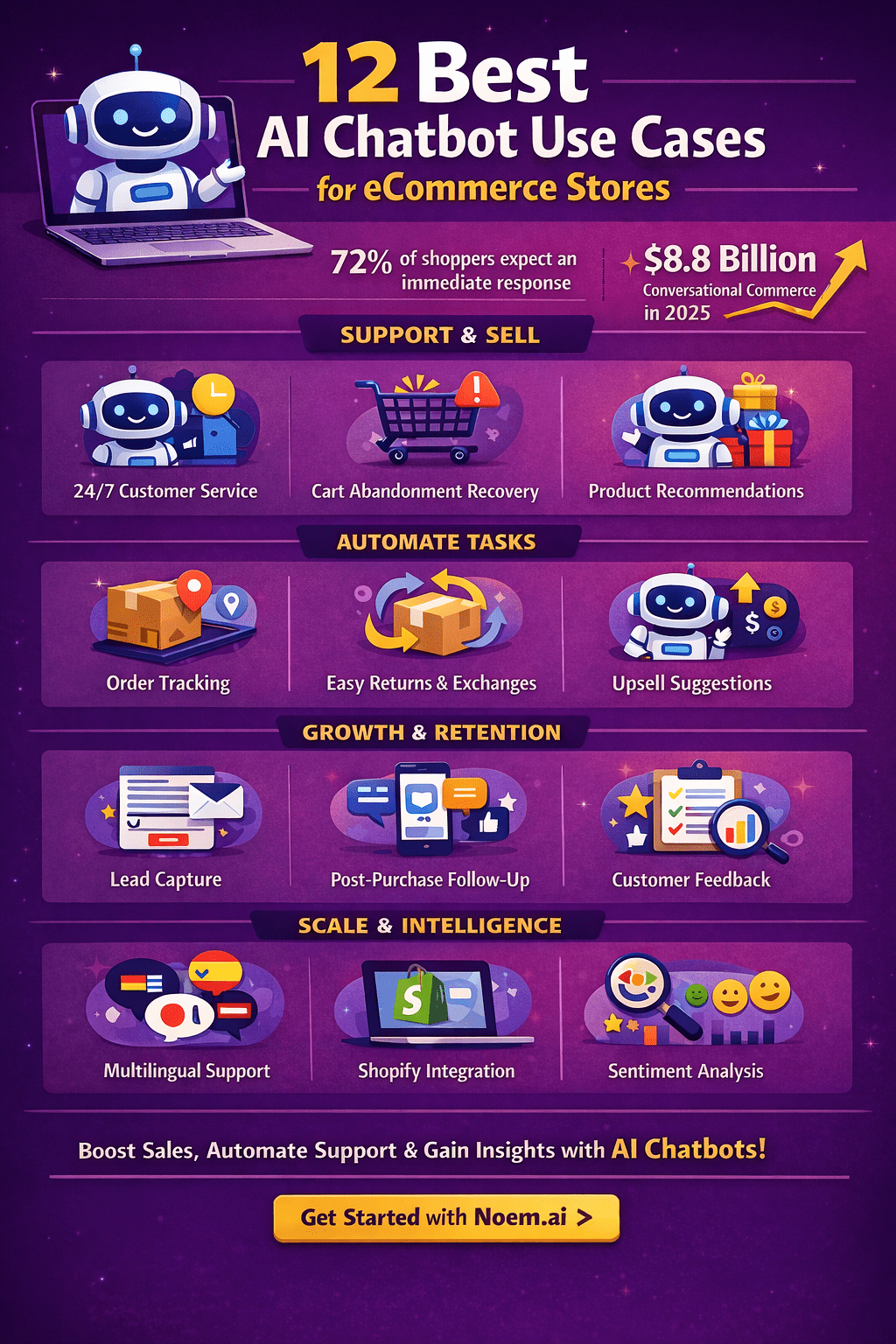
72% of shoppers expect an immediate response when they contact a brand, and most eCommerce stores can’t deliver that after 6 pm. The global conversational commerce market crossed $8.8 billion in 2025 and is growing at close to 15% annually. The stores pulling ahead aren’t necessarily spending more on ads or stocking better products. They’re just not leaving conversations unanswered.
AI chatbot use cases for eCommerce now cover the full customer journey, from the first product question to post-purchase follow-up. Whether you’re on Shopify, WooCommerce, or BigCommerce, the practical question isn’t whether an AI chatbot belongs in your store. The question is which job to give first.
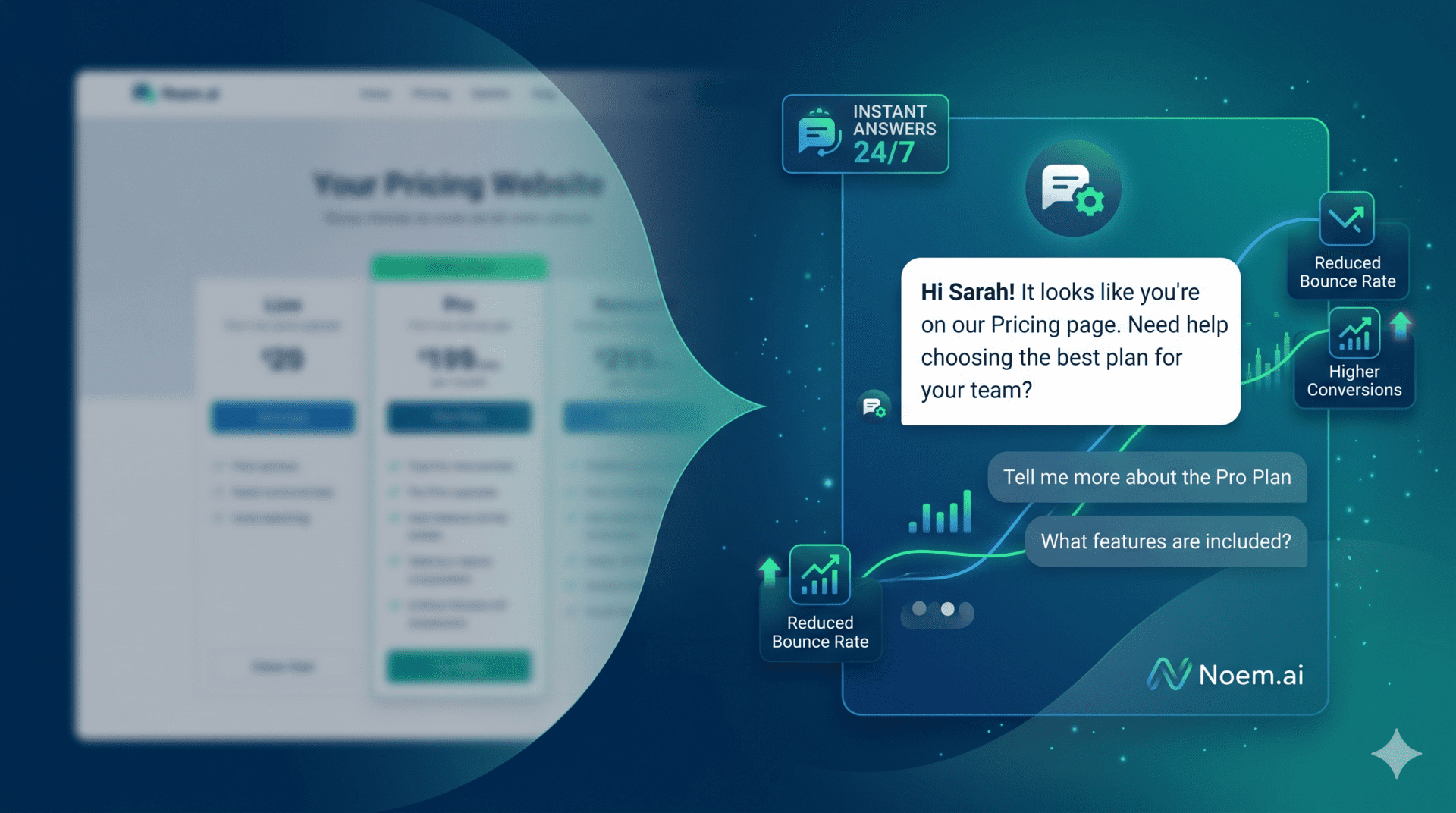
Use Cases 1–3: Conversations That Support and Sell
1. 24/7 Customer Support That Keeps Shoppers on the Page
Most store owners add an AI chatbot, and the ticket volume does drop. What takes longer to notice is the change in conversion rate during late-night and weekend sessions, when the store is open but nobody’s around to answer questions about fit, delivery time, or whether the product runs small.
Zendesk found that 64% of consumers will spend more with a brand when their issue gets resolved where they already are. A shopper who gets an answer in the chat window stays in the buying mindset. One who gets a ‘we’ll get back to you within 24 hours’ auto-reply usually doesn’t. Noem.ai’s eCommerce chatbot handles product questions and pre-purchase hesitation at any hour, without a support agent involved.
2. Cart Abandonment Recovery Before the Tab Closes
Most eCommerce stores run cart abandonment email sequences. Those sequences fire after the shopper has already left, already reconsidered, already opened five other browser tabs. A re-engagement email that arrives 30 minutes later is working against that decision rather than helping to intercept it.
An AI chatbot on the checkout page catches that moment while the session is still open. It can answer a question about your return window, clarify a delivery estimate, or address whatever is holding up the purchase.
3. Conversational Product Recommendations
The browse data shows what a shopper looked at. It doesn’t tell you what they actually want or why they haven’t bought yet. A shopper typing “I need something for a hiker who already has all the gear” is handing you a buying situation in plain language. Most product pages can’t respond to that. An AI chatbot can ask what the budget looks like, then pull up options that actually fit the request rather than returning a generic search result.
64% of AI-powered sales come from first-time shoppers, which means guided discovery often happens before someone even knows your catalog. Store owners who’ve turned this on tend to notice it first in their average order value figures, usually a few weeks in.
Use Cases 4–6: Cutting the Operational Load
4. Automated Order Tracking
Every eCommerce support inbox looks the same. A large portion of it is some version of “Where is my order?” Not complex. Not urgent. Just frequent enough that it takes a meaningful chunk of your team’s week, every week, regardless of what else is going on.
An AI chatbot connected to your order management system answers those questions instantly and without friction, regardless of the volume your store generates. For most stores, order-tracking questions account for a third of total support volume or more. Automating that one job changes how your team’s week feels, even before you look at the ticket numbers.
5. Returns and Exchanges That Don’t Cost You the Customer
Most shoppers who have a bad return experience don’t send an angry email. They quietly buy the same product from a different store next time, and you never find out why they left. Most eCommerce stores have reasonable return policies. The problem is the experience of actually using them, which involves finding the right page, reading the policy, emailing support, and waiting for a label.
An AI chatbot walks a customer through that process in the same window where they’re already asking. It checks order eligibility, walks through the steps, and handles the exchange confirmation without a support agent involved.
6. Upselling Mid-Conversation
An AI chatbot that mentions a compatible product during an active conversation doesn’t feel like a promotion. It reads as product knowledge, and the shopper is already in a buying frame of mind. The revenue impact of this AI chatbot use case typically doesn’t show up as a single, dramatic lift. It accumulates across hundreds of conversations over several weeks. Most store owners spot it when they pull their average order value report, and the number is quietly higher than it was two months ago.
Use Cases 7–9: Growth and Retention
7. Lead Capture Before the Bounce
A visitor who leaves without buying isn’t always a lost sale. A visitor who leaves without giving you anything to reach them with is. No email, no preference signal, no product category they cared about. Just a session that ends and an ad spend that produces nothing to follow up on.
An AI chatbot opens a low-friction conversation before the exit. It asks what the shopper was looking for, offers to send relevant picks by email, or connects a small discount to a category they browsed.
8. Post-Purchase Follow-Up
Most eCommerce stores send an order confirmation email and then go quiet for two weeks. That silence sits inside one of the highest-intent windows in the customer relationship, right after someone has spent money with you and is paying attention to whether the experience was worth it.
A chatbot that checks in a couple of days after delivery and asks how the product landed gets responses that a post-purchase email rarely does. If the customer is happy, you get a review or a referral. If something went wrong, you find out before it becomes a public complaint.
9. Feedback Collection That Gets Real Answers
A post-purchase survey sent by email is opened by a fraction of your customer base and completed by even fewer. A chatbot that asks one question at a time, within the same interface where the customer just had a real interaction, is answered more often and more specifically.
“What made you hesitate before buying?” gets a different response in a chat window than in a survey form. Chatbot conversations surface the friction that never became a complaint. You find out what was unclear before it costs you anything.
Use Cases 10–12: Scale and Intelligence
10. Multilingual Support Without the Headcount
One Noem.ai customer estimated it would have taken 50 agents across multiple call centers to match what their AI chatbot handles across languages. For stores selling across regions, that number isn’t surprising. Building a multilingual support headcount takes months, costs significantly more than most operators plan for, and still falls short during an unexpected traffic spike.
An AI chatbot handles multiple languages from the same setup and the same knowledge base. The customer gets a response in the language they’re using to shop. Your support org stays the same size.
11. Shopify Integration That Takes an Afternoon, Not a Sprint
Most store owners who’ve added a chatbot to their Shopify store expected the setup to take longer than it did. Noem.ai pulls live product data, order history, and customer records into the chatbot without custom code. You configure it, publish it, and it starts handling conversations.
12. Sentiment Analysis and Weekly Store Intelligence
Noem.ai generates weekly sentiment reports from chatbot conversations. You see which questions came up most that week, where shoppers got stuck, and what they asked that your product pages never answered.
The AI chatbot use case stops being a support tool at that point. It becomes something your copywriter, your ops lead, and your merchandising team can actually use.
Conclusion
Your store runs around the clock. Your support shouldn’t have an off switch. The AI chatbot use cases above are the specific jobs eCommerce operators are running on autopilot right now. Support runs overnight. Revenue recovery happens mid-session. Store intelligence lands in your inbox every week.
Set up your eCommerce chatbot on Noem.ai in under 30 minutes. No credit card required.
Frequently Asked Questions
Does an AI chatbot actually increase eCommerce sales?
The mechanism is more specific than most store owners expect. 64% of AI-powered sales conversions come from first-time shoppers, meaning the chatbot is often doing discovery work, helping someone find the right product before they even know your catalog. Add cart abandonment recovery and mid-conversation upselling, and the revenue impact shows up in average order value and conversion rate figures within a few weeks.
What is the best chatbot for a Shopify store?
The right answer depends on what job you need the chatbot to do. For store owners who want a setup that connects to live product data, order history, and customer records without writing code, Noem.ai’s Shopify integration is built specifically for that.
How does an AI chatbot reduce cart abandonment?
An email sequence fires after the session ends. An AI chatbot works while the session is still live, catching the moment of hesitation before the shopper closes the tab. It can answer a last-minute question about returns, clarify a shipping estimate, or address a product concern that the page didn’t resolve. Most store owners who switch from email-only sequences to a live chatbot see the difference in checkout completion rate within the first month.
Can an AI chatbot handle order tracking automatically?
It can, as long as it’s connected to your order management system. The chatbot pulls live order data and responds to tracking questions without a support agent involved. For most eCommerce stores, tracking inquiries accounts for a significant share of weekly ticket volume. Your team’s time is better spent elsewhere when that job runs on its own.
How is Noem.ai different from Tidio or Intercom?
Tidio and Intercom are solid if your primary need is live chat and support ticketing. Noem.ai handles support conversations, upselling, lead capture, multilingual responses, and weekly sentiment reporting from a single platform. The pricing is also structured for store operators rather than enterprise support teams.