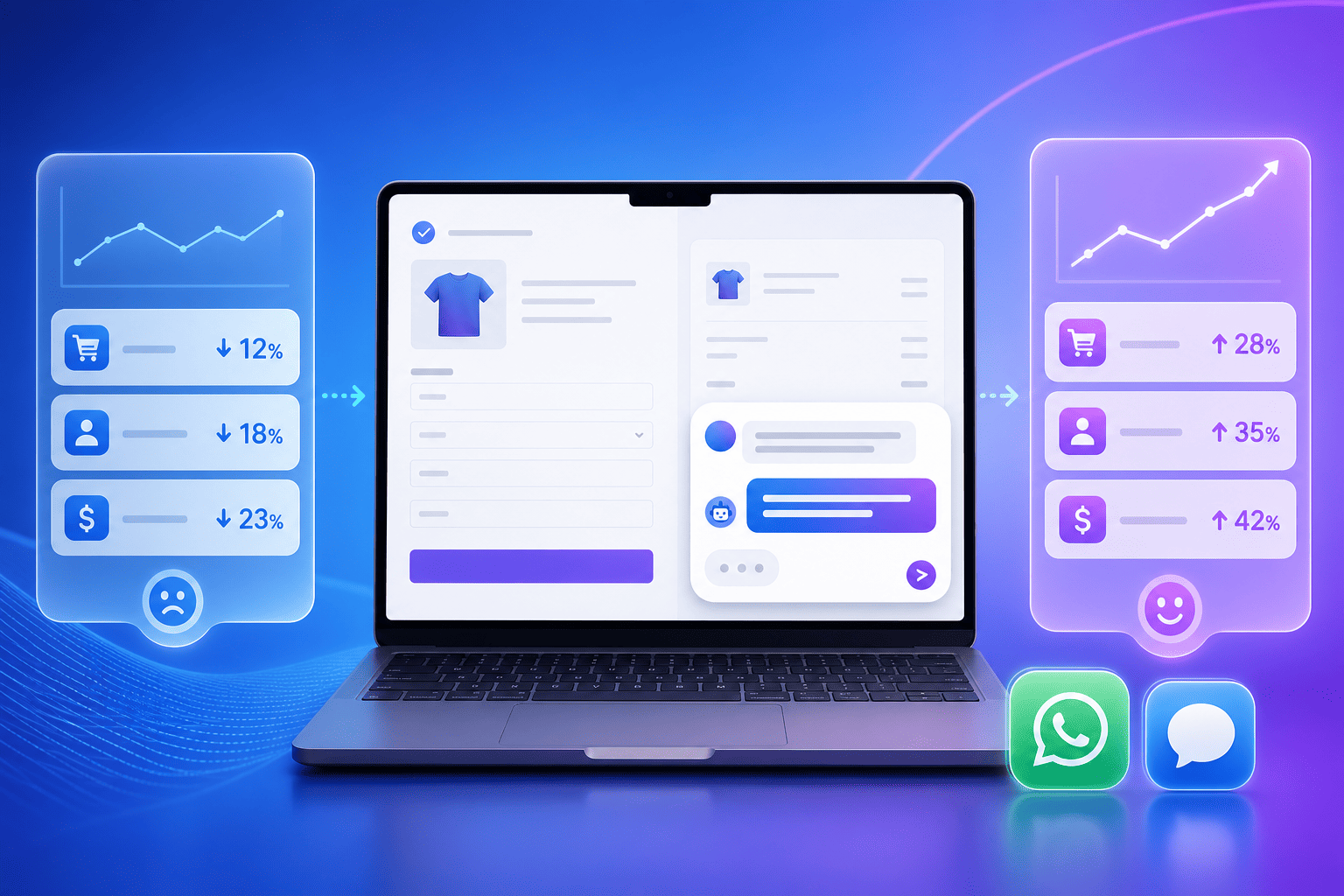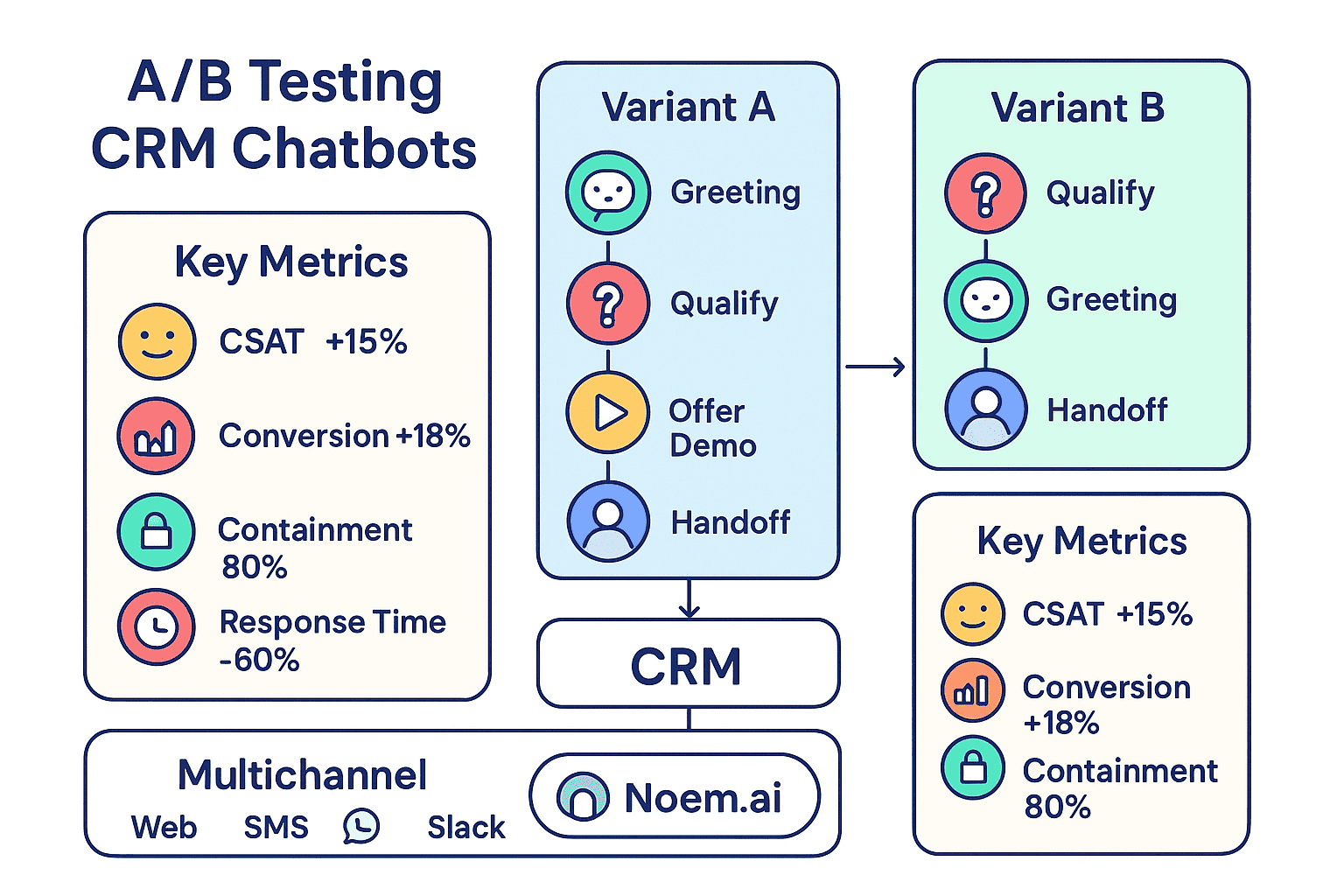
A/B testing works because it turns guessing into learning. When your chatbot is tied to your CRM, every chat can become tracked data: who the visitor is, what they asked, what the bot said, and what happened next. This makes it easy to measure lift from small changes, like a new greeting or a different offer. It also helps your reps because the chat becomes part of a complete record. This record powers better follow-ups and shows what talk tracks actually turn into meetings and deals (ref: Noem.ai ; Noem.ai Blog ).
- Instant Website Lead Capture: When a visitor lands on your site, the chatbot can grab name, email, company, and intent right away, so you never lose a hot lead. With CRM integration, that record is created instantly, and no one has to copy and paste. This cuts lead decay, which often happens in the first few minutes after a visitor leaves. A/B tests here can compare two greeting lines or two call-to-action buttons to see which one earns more complete forms (ref: Noem.ai Demos ; TTMS ).
- Real-Time Lead Qualification: Your bot can ask 2–3 smart questions to learn budget, timeline, and need. With the right instructions, it can adapt follow-ups based on sentiment, skipping pushy asks when the mood is low. Sales teams then route the best leads to a calendar and keep others in nurture. Testing question order, tone, or thresholds helps you learn which path drives the most booked demos (ref: Noem.ai Sentiment Analysis ; Noem.ai Instructions Guide ).
- Automatic Lead Creation: Every chat becomes a CRM record with fields filled in for contact details, topic, and next steps. This saves time for your reps and prevents data loss. It also gives you a clean base for A/B test reports: you can tag which version of the chat the user saw and tie it to outcomes. That way you see results by cohort, not just by guesswork (ref: Noem.ai Instructions Guide ; Noem.ai ).
- Faster Response Times for Prospects: People do not like to wait. A chatbot can answer right away and pass the ball to a human when needed. This speed helps stop drop-off and keeps the buyer in the moment. With the right tools, bots can handle up to 80% of common questions, which cuts queue time and frees your team for high-value work (ref: Noem.ai Blog ; MarketingTechStack ).
- Personalized Sales Conversations: A bot that “remembers” answers can shape a path that fits each person. It can change tone when it senses the user is frustrated, and become more direct when the user wants speed. These small choices add up to a better experience and a higher chance of a meeting. Teams that test tone shifts often see 10–20% CSAT lift compared to flows that keep one flat voice (ref: Noem.ai Sentiment Analysis ).
- Complete Conversation History: When the chat is stored in the CRM, reps see what was promised, what was asked, and what matters most to the buyer. This prevents repeat questions and builds trust. It also makes handoff to success or support smoother after the deal closes. Clean history is the backbone of good A/B testing because it shows the “why” behind the numbers (ref: Noem.ai ; Noem.ai Demos ).
- Automated Demo and Meeting Scheduling: When the lead hits a score or a signal, the bot can open a calendar, book a time, and write it to the CRM. This cuts back-and-forth and locks in the next step fast. A/B tests can try two invite wordings or two trigger points to see what earns the most booked demos. Over time, this is one of the biggest wins for revenue teams (ref: Noem.ai Instructions Guide ).
- Higher Close Rates with Better-Qualified Leads: When you combine instant capture, smart questions, fast response, and easy booking, you move more buyers into serious talks. Reps spend time with the right people, not with tire-kickers. A/B tests help you sharpen this edge week by week. The result is more deals per rep and a pipeline that feels clear, not cloudy (ref: Noem.ai Blog ; NAV43 ).
The A/B Testing Blueprint with Noem.ai: Build, Launch, Measure, Improve
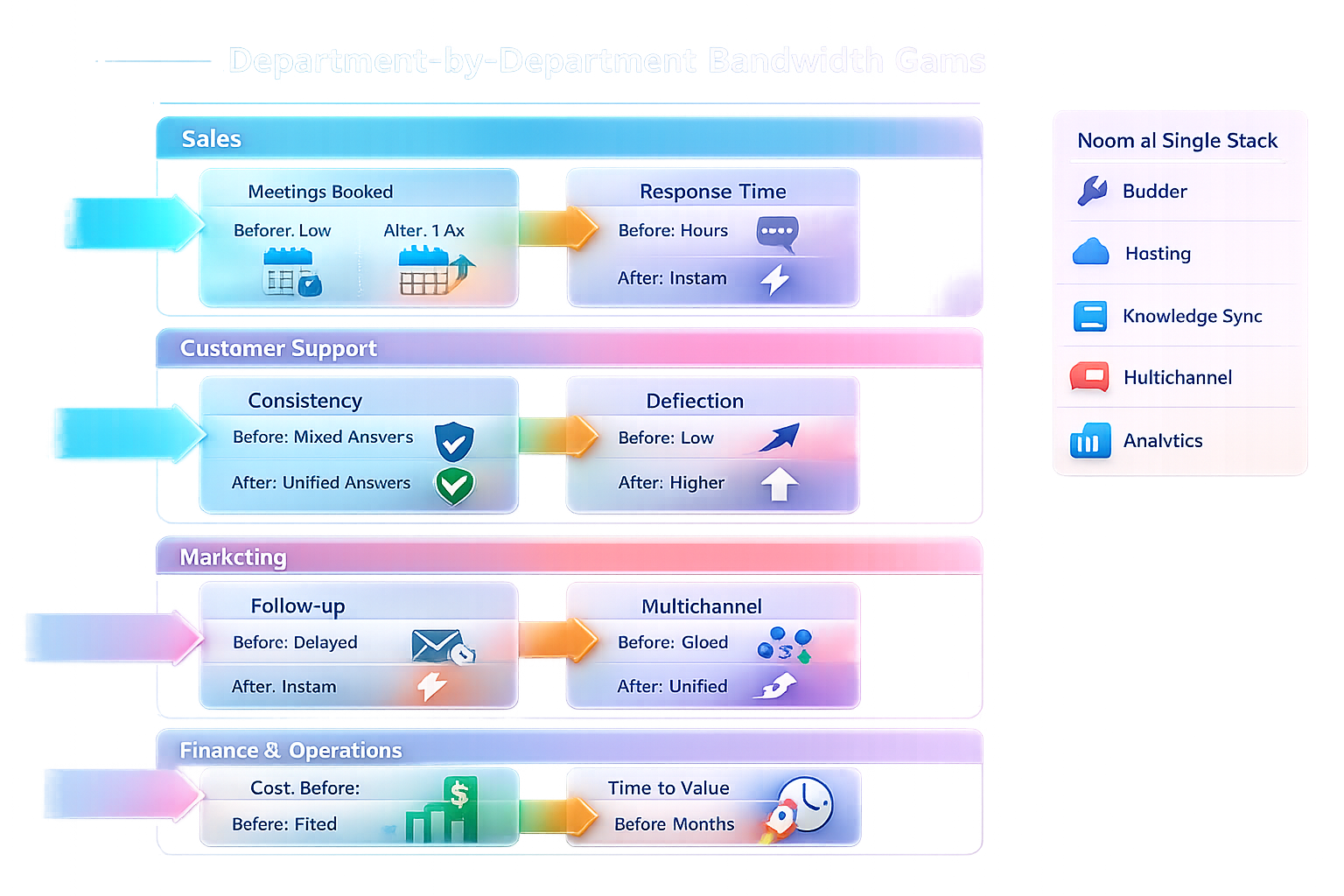
A simple plan beats a complicated one. With Noem.ai, you can build a test-ready chatbot in minutes, not weeks. The platform bundles building, hosting, knowledge sync, multichannel publishing, and analytics in one place. This single stack means your test setup is fast, your tracking is clean, and your rollouts are easy to manage. You focus on the message and the result—not on glue code or switching tools (ref: Noem.ai ).
- Define Your Variants in the Instructions Tab: In Noem.ai, the Instructions tab is where you set the bot’s role, goals, tone, and boundaries. Create Variant A and Variant B there—one might use an empathetic tone and a 2-step qualifier; the other might be more direct with a 3-step qualifier. Keep only one variable different at a time so results are clear. Use clear rules for when to offer a demo, when to ask for an email, and when to escalate (ref: Noem.ai Instructions Guide ).
- Sync Knowledge and Keep It Fresh: Out-of-date answers lose deals. Noem.ai can auto-sync content so your bot always uses your latest pages, docs, and FAQs. This reduces test noise and makes sure Variant A and B both pull from the same, trusted source. When your base is solid, your test results reflect message changes—not content gaps (ref: Noem.ai ; Noem.ai Blog ).
- Connect to Your CRM and Tools Once: Tie your bot to your CRM with APIs or webhooks and set up fields for lead source, variant, and outcome. Add tools for lead creation, meeting booking, and tagging. When a chat ends, the bot posts the data to your CRM with the variant label, so you can slice results by A vs. B. This makes your dashboards simple and your wins obvious (ref: Noem.ai Instructions Guide ).
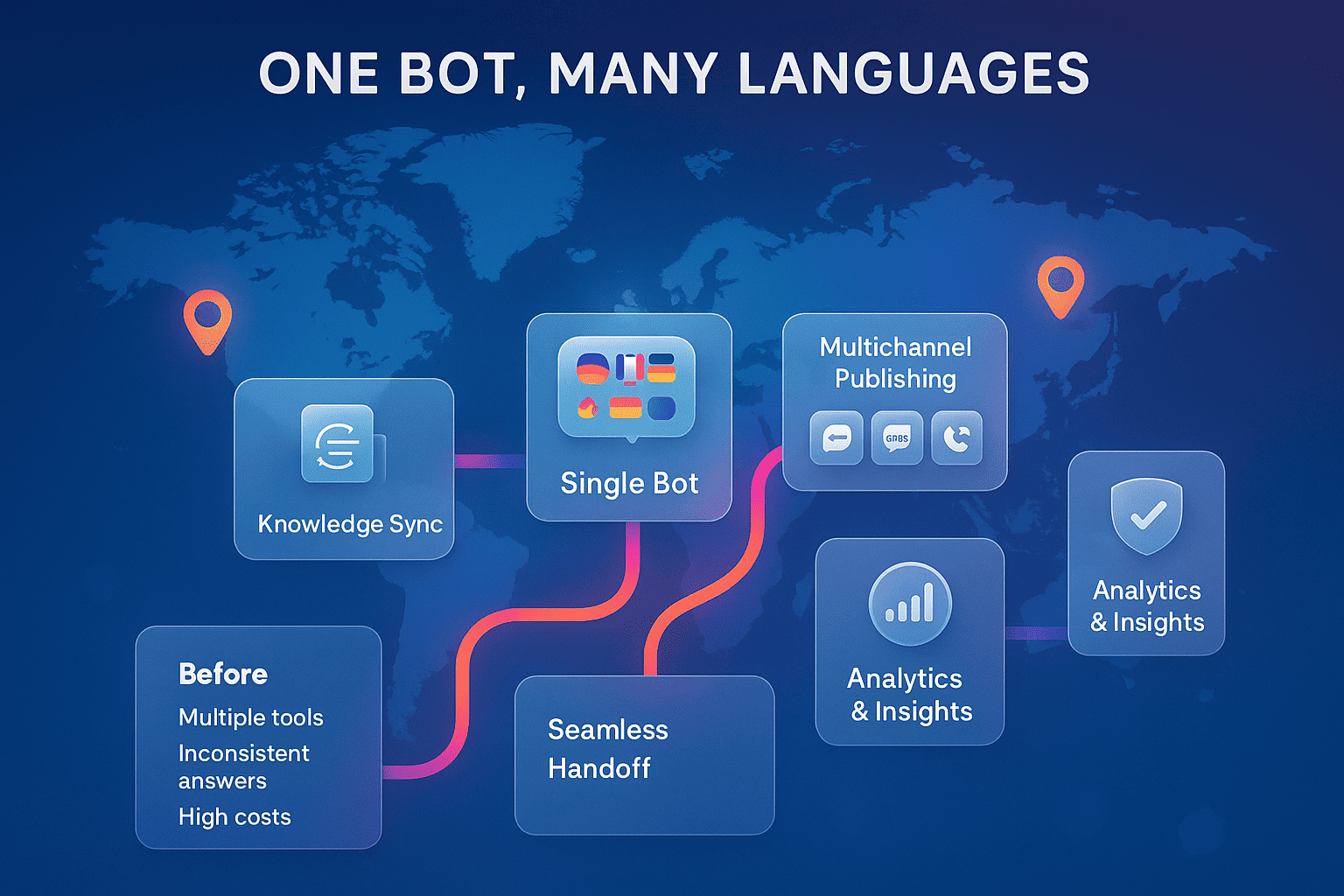
- Test Across Channels with One Click: Your buyers are on your website, SMS, WhatsApp, and Slack. With Noem.ai, you can publish the same bot across channels with one stack, then measure which messages work best where. This gives you more data, faster, without more work. Multichannel testing is a quiet superpower that helps you spot context effects you would miss on site-only tests (ref: Noem.ai ; Noem.ai Demos ).
- Measure What Matters Weekly: Each week, check CSAT, conversion to lead, booked meetings, containment rate, first response time, and escalation rate. Look for patterns by sentiment—did a tone change help frustrated users? Track time-to-resolution and cost per contact so savings show up along with wins. Teams often see 10–20% CSAT lift when the bot adapts tone based on mood and up to 80% of routine chats handled by the bot (ref: Noem.ai Sentiment Analysis ; MarketingTechStack ).
- Iterate in Small, Safe Steps: Do not change five things at once. Tweak the greeting, then the first question, then the offer, then the handoff rule. This helps you learn what moved the needle. Over a month, these small moves add up to big wins that you can trust (ref: Noem.ai Blog ).
What to Test: High-Impact Ideas That Drive Lift Fast
Picking the right test ideas makes the work fun and the results clear. Start with parts of the chat that touch every user and lead to key actions like email capture or demo booking. Use short copy and clear choices so the path feels calm and helpful. If the user mood is low, test a softer tone and more reassurance. If the user is moving fast, test fewer words and a quick jump to the calendar (ref: Noem.ai Sentiment Analysis ).
- Greeting and Hook: Try two versions of the first line. One might be “Need help picking the right plan?” and the other “Want a quick product tour?” Check which one leads to more replies and more completed qualifiers. This small change often has the biggest reach because every visitor sees it (ref: Noem.ai Demos ).
- Qualifying Questions Sequence: Test the order and the count. Many teams find that two smart questions beat four generic ones for speed and trust. Track drop-off between each step to see where users bail and which path earns the most valid emails (ref: Noem.ai Instructions Guide ).
- Tone Shifts by Sentiment: Create rules that switch tone and pacing when the user shows frustration. Compare a static tone flow (Variant A) to a sentiment-aware flow (Variant B). Expect a CSAT lift in the 10–20% range when you get this right, along with lower escalations (ref: Noem.ai Sentiment Analysis ).
- Offer Positioning: Test the moment you invite a demo. You might offer it right after a clear need signal in Variant A and only after confirming timeline in Variant B. Watch booked meetings and no-show rates to see which path attracts real buyers (ref: Noem.ai Blog ).
- Knowledge Snippets and Links: Try a short, helpful line that links to a feature page versus a longer, “how it works” block. Keep both synced to your latest docs so you are not testing old info. Measure clicks, time on page, and return-to-chat behavior (ref: Noem.ai ).
- Close and Handoff Script: Test how you end chats that do not need a human. One version might summarize next steps with a resource link; another might invite an email follow-up. Measure reopen rates and post-chat CSAT to find the smoother goodbye (ref: Noem.ai Blog ).
How to Read Results: Metrics That Prove Your Chatbot Is Working
The best tests are easy to read and easy to repeat. Tie every chat to a variant label in your CRM and review results on a set day each week. Watch both experience KPIs and operational KPIs. Experience KPIs include CSAT and NPS; operational KPIs include first response time, time to resolution, containment rate, escalation rate, and cost per contact. Together they tell you if the user felt good and if your team saved time (ref: Noem.ai Blog ; NAV43 ).
- CSAT Lift (Target: 10–20%): If Variant B adapts tone by sentiment and Variant A does not, you should see a clear CSAT bump. Higher CSAT often links to lower escalations and better conversion later in the journey. Track CSAT by sentiment bands (low, neutral, high) to learn where the lift is strongest (ref: Noem.ai Sentiment Analysis ).
- Containment and Resolution Time: A strong bot answers most common asks, and your team handles the rest. If containment goes up and time to resolution goes down, that means your copy and flows are working. Some teams see bots cover up to 80% of routine chats when knowledge is synced and flows are kept simple (ref: MarketingTechStack ; Noem.ai Blog ).
- Conversion Lift (Lead, MQL, Meeting): Tag leads by variant and calculate lead-to-meeting and meeting-to-opportunity rates. If you move the invite earlier, watch for meeting no-shows; if you move it later, watch for lower volume. The best variant balances quality and speed to book (ref: Noem.ai Demos ).
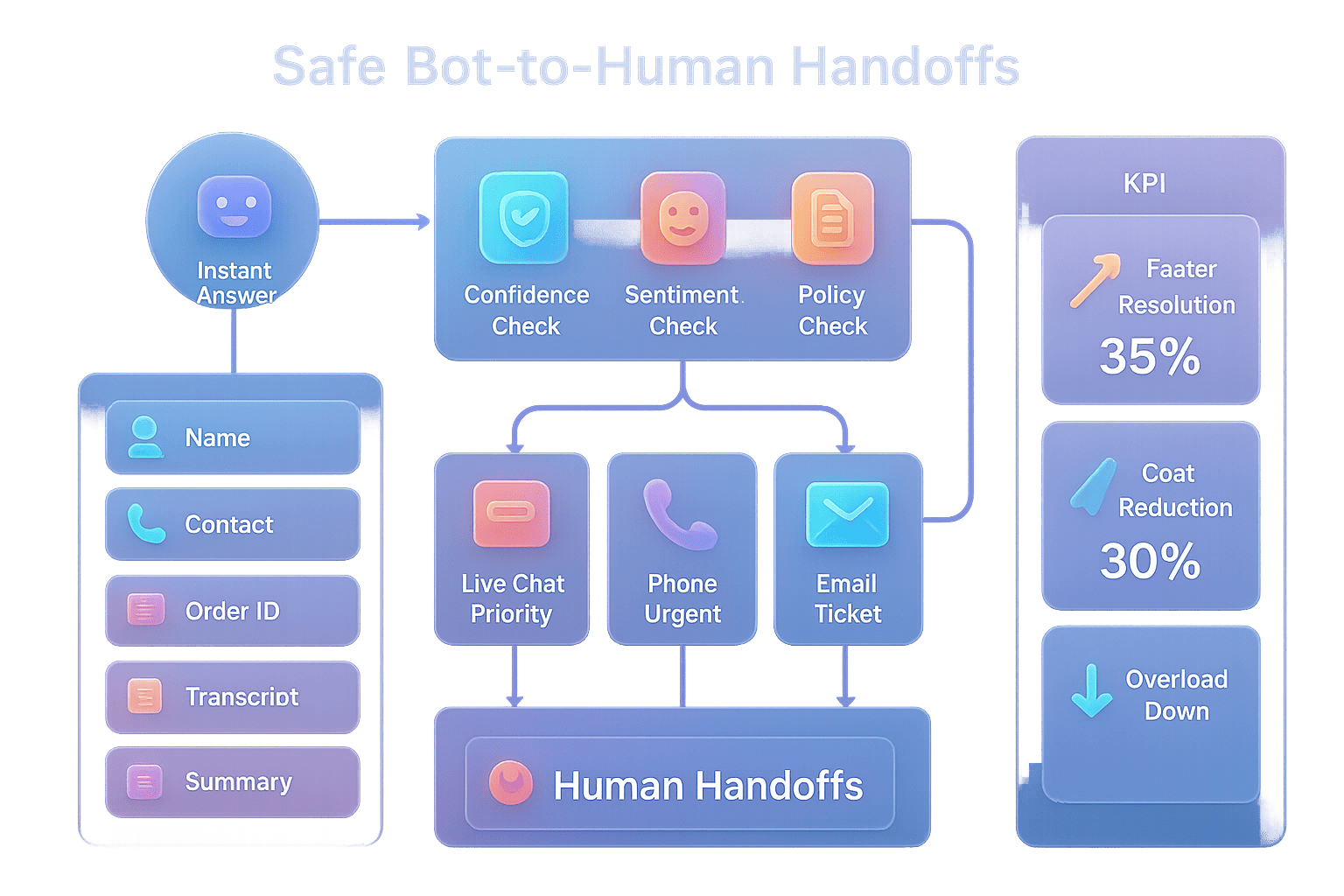
- Escalation Rate and NPS: If the bot is too aggressive, escalations rise; if the bot is too vague, NPS falls. Use weekly reviews to tune rules so the handoff feels human and kind. Over time, this balance gives you a smooth customer path from first touch to closed-won (ref: Noem.ai Blog ).
- Cost per Contact: Faster answers and fewer manual tasks lower support costs. When you add auto lead creation and calendar booking, you also lower sales admin time. Track this burn-down to show clear ROI to your team (ref: TTMS ).
A Sample 14‑Day Experiment Plan You Can Run This Month
You do not need months to see wins. With the right steps, you can run a clean A/B test in two weeks. Keep scope tight and your goal simple—like more emails captured, more meetings booked, or higher CSAT on frustrated users. Use the same knowledge base for both variants and change just one thing at a time. Below is a simple plan you can copy (ref: Noem.ai ).
- Day 1–2: Set Up Variants in Noem.ai: Write two instruction sets that differ by one variable—tone, question order, or invite timing. Map the same knowledge source to both variants so content matches. Connect your CRM fields and tags so every chat is labeled A or B (ref: Noem.ai Instructions Guide ).
- Day 3–4: QA Five Core Scenarios: Test normal queries, vague asks, off-topic questions, urgent intent, and calendar booking. Check edge cases like typos, long messages, and emojis. Make sure both variants handle these the same way except for the one thing you are testing (ref: Noem.ai Demos ).
- Day 5–10: Go Live on Website and One More Channel: Publish on your site and also on WhatsApp or SMS to reach more users. Watch early results but avoid mid-test edits. Let the data build so the pattern is real (ref: Noem.ai ).
- Day 11–12: Review Metrics and Transcripts: Compare CSAT, lead capture rate, booked meetings, and containment. Read 10 transcripts from each variant to learn the “why” behind the numbers. Look for sentiment shifts and points of friction you can remove (ref: Noem.ai Sentiment Analysis ).
- Day 13–14: Ship the Winner and Plan the Next Test: Roll the winning variant to all channels and save the other as a backup. Pick the next test idea and repeat. Small tests, shipped often, bring steady gains your team can feel (ref: Noem.ai Blog ).
Why Noem.ai Is the Fastest Path from Idea to Impact
Most teams struggle because their stack is messy. One tool to build the bot, a second to host it, a third to sync content, and a fourth to track results. That means long setup times, unclear data, and slow rollouts. Noem.ai fixes this by putting builder, hosting, knowledge sync, multichannel publishing, and analytics into one simple platform. That means you test faster, measure cleaner, and scale sooner (ref: Noem.ai ).
- One Stack, Minutes to Live: You can create a bot, define A/B variants, and launch in minutes. There is no long integration cycle or back-and-forth across tools. You get real results fast, which keeps your team excited and focused on wins (ref: Noem.ai ).
- Knowledge Auto‑Sync for Trust: Your bot pulls from the latest content so it does not give stale answers. This protects your brand and your tests. It also lets you update your site once and know the bot is in sync across every channel (ref: Noem.ai Blog ).
- Multichannel, One Click: Publish to web, SMS, WhatsApp, and Slack without rebuilding. See analytics all in one place so you can compare channels and messages side by side. This helps you invest in what actually works for your buyers (ref: Noem.ai Demos ).
- Analytics that Tie to Sentiment: Because Noem.ai helps you link outcomes to mood, you can see when tone shifts help and where they do not. This gives you a clear map for the next test. Teams often report 10–20% CSAT gains when they get this right (ref: Noem.ai Sentiment Analysis ).
- Usage‑Based Pricing that Scales: Start small and pay for what you use. As you grow across channels and countries, pricing stays predictable. This keeps finance happy while sales grows fast (ref: Noem.ai ).
Real Results You Can Target in Your First Quarter
Give yourself three months and a steady weekly cadence. Start with your homepage chat and one more high-intent page, like pricing. Then add one more channel the next month. Keep tests simple and wins will stack. These target ranges are common and realistic when you use sentiment-aware bots and clean CRM tracking (ref: Noem.ai Blog ).
- CSAT Lift: Aim for 10–20% improvement by making tone adapt to mood and reducing friction in early questions. Tag transcripts by emotion and watch where users pause. Use those spots for your next round of copy tweaks (ref: Noem.ai Sentiment Analysis ).
- Coverage and Containment: Target 60–80% coverage of routine asks with strong knowledge sync and simple, helpful copy. This frees reps to handle complex deals and custom questions. The best part is users feel faster care, which builds trust (ref: MarketingTechStack ).
- Lead Capture and Meeting Rate: Improve completed lead captures by 10–25% with better greetings and fewer fields. Boost booked meetings by testing the invite timing and the exact words on the button. Always tag which variant won so you can scale it with confidence (ref: Noem.ai Demos ).
- Response Time and Resolution: Cut first response to near‑instant and reduce average resolution time by removing fluff. Use weekly reviews to clean up long answers and broken links. Fast answers create momentum that carries into booked demos (ref: Noem.ai Blog ).
- Data Quality and Hand‑Off: With automatic lead creation and full chat history, your reps pick up with full context. This reduces repeat questions and shortens the time to the next step. Good data also keeps your reports honest so you can defend your wins (ref: TTMS ).
Your Next Step: Launch a Test This Week with Noem.ai
You do not need a big project plan to begin. Build two simple variants in the Noem.ai Instructions tab, connect your CRM once, and go live on your homepage. Let the data run for a week, then ship the winner and line up the next test. In a month, you will feel the change in your calendar and your numbers. Ready to capture more leads, qualify in real time, and book more demos today? Start your first A/B test now with Noem.ai—the single stack that helps sales teams learn faster, measure lift clearly, and turn better chats into better deals (ref: Noem.ai ).