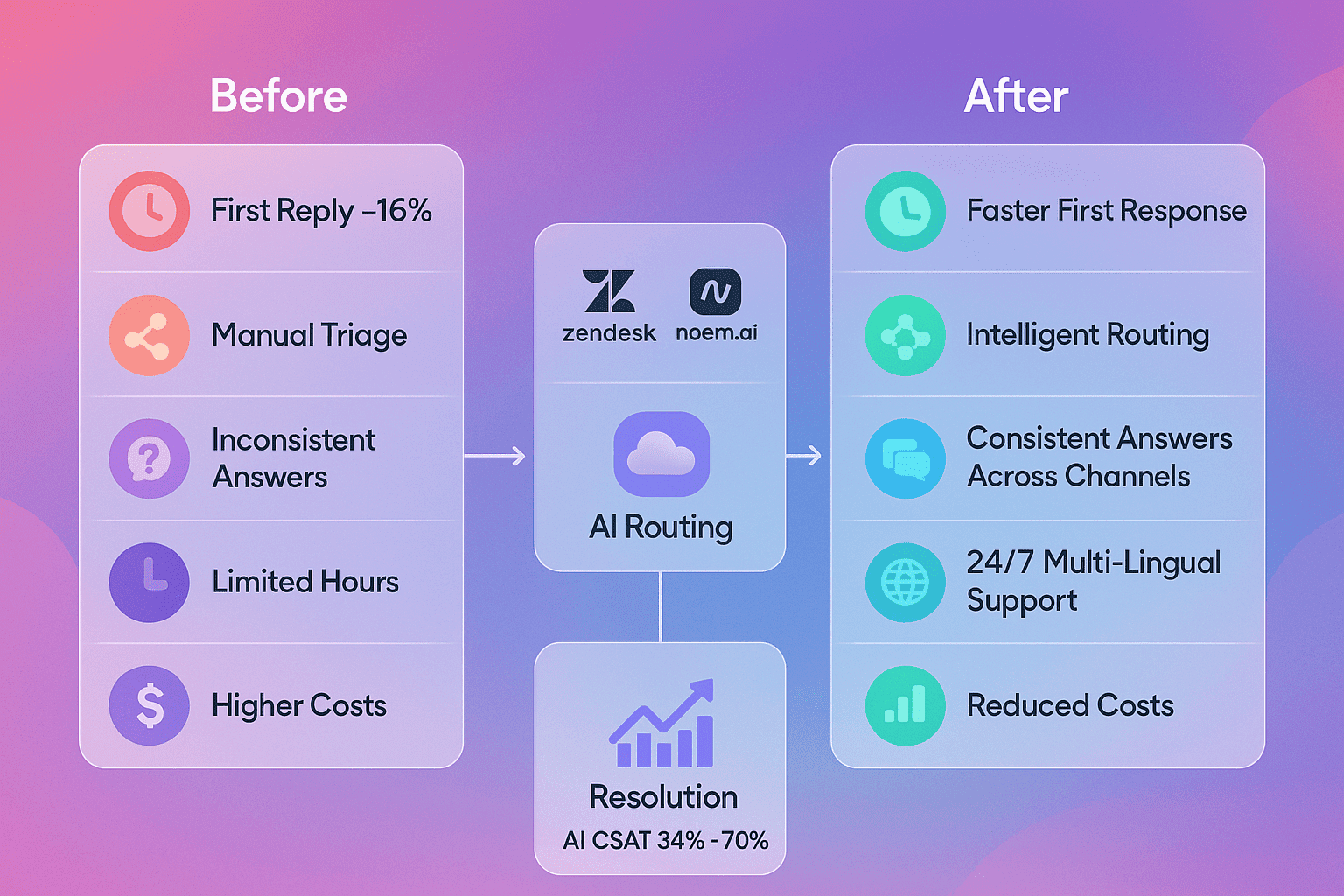
Support costs keep rising as more customers ask for help across more channels. Teams try to cover web chat, email, SMS, and apps, but adding people for every new hour and channel gets expensive fast. The good news is that AI-first chatbots can handle many common questions, triage the rest, and give quick answers that match your policy and brand voice. When designed the right way, they lower ticket volume, speed up replies, and keep the tone consistent—without replacing the human touch you still need for complex cases. With an AI-first approach, your agents focus on the tricky parts, and the bot handles the rest, day and night.
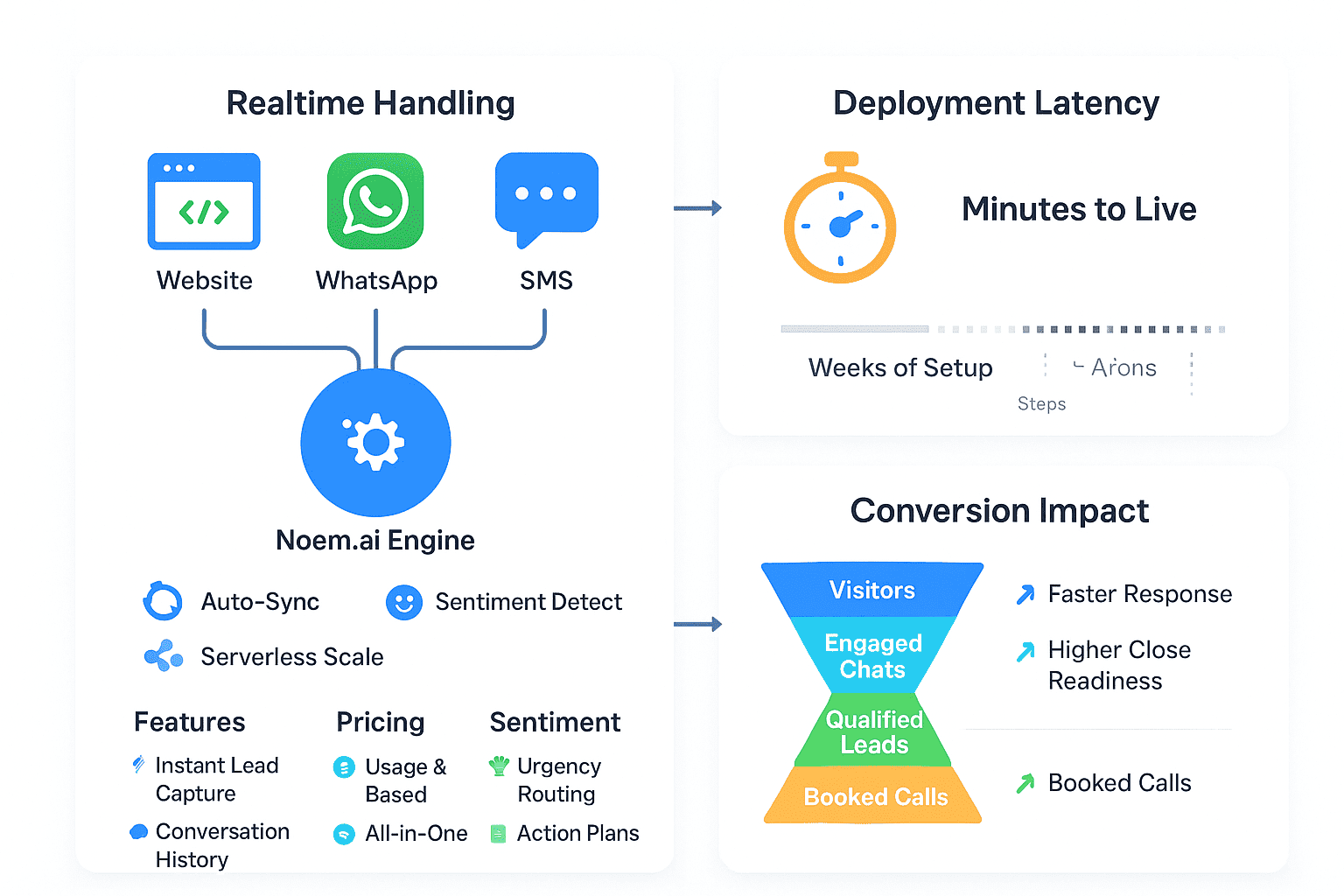
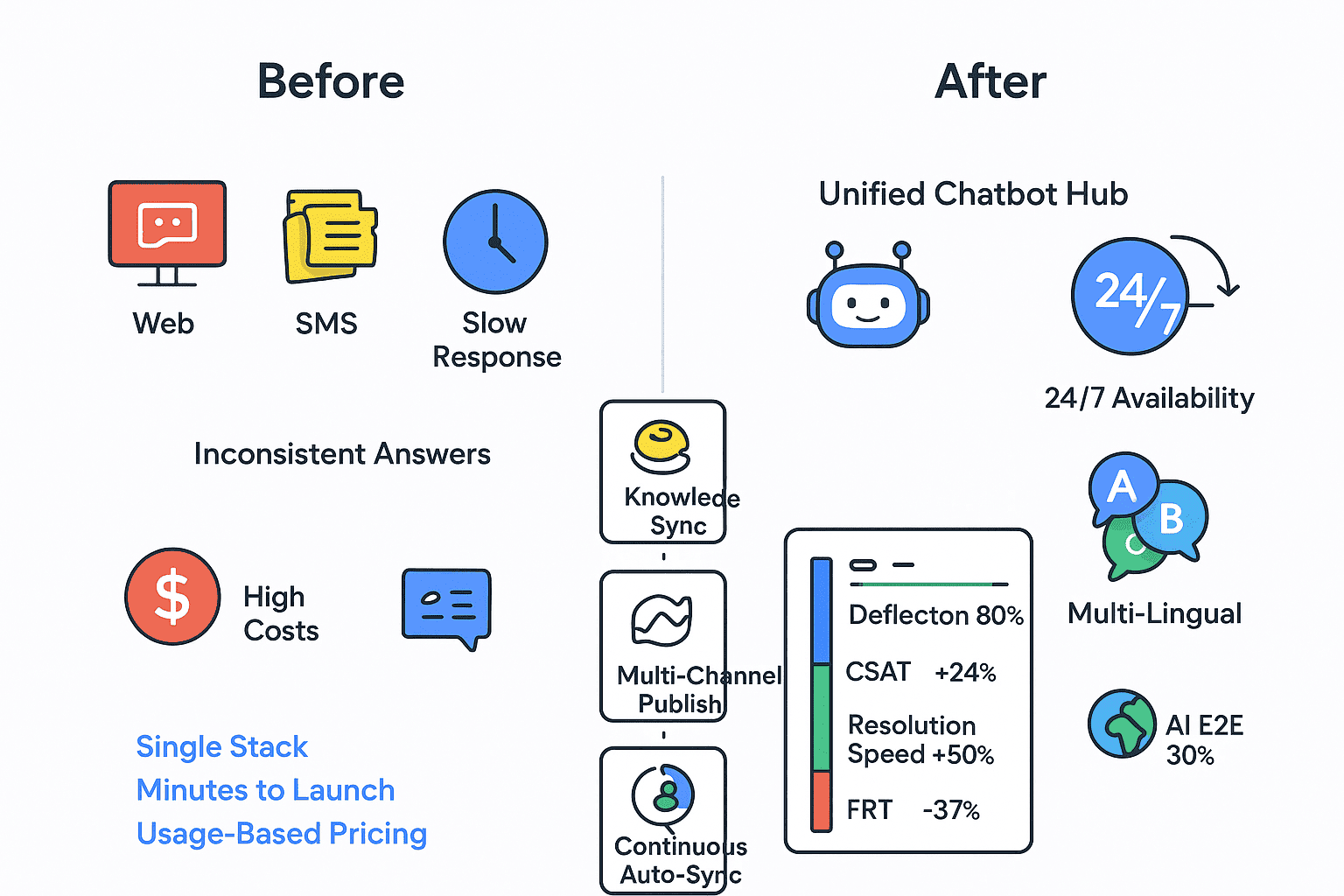
This is where noem.ai stands out. It bundles builder, hosting, knowledge sync, multi-channel publishing, and analytics into a single stack, so your team goes live fast and stays aligned as content changes. Instead of stitching tools, you click to connect your knowledge and push the bot to your channels. Continuous auto-sync keeps answers current, so customers don’t see stale info that causes repeats and churn (ref: noem.ai). This combo of speed, simplicity, and trust means you reduce cost without hurting quality. It’s a smarter way to scale support.
Across real deployments, AI-first chatbots can automate up to 80% of tickets when optimized, while preserving service standards that customers expect (ref: noem.ai, noem.ai). Teams report faster resolutions, lower first response times, and better satisfaction, because answers are fast, consistent, and always on (ref: noem.ai, noem.ai). You cut spend, protect CX, and give agents time back for higher-value work.
Six Pillars That Keep Quality High While Costs Go Down
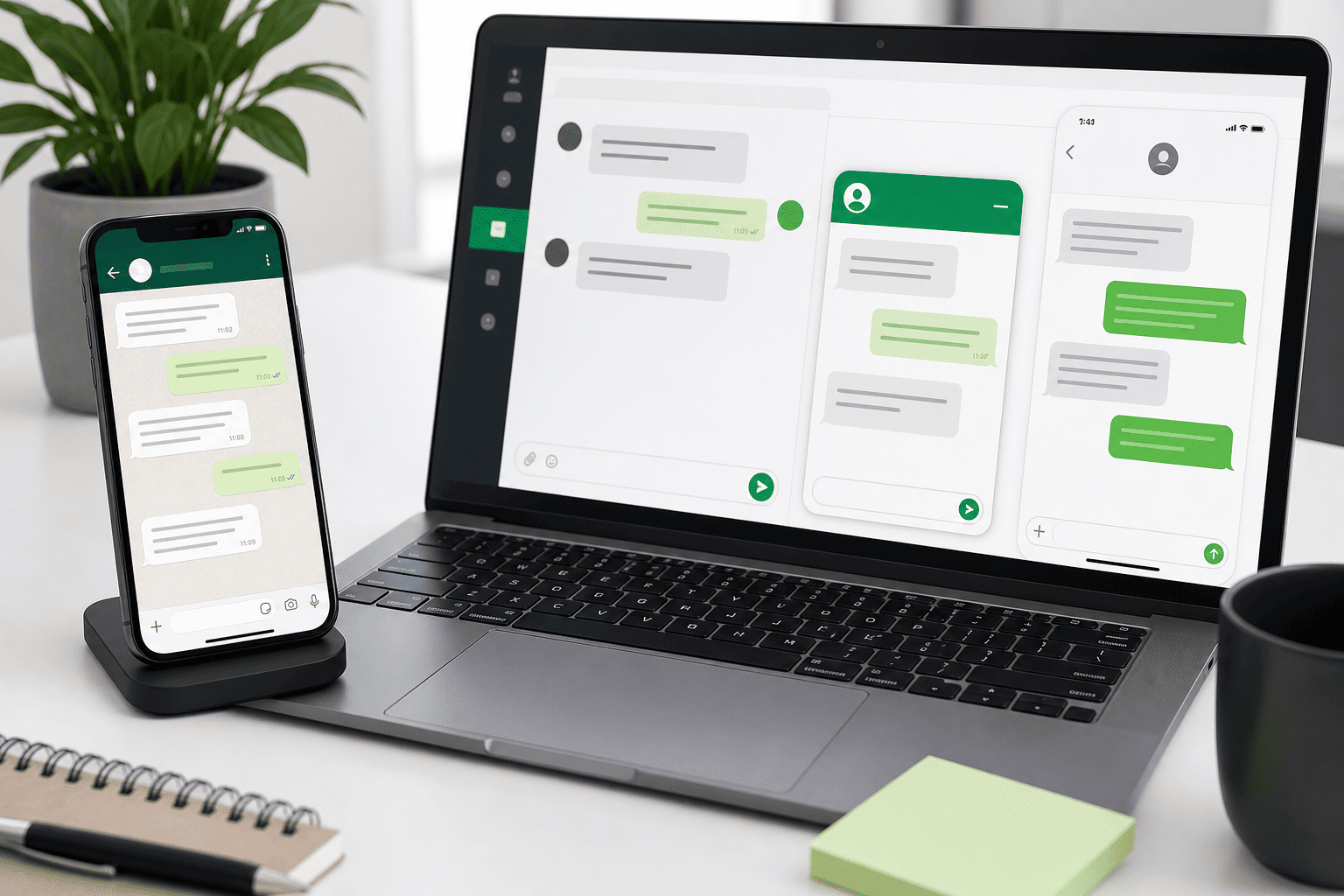
- Bold Consistency Across Channels: Customers hate getting different answers on web chat, SMS, and WhatsApp. An AI-first chatbot that is synced to one source of truth keeps wording, policy, and pricing aligned everywhere, every time. Studies show most people expect the same message no matter where they ask, and consistent replies reduce repeat contacts and frustration (ref: noem.ai). With noem.ai, multi-channel publishing is built in, so teams run one bot across channels from a single dashboard, cutting copy-paste errors and saving hours.
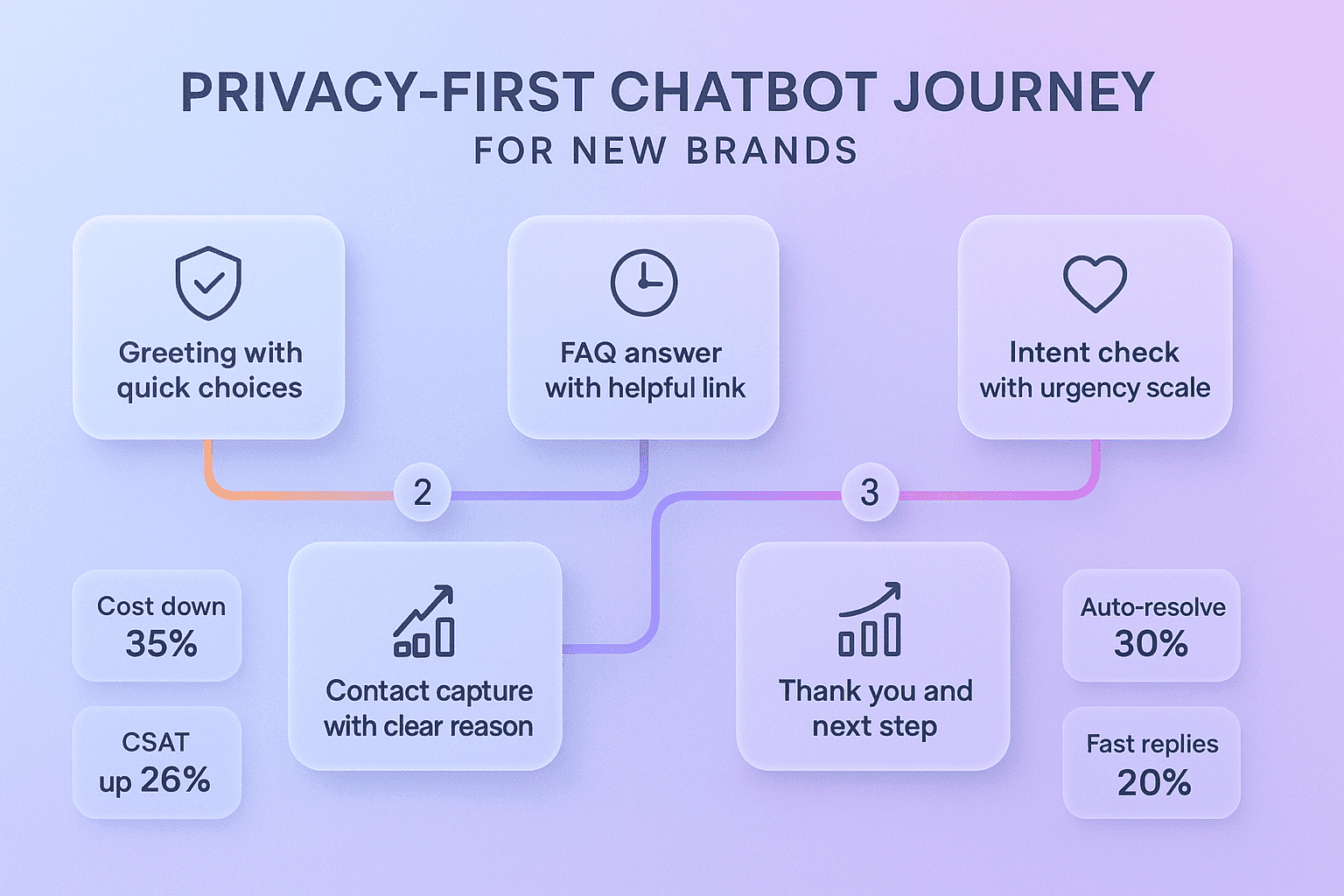
- Bold 24/7 Availability Without Overtime: Customers ask at all hours, but paying for after-hours coverage is hard on small teams. An always-on bot gives instant answers to common questions, books time for agents when needed, and keeps the queue low while you sleep. Many brands see 30% of chats fully resolved by AI, with reports of faster resolution and a big drop in first response time, which boosts trust and keeps carts from being abandoned (ref: noem.ai, noem.ai). With noem.ai, rollout is quick, so you get value in days—not quarters.
- Bold Multi-Lingual Support, One Stack: If you serve global customers, language support matters. A well-tuned AI-first chatbot can greet and help people in many languages, without hiring a full translation team for every time zone. Because noem.ai auto-syncs knowledge, translations update fast when your content changes, keeping answers fresh and accurate across regions (ref: noem.ai). This means less lag, fewer misunderstandings, and a friendlier experience for everyone.
- Bold Reduced Support Costs, Same or Better CX: Cutting tickets is not the same as cutting corners. With AI handling repeat questions, agents can focus on issues that need human judgment, which is where they shine. Many teams see up to 80% deflection when the bot is trained and tuned well, plus meaningful CSAT gains as replies get faster and more consistent (ref: noem.ai, noem.ai). With noem.ai, usage-based pricing keeps costs predictable as volume shifts.
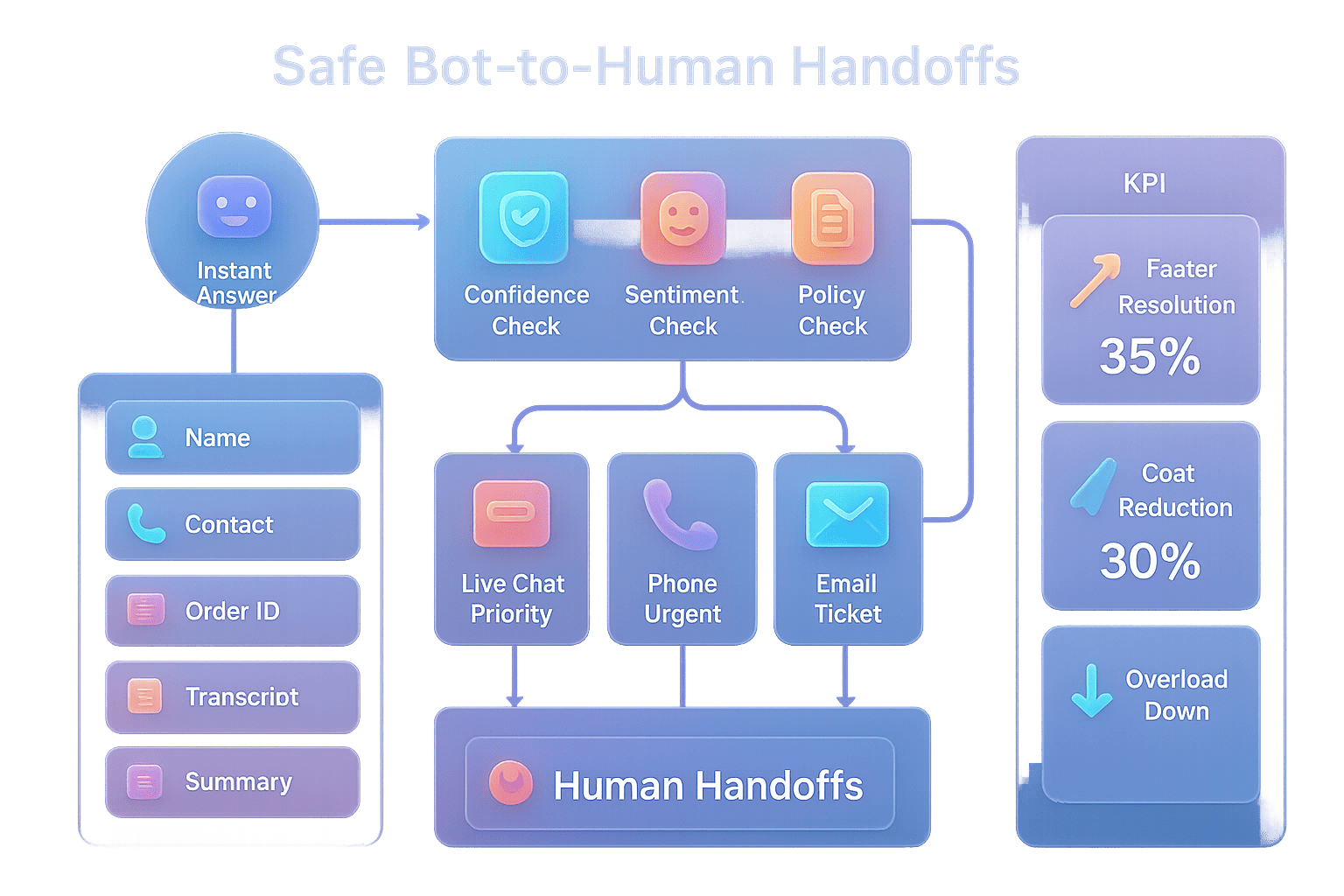
- Bold Complete Conversation History for Smooth Handoffs: Customers don’t want to repeat themselves. When a bot escalates to a human, the full transcript and context should follow so the agent can solve the issue fast. With a complete, searchable history, managers can spot gaps, fix flows, and coach agents without guesswork (ref: noem.ai). noem.ai logs everything and flags missed questions for one-click retraining, so quality improves week by week.
- Bold Actionable Insights That Drive Better Decisions: Good support is not only fast—it is also smart. Every chat is data that can point to product issues, confusing policies, or pages that need better copy. With the right analytics, leaders can see which intents spike, which answers win, and where to optimize flows, turning support from a cost center into a growth lever (ref: noem.ai, noem.ai). noem.ai puts these insights in one place so teams can move fast.
The Practical Playbook: Launch in Weeks, Not Months
Going AI-first does not have to be complex. The goal is to get live quickly, learn from real traffic, and improve in small, steady steps. Start with your top five question types—the issues that show up daily and eat most of your time. Use existing content like FAQs, help docs, and policy pages to train the bot, then publish to your top channel first. This lets you measure impact fast, before expanding to more channels and languages.
With a single-stack platform like noem.ai, setup is fast because builder, hosting, knowledge sync, and analytics live in one place. You connect your knowledge sources once and choose channels with a click, skipping extra vendors and delays (ref: noem.ai). Auto-sync keeps the bot aligned when policies or pricing change, which prevents old answers from causing repeat tickets. This reduces rework, saves hours, and keeps teams focused on high-impact improvements. You get the benefits of an enterprise setup without the heavy lift.
A simple, four-week roadmap helps you ship value fast:
- Week 1 — Sync, Train, Publish: Connect your help center, product pages, and refund policies to build a strong knowledge base. Train core intents around common questions like order status, returns, billing, and troubleshooting. Set clear fallback rules and escalation paths so the bot knows when to hand off. Publish to your main channel, like web chat, and set up light QA to confirm tone and accuracy (ref: noem.ai).
- Week 2 — Measure and Tune: Track deflection rate, first response time, and CSAT to see what works. Review missed questions, add examples, and tighten wording where users get confused. Use analytics to find the top repeated issues and upgrade those flows first. Keep auto-sync on so content updates push to the bot without extra work (ref: noem.ai).
- Week 3 — Add Smart Escalations: Teach the bot to sense frustration by using sentiment cues and trigger handoffs sooner for upset users. Set rules for VIPs or high-risk topics to route to your best agents. This reduces churn and protects NPS, while the bot still handles the easy stuff all day and night. Many teams see faster resolutions and lower handling time after tuning these rules (ref: noem.ai).
- Week 4 — Expand Channels and Languages: Once your top flows are solid, publish to more channels like SMS and WhatsApp so customers get the same answers everywhere. Turn on extra languages based on traffic data and add language-specific examples for clarity. Keep reviewing weekly reports to spot gaps and train those fast. This is how you scale while keeping quality high (ref: noem.ai).
Measure What Matters: Proving ROI Without the Hype
You can’t manage what you don’t measure, so pick a few simple KPIs and track them weekly. First, measure deflection: the percent of issues the bot solves without an agent. Next, check first response time; bots should cut this by a lot since they answer right away. Then watch resolution time and CSAT to make sure quality stays strong as volume grows.
Across AI-first rollouts, here’s what teams often see: up to 80% fewer tickets from better automation, with 30% of chats fully handled by AI in many cases (ref: noem.ai, noem.ai). Resolution time can improve by roughly 50%, and first response time can drop by about 37% once the bot takes the first touch (ref: noem.ai, noem.ai). CSAT can lift by double digits—often reported around 24%—because customers get clear answers faster, day or night (ref: noem.ai). These are the kinds of changes that let you scale without adding headcount.
Make sure you use conversation history to coach the system. Look at where users re-ask questions and add examples to handle those turns better. Study successful chats where the bot solved the issue in one pass, and reuse that language for similar intents. Use analytics to flag the top 10 reasons people reach out, then build deeper flows for those. Over time, this steady tuning unlocks more deflection and even better CSAT (ref: noem.ai).
Avoid common pitfalls while you scale. Don’t roll out to every channel on day one—learn on one channel first to fix early misses. Keep sensitive or high-risk topics set for quick handoff so customers get human help right away. Stay away from jargon and long menus; keep prompts short, clear, and friendly. Most of all, keep your knowledge updated so the bot’s answers match your latest policies (ref: noem.ai).
Ready to see how much you can save—and how much faster your customers get help—when you go AI-first with a single, simple stack? Try a 30-day pilot with a focused goal, track deflection and CSAT weekly, and let real data guide your next step (ref: noem.ai, noem.ai).