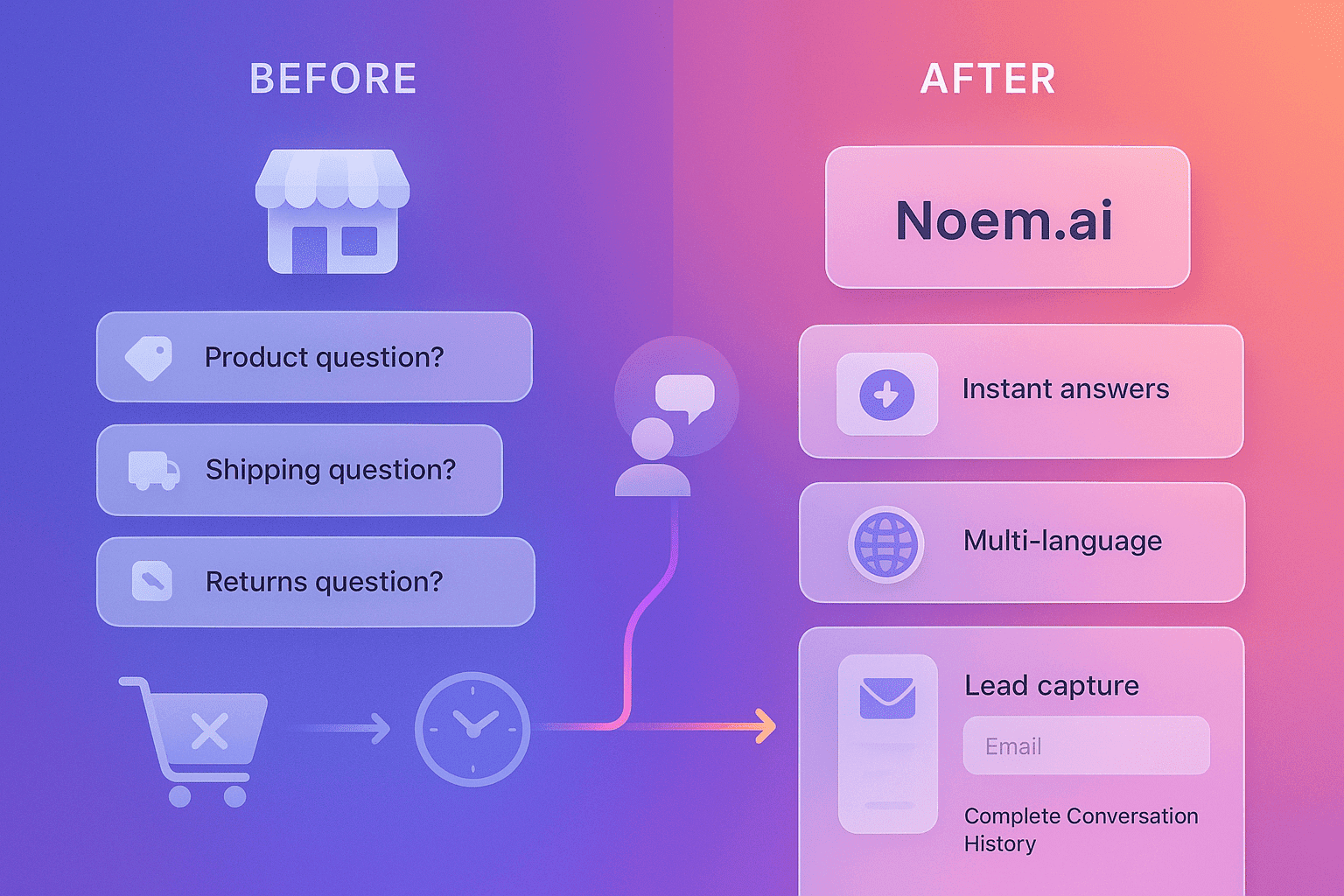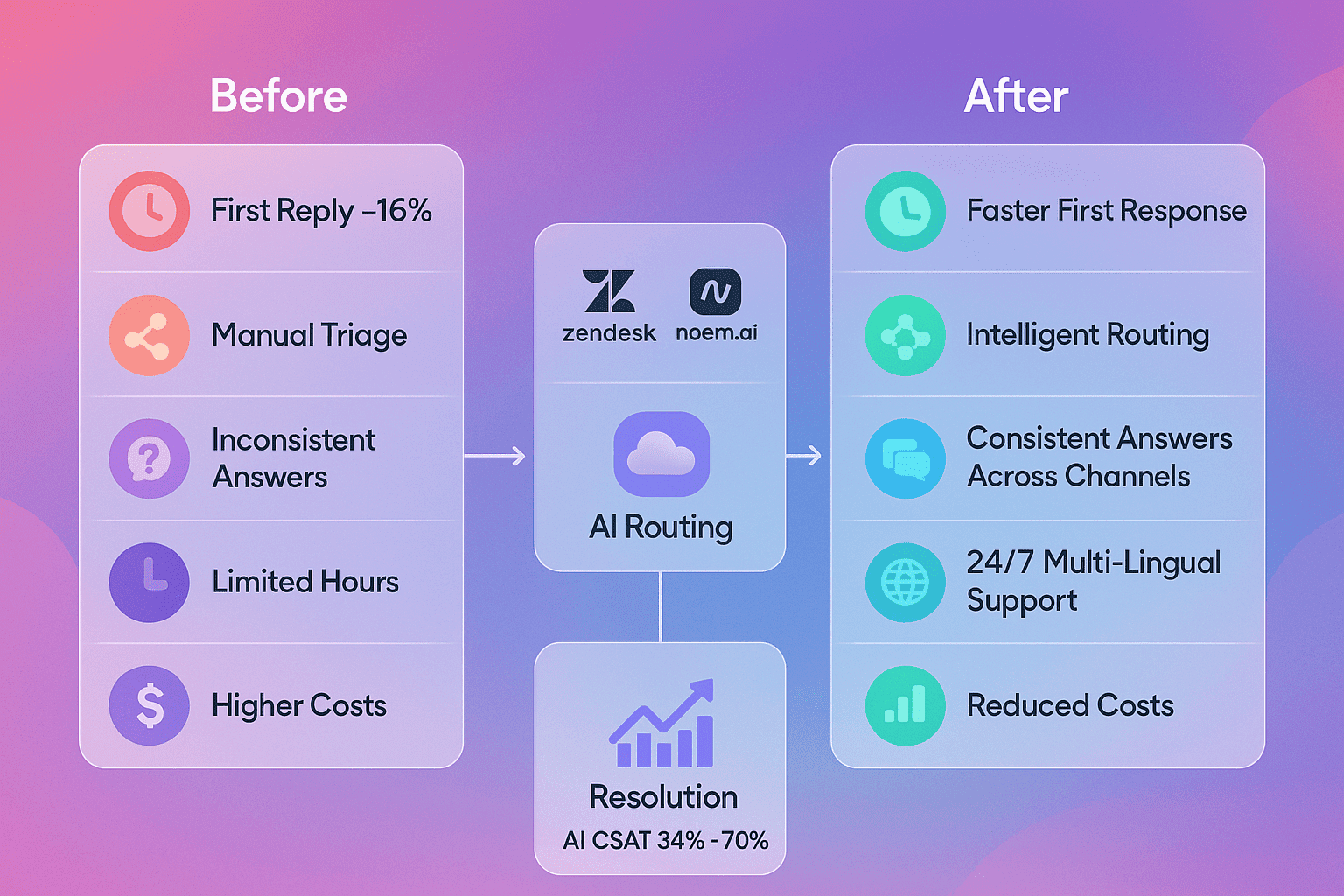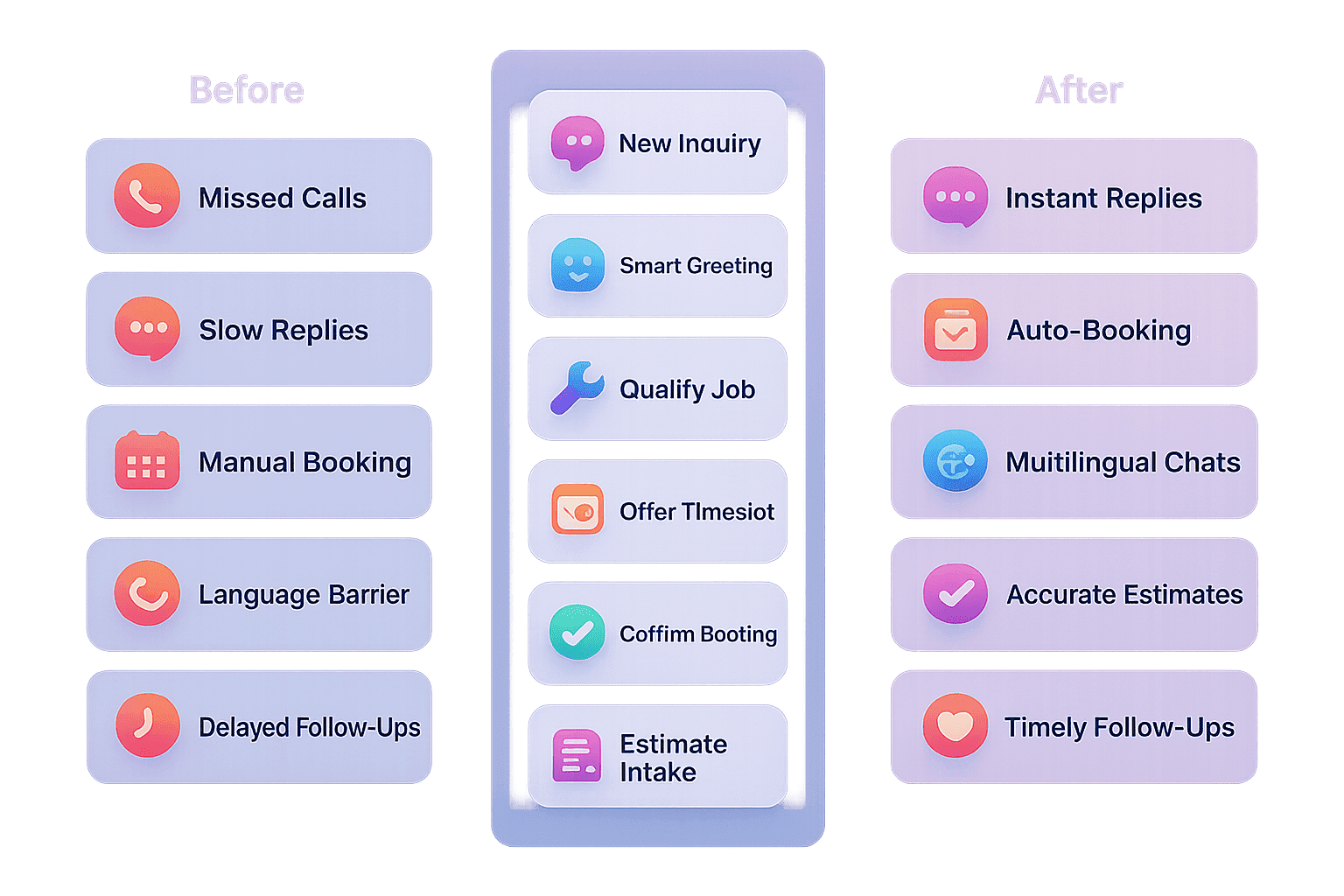
Field teams lose time when they step off a job to answer the phone. Every call, text, or email they chase is time not spent fixing, installing, or inspecting. Customers feel this too, because they wait for answers while your team is stuck on hold or in drive time. A field-friendly chatbot solves this by handling the first touch, gathering details, and moving the request toward a booked job right away. With the right setup, that friendly assistant works all day and night, so your best people can stay focused on the work that pays the bills.
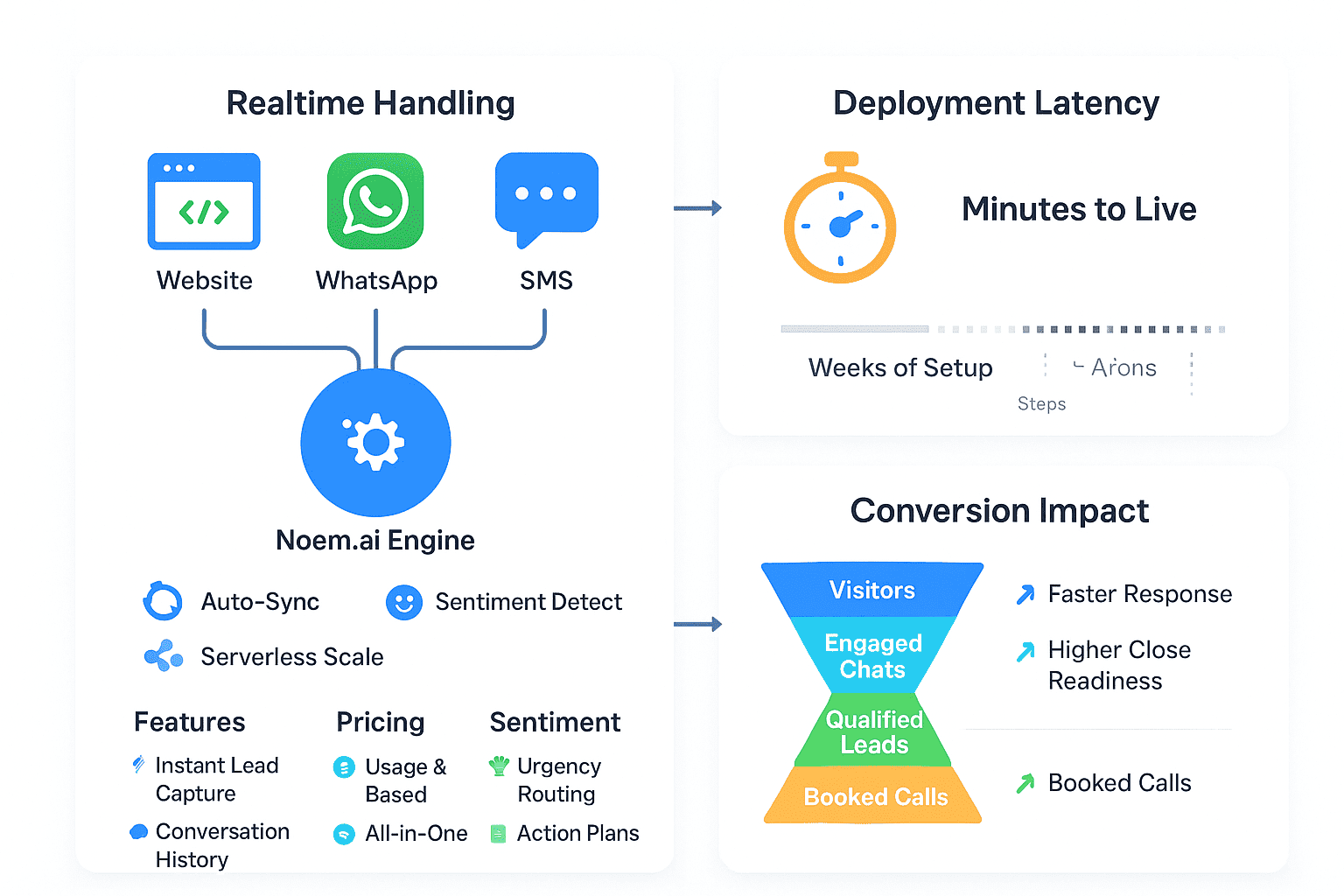
This is where Noem.ai shines. The platform brings building, hosting, knowledge sync, multichannel publishing, and analytics into one place, so you can go live fast without a big project. It supports clear conversation design, brand-safe answers, and guardrails that keep the bot helpful and on-topic. When messages and calls come in, the assistant responds in seconds, asks only what is needed, and routes the job to the right slot. This means you keep your service promise while your team keeps working at the site. The result is less stress, more booked work, and a smoother day for everyone.
Fast answers are not just nice to have. They are the key to catching leads before they move on. Industry results show teams using Noem.ai often see response times improve by up to 80 percent, with many answers arriving in seconds rather than minutes, which helps hold the customer’s attention and turn more inquiries into booked jobs (ref: Noem.ai). When you combine that speed with simple, step by step questions, the assistant can qualify the lead, gather address and job type, and even check availability. You are not adding more staff to do this. You are letting smart chat do the heavy lift while techs keep working. Customers get the help they want right when they need it, and you protect your schedule.
Faster Replies, More Bookings, Fewer Missed Calls
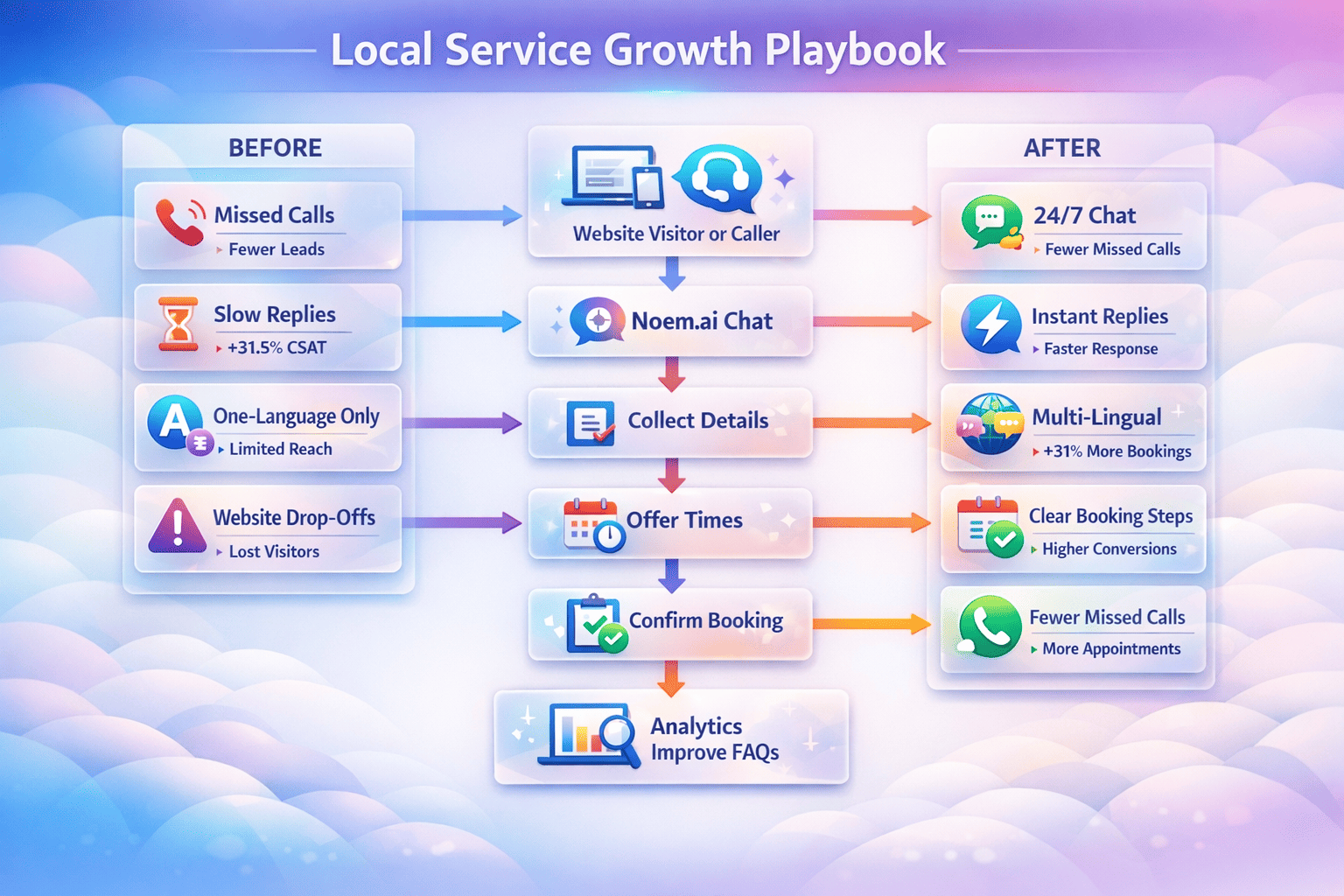
When a new inquiry arrives, the clock starts. If a person waits too long, they often call the next number on the list. That is why instant answers are powerful for field teams. A chatbot that greets in seconds, shares next steps, and offers to schedule can save the lead before it slips away. With a steady chat flow and clear prompts, your business can book more jobs without putting more people on the phones.
- Faster response times that hold attention: When your assistant answers in seconds, people are more likely to stay and share details. Noem.ai users often see up to 80 percent faster replies, which keeps the conversation going and reduces drop-off from slow back and forth (ref: Noem.ai). This is extra important for urgent jobs like leaks, outages, or no-heat calls. The faster the reply, the higher the odds the person books with you and stops shopping around.
- Bookings without extra staff: A good chat flow asks for service type, location, and timing, then offers open slots. This turns chat into action, even while your crew is at the job site. Instead of adding headcount to watch the inbox, the assistant lifts the weight of routine scheduling. Teams report that automation can handle around 30 percent of common questions outright, which lets staff focus on complex issues while the assistant captures easy wins (ref: Noem.ai).
- Fewer missed calls and messages day or night: Missed calls are lost revenue, and voicemail is often the place where leads go to die. With a 24 by 7 chat assistant on your site and channels, customers always get a reply, even after hours or on weekends. The assistant gathers contact info and job details so you can follow up fast if needed. This simple change protects your pipeline and stops the silent leak of unreturned messages (ref: Noem.ai).
- Friendly, brand-aligned answers across channels: People reach out from your site, social, or messaging apps. They expect the same voice and the same clear next step no matter where they start. With Noem.ai’s multichannel tools, you can keep tone, rules, and content aligned so customers do not get mixed messages. This steady voice builds trust and reduces confusion that can lead to lost bookings (ref: Noem.ai).
When you combine these wins, the effect adds up fast. A simple greeting test can lift conversions more than you expect. Some teams report an average 34 percent boost in conversion by tuning greetings and first messages after looking at early chat data, which is a fast, no-code way to capture more jobs from the traffic you already have (ref: Noem.ai). You do not need to overhaul your website or spin up a long project to get this lift. You start with a helpful greeting, make sure the assistant offers to book right away, and let the data guide simple tweaks. Over a few weeks, those small changes can deliver a steady bump in booked work.
This is also where Noem.ai helps you monitor and improve with less effort. The platform includes sentiment and activity reports that roll up what people asked and how the assistant did, so you can see what is working and what needs a small fix. Weekly views make it easy to spot patterns like repeat questions about pricing or timing and then update the knowledge so the next customer gets a better, faster answer. This steady, light lift form of improvement keeps your assistant sharp without eating your team’s time. It is a simple way to keep the wins coming while your crew stays on the tools (ref: Noem.ai).
Multi-Lingual Conversations, Accurate Estimates, And Helpful Follow-Ups
Field work serves many neighborhoods, and not every customer prefers the same language. If someone cannot be understood, they may hang up or call a competitor. With multi-lingual chat, you show respect and remove the barrier right away. The assistant can greet, answer top questions, and collect details in the person’s preferred language, then pass the job along with a clear summary. This simple choice widens your reach and turns more first touches into wins.
- Multi-lingual customer conversations out of the box: Noem.ai supports conversations across languages, which is valuable for trades that serve diverse areas. The assistant can detect and respond in the customer’s language and still keep your brand voice and rules in place. This lets you serve more people without hiring a full multi-lingual staff shift. Your team gets a clean handoff with details ready to go (ref: Noem.ai).
- Estimates that start themselves: Many calls begin with a simple ask. What will this cost, and when can you come. The assistant can collect photos, address, equipment type, rough size, and urgency, then send a pre-filled note to your dispatcher or estimator. With current pricing and policies kept in sync, the bot shares accurate, up to date info and avoids old quotes. This saves back and forth and gets the estimate ready sooner (ref: Noem.ai).
- Follow-ups that build trust and repeat work: After a job, customers often ask about next steps, care tips, or warranty notes. The assistant can send a friendly check-in, invite feedback, and answer the common what now questions. This adds a warm touch without loading your front desk with calls. Teams that use chat to handle routine questions report lower ticket volume and higher satisfaction, which makes it easier to win the next job with the same customer (ref: Noem.ai).
- Knowledge that stays fresh without babysitting: Many field businesses change prices by season, add promos, or update service zones. Manual updates can lag, which leads to wrong answers and unhappy calls. With continuous sync, Noem.ai keeps your assistant aligned with the latest content so customers get accurate info every time. You avoid quoting old prices and keep your team on the same page with less effort (ref: Noem.ai).
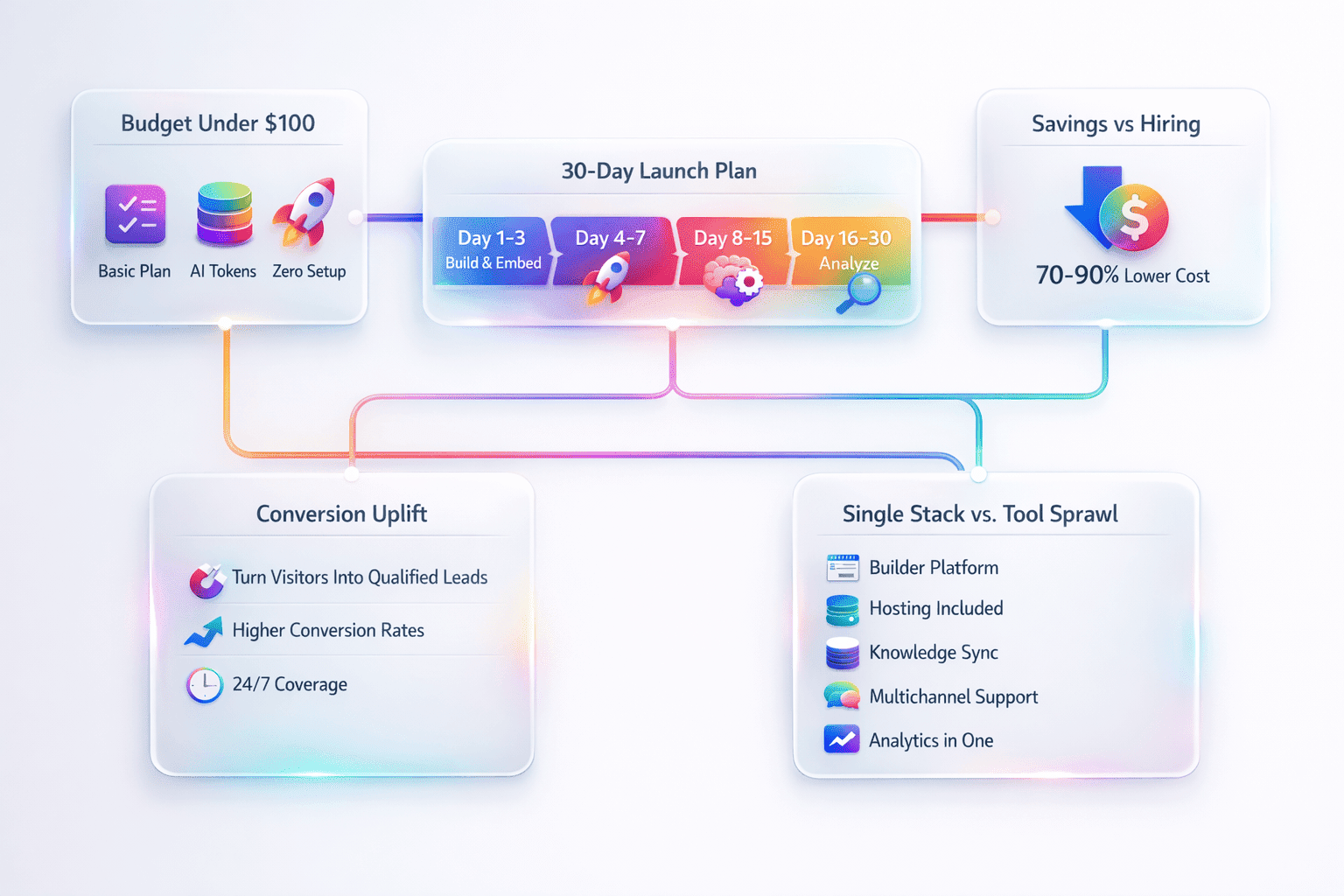
Accuracy matters as much as speed. If a bot gives the wrong time window or an out of date price, it can create work for your crew later. That is why a single stack approach is useful for busy field teams. With Noem.ai, building, hosting, content sync, and analytics sit together so there are fewer gaps where errors sneak in. Your assistant stays current, and your team spends less time chasing corrections. The result is a simple, trustworthy system that helps every step of the customer journey.
Your staff also benefits from cleaner handoffs. When the assistant collects the right details upfront, dispatch has less to clarify, and techs show up with what they need. That leads to faster calls, fewer returns, and happier customers. Over time, your reports will show which questions predict a smooth job and which need a tweak in the chat flow. By using those insights, you keep improving without heavy work. This is why a focused tool like Noem.ai is a strong fit for field service teams that want fast wins without taking on complex projects (ref: Noem.ai).
Simple Setup, Clear Reports, And Results You Can See
A big reason teams delay chat projects is fear of setup time. The good news is you do not need a long build or a custom stack to get value. With a bundled platform, you can launch fast, test in real conversations, and improve week by week. This fits the way field teams work, because there is not a lot of time for long meetings and big plans. You want a tool that respects the day to day and gets wins quickly.
- Go live in days, not weeks: Noem.ai brings builder, hosting, syncing, and analytics into a single stack, which reduces moving parts and makes rollout faster. You connect your service types, service area, hours, and basic rules. Then you launch on your site and channels so the assistant can handle common questions, bookings, and estimate requests right away. You get results quickly without a complex setup or long training cycle (ref: Noem.ai).
- See what works, fix what does not: Built-in sentiment and activity reports make it simple to understand customer mood, top questions, and where people drop off. You can spot wins like faster first reply and more completed bookings. You can also see which answers need a clearer step or a better handoff. Small edits based on real data often have an outsized impact on your weekly bookings and customer satisfaction (ref: Noem.ai).
- Fewer routine tickets, more time for real work: When the assistant handles common questions, your inbox gets lighter. Noem.ai users have reported significant drops in routine support load, with top questions handled by the bot so staff can focus on complex issues and on-site work (ref: Noem.ai). As routine volume falls, your team responds faster to harder asks, which boosts trust and keeps schedules tight. This steady shift improves the whole customer journey.
- Predictable costs with usage-based pricing: Field service demand can spike in heat waves, cold snaps, or storms. You need a tool that scales when you do, without cost shocks that hurt your margin. With usage-based pricing, you pay in a way that tracks real demand, which makes planning easier. This lets you grow chat volume during peak times and settle back down when the season cools off, all without budget drama (ref: OpenPR).
As you gather more conversations, your assistant gets better at guiding people to the right next step. You can A B test openings, refine which services show first, and adjust the way you ask for photos or notes. These small, focused changes add up to more finished chats and booked jobs. Teams that do this simple tune-up work often see higher conversions without buying more ads. That is smart growth that respects your time and your budget (ref: Noem.ai).
You will also find that your front office runs smoother. Instead of bouncing between tools, your staff uses one place to check performance and adjust content. With fewer systems to manage, there are fewer errors to chase. This is the heart of what makes Noem.ai different for field teams. It is built to be simple, fast, and trustworthy, so you can ship value quickly, then keep improving day by day without a heavy lift (ref: Noem.ai).
Real-World Wins You Can Expect In The First 30 Days
In one month, small changes can set a new pace for your business. You can capture more inbound work, stabilize your schedule, and reduce the number of times a tech must step away to answer questions. You will also build a stronger habit of learning from your own data. Here is what a simple, steady first month can look like for many field teams.
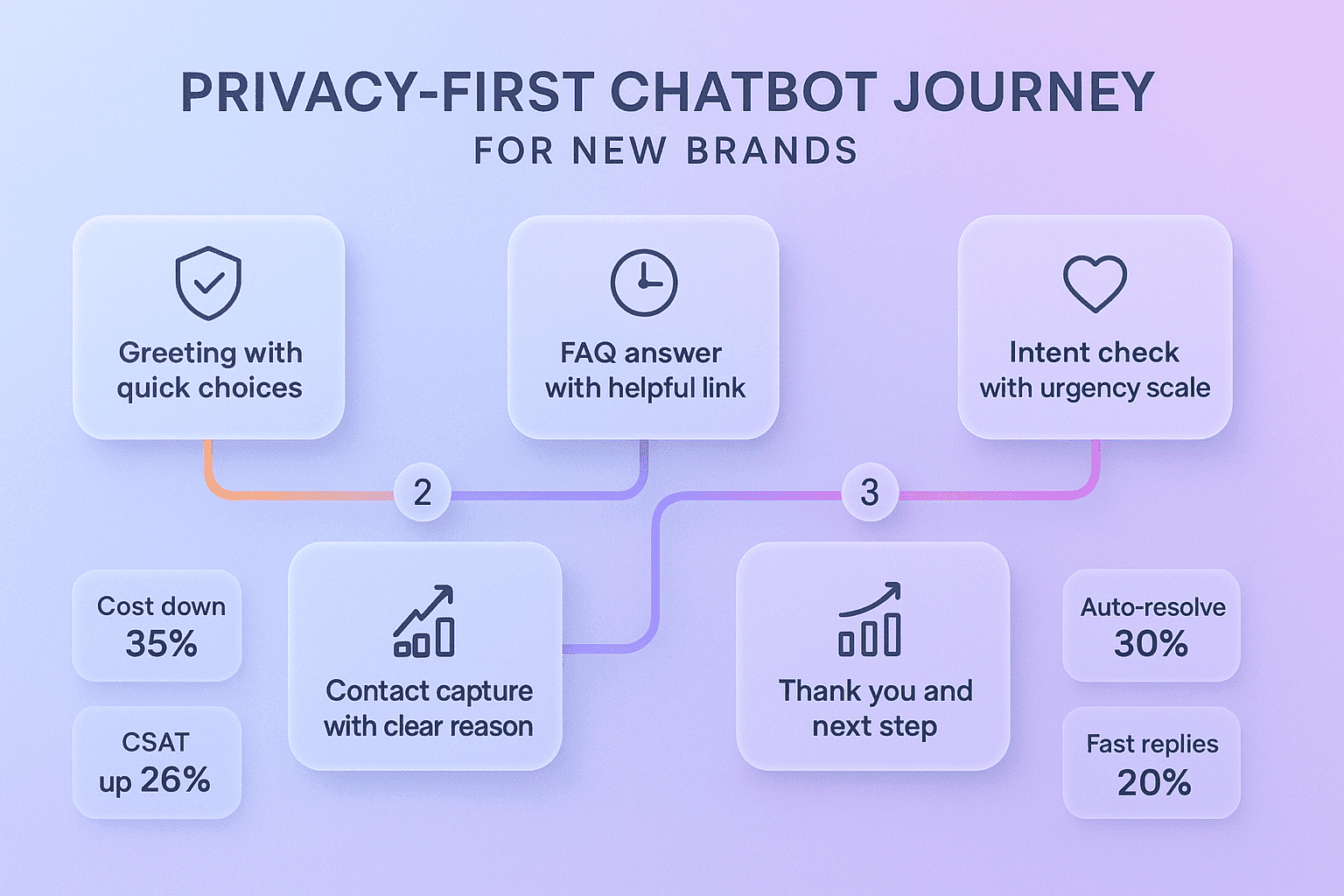
- Week 1: Launch a clear greeting and booking path: Start with a friendly hello, a short list of services, and a fast path to schedule. Make sure the assistant asks for location, urgency, and a contact method early. Set guardrails so complex issues are handed to a person with a note and a timestamp. This gives you safe coverage right away while you collect the first set of real chats to review (ref: Noem.ai).
- Week 2: Add estimate intake and after-hours auto-reply: Many leads come in after dinner or on weekends. Set an after-hours message that promises a fast follow-up and still offers to collect estimate details. Ask for photos where useful, like a unit label or a leak area. This creates productive mornings with qualified leads waiting and fewer missed calls from the night before (ref: Noem.ai).
- Week 3: Review reports and tune the first two messages: Look at sentiment, drop-offs, and top questions. If people ask about price right away, consider adding a quick price range message or a link to a pricing page. If people ask about timing, add next available windows and an offer to book. These micro-changes often drive a measurable bump in finished chats and booked jobs by the end of the week (ref: Noem.ai).
- Week 4: Expand multi-lingual support and standardize follow-ups: Turn on a second language for common neighborhoods you serve. Set a friendly day-after message that shares care tips and a feedback link. Close the loop by offering a discount for service plans or seasonal tune-ups. This keeps your brand top of mind and drives repeat work without adding phone time for your team (ref: Noem.ai).
Across these first weeks, you should see fewer routine calls, faster replies, and more completed bookings from the same traffic you had before. Some teams also see customer satisfaction rise as simple questions get answered right away and follow-ups happen on time. Industry snapshots show that automation can resolve around 30 percent of common questions and lift satisfaction by about 24 percent, which lines up with lighter inbox load and more time for complex jobs that need a person’s touch (ref: Noem.ai). These are practical, day to day wins that matter most to field teams.
When you are ready to grow further, the same system supports new channels and small workflow upgrades. You do not need to add heavy tools to serve more people. Instead, you use the reports to aim your next small change. Over time, that adds up to a strong, simple engine for customer care that keeps your crews on site and your schedule full. This is the promise of a focused, field-friendly assistant done right, and it is what Noem.ai is built to deliver for busy service teams.
Ready To Keep Your Techs On The Tools And Your Schedule Full
If you want faster replies, fewer missed calls, more bookings, and friendly multi-lingual help without adding staff, this is a great time to start. Launch a simple assistant, learn from your first week of chats, and keep tuning from there. You will protect your team’s time and win more work from the traffic you already have. The best part is you can do this in days, not weeks, thanks to the single stack design and auto-sync from Noem.ai. Want a quick walkthrough or a fast pilot to see the lift for yourself?