Customer needs do not wait for business hours. People ask for help on weekends, at night, and in different time zones. Studies show that 82 percent of customers expect instant responses, and slow replies can lead to lost sales or churn for your business (ref: Zendesk). The good news is that modern AI chatbots can stay online all day and night, giving answers in seconds. This means you can help more people and keep costs predictable without adding more staff.
Customers are also warming up to helpful bots, especially when they get quick answers. Reports show that 51 percent of consumers prefer bots when they want help right away, and that share rises to 75 percent when speed is the top need (ref: Ringly; ref: ChatMaxima). This shift is not only about cost. It is about giving customers the fast, correct help they want at any hour. If your support is always on, you build trust. If it is not, people can and will switch to brands that respond first and respond well (ref: Hyperleap).
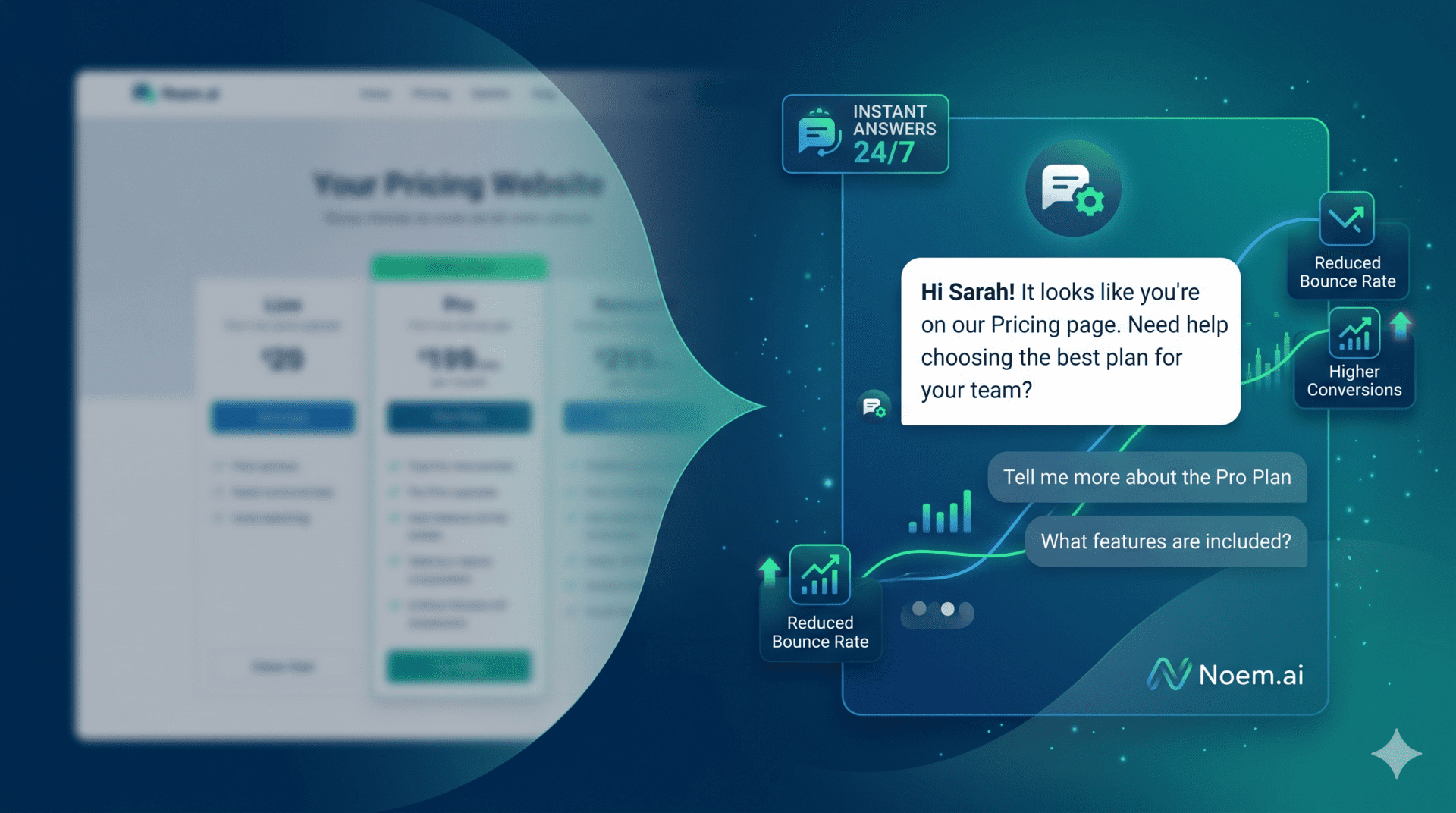
When you connect this need with a focused platform like noem.ai, the path to 24-7 support gets simple. Noem.ai bundles builder, hosting, knowledge sync, multichannel publishing, and analytics into one stack, so teams go live in minutes instead of weeks. With continuous auto sync, your bot always reflects the latest content, so answers stay fresh. Usage based pricing helps you scale at a pace that makes sense for your business. This blend of speed and trust is why many teams are moving to noem.ai from piecemeal tools (ref: Noem.ai Blog).
The New Standard: Consistent Answers Across Channels, Any Language, Any Hour
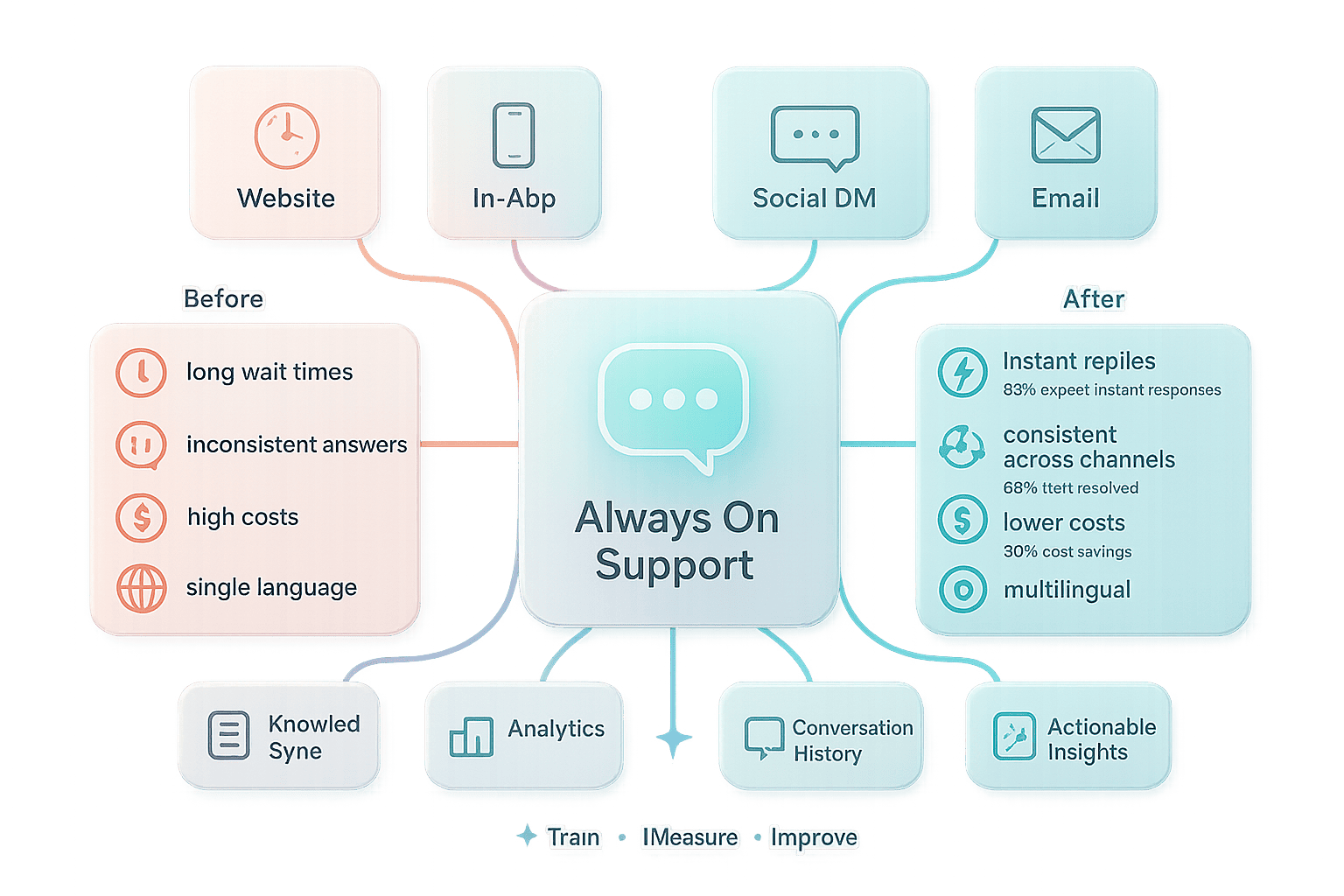
- Consistent Answers Across Channels: Customers ask the same question on chat, email, and social. They expect the same answer every time. Generative AI support agents now reach about 92 percent accuracy in understanding intent, which is far better than old keyword bots at 65 to 70 percent, and this makes cross channel replies feel steady and clear (ref: ChatMaxima). When answers match across your website, help center, and social inboxes, confusion drops and first contact resolution goes up. Always on help only works if it is also always right, and synced knowledge is how you get there (ref: Noem.ai Blog).
- 24-7 Availability That Scales: Modern buyers live around the globe, which means someone needs help at any time. With 24-7 chat in place, you do not need to add costly night shifts just to be present. The benefit is more than coverage. It is also speed, since bots respond in seconds and are not stuck on hold queues (ref: Zendesk). As a result, you can meet needs quickly without making a big hiring plan just to catch up at peak hours or during launches (ref: CoSupport).
- Multi Lingual Customer Support: Serving more markets often means more languages. Hiring for each language is costly and slow. Well tuned AI now handles many common languages natively, so teams can greet and guide people in the language they prefer. Studies show a 15 percent lift in satisfaction in non English markets when support is multilingual, which helps with global growth without building large regional teams (ref: Hyperleap). With noem.ai, you can publish to web, in app, and social channels, so the same smart bot helps everywhere your users are (ref: Noem.ai Blog).
- Reduced Support Costs Without Cutting Quality: Strong AI programs reduce total support costs by about 30 percent, and some teams report 30 to 40 percent savings as bots handle routine questions and qualify leads well before a handoff (ref: Hyperleap). Agents who do use AI tools can handle 35 to 40 percent more tickets per shift without more errors or worse CSAT, which stretches your team without adding headcount (ref: ChatMaxima). These gains come from faster first answers, better routing, and fewer repeats. With usage based pricing from noem.ai, your costs follow real usage and stay predictable as you grow (ref: Noem.ai Blog).
- Complete Conversation History And Clean Handoffs: A full record of each chat helps everyone. When a person moves from bot to human, the agent can see what was asked and what was answered already. This removes repeat questions and speeds up time to resolution. Managers can also review handoffs to find gaps in content and training so the bot gets smarter each week. Clean handoffs are part of what makes noem.ai feel safe for both customers and agents because context never gets lost (ref: Noem.ai Blog).
- Actionable Customer Insights Out Of The Box: Helpful chat data does not stop at ticket deflection. Teams can see top intents, where people get stuck, and which answers lead to resolved chats. Missed question alerts become to do items, and one click retraining can fix a gap fast (ref: Noem.ai Blog). This loop turns a basic FAQ bot into a trusted guide that helps both support and sales. With noem.ai analytics, your team can move from reactive work to proactive improvement each week.
What The Data Says About Speed, Resolution, And Customer Preference
When teams add AI chat, two results stand out. First, the bot answers fast, usually in seconds. Second, it can often solve the whole issue on the first try. AI native platforms now reach 55 to 70 percent first contact resolution with average handle times under three minutes, which is faster than the four to seven minute average for human assisted voice calls (ref: CoSupport). In tier 1 support, companies report 65 percent of inquiries are resolved without a human, and the rest are passed to agents with full context so the customer does not need to repeat themselves (ref: ChatMaxima).
Real world examples show how big this can be. Klarna cut average resolution time from 11 minutes to 2 minutes after rolling out AI, an improvement of about 82 percent based on public reporting (ref: CoSupport; ref: ChatMaxima). H and M reported a 70 percent drop in response time after using a generative AI chatbot for common tasks (ref: ChatMaxima). Satisfaction improves too when answers are fast and correct. One survey shows 92 percent of people are satisfied with AI chats that deliver helpful answers quickly, which proves speed plus accuracy is what matters most to customers (ref: Hyperleap).
Customer preference is also changing each year. Today, 74 percent of customers say they prefer chatbots for simple questions, and 78 percent prefer a bot over waiting on hold (ref: ChatMaxima; ref: Hyperleap). Trust is rising along with use. About 85 percent of customers now trust bots for simple queries, up from older data that showed a lower level of trust (ref: Hyperleap). Many people even believe bots will sound natural very soon, which means the bar for quality is still moving up (ref: Ringly).
These shifts make always on help more than a nice to have. It is a must have to keep up with what customers expect. If your answers are quick and steady across all channels, you win attention and trust. If you also keep costs flat as volume grows, you build a support engine that scales with your business. This is exactly where a focused platform like noem.ai shines, because it puts builder, hosting, sync, and analytics in one place so teams can move faster without risk (ref: Noem.ai Blog).
Finally, not every chat can or should be fully automated. Safe escalation is part of a strong design. Teams using AI report 45 percent fewer escalations to humans compared to old rule based bots, because the bot actually solves the issue or adds solid context before the handoff (ref: ChatMaxima). This keeps agents focused on the complex cases that need judgment and empathy. With complete history attached, those handoffs feel natural and kind to the customer.
From Setup To Scale: How noem.ai Helps You Go Live In Minutes, Not Weeks
- One Stack, Fewer Moving Parts: Many teams struggle with a patchwork of point tools that do not play well together. noem.ai combines chatbot builder, hosting, knowledge sync, multichannel publishing, and analytics into a single stack. This reduces vendor sprawl and removes long integration projects that stall launches and drain budgets. With one login and one workflow, your team spends more time helping customers and less time chasing setup tasks (ref: Noem.ai Blog).
- Continuous Auto Sync Keeps Answers Fresh: A bot is only as good as the content behind it. When your product or policy changes, you need those changes live fast. Continuous auto sync means the bot always reflects the latest docs, help center articles, and FAQs, so answers stay correct without manual updates. This drives more first contact resolutions and fewer mistakes across time zones and channels (ref: Noem.ai Blog).
- Multichannel Publishing In A Click: Your customers find you on your website, in app, and on social. That is why noem.ai supports multichannel publishing so one bot can serve all major touchpoints. This keeps answers consistent and lowers the effort to maintain multiple bots for each place. It also ensures your brand voice stays the same everywhere, which builds trust over time (ref: Noem.ai Blog).
- Usage Based Pricing That Scales Predictably: New programs often start small and grow with adoption. With usage based pricing, you can launch, learn, and scale without big up front costs. You pay for what you use, plan for growth, and avoid waste. This model maps well to seasonal spikes and product launches, and it is one reason leaders say AI support helps them scale without hiring sprints (ref: Noem.ai Blog).
- Analytics And Insights You Can Act On: Going live is step one. Getting better each week is how you win. noem.ai analytics give you top intents, deflection rates, sentiment trends, and missed question alerts. With one click retraining, your team can turn insights into better answers and smoother flows. Over time, this lifts CSAT and reduces escalations in a way you can measure and share with the business (ref: Noem.ai Blog).
Proof Points You Can Share With Your CFO And COO
Leaders want clear numbers and simple plans. The numbers behind always on chat are strong and getting stronger each quarter. Industry sources report up to 30 percent cost reductions from well run chatbot programs, especially when the bot tackles routine tasks at scale (ref: Hyperleap). When agents do need to step in, AI backed workflows help them handle 35 to 40 percent more tickets per shift without hurting satisfaction, which is a big gain in productivity (ref: ChatMaxima). And do not forget that 82 percent of customers now expect instant replies, so speed is not just a nice touch. It is the standard you are judged against every day (ref: Zendesk).
The quality story is just as important as the cost story. Generative AI systems show around 92 percent accuracy in understanding what a customer wants to do, which brings down confusion and makes answers feel helpful and human like in the right way (ref: ChatMaxima). Satisfaction rises when people get fast, correct answers. In fact, 92 percent of customers report being satisfied with AI chat when it is quick and helpful, which proves that simple, correct help is enough to delight most people (ref: Hyperleap). If you keep these wins steady across all your channels, your brand earns a reputation for being easy to work with at any hour.
There is also a competitive angle you can bring to planning. Many customers say they will switch brands for better AI support, which makes your support experience a top lever for retention and growth, not just a cost line (ref: Hyperleap). If your team can deploy fast and improve week by week, you widen the gap with slower rivals. This is where the speed of noem.ai matters. Because the platform is one stack, you do not lose months to setup, and you can show results by the next board meeting (ref: Noem.ai Blog).
When you share this plan with your CFO, keep the steps crisp. Start with a limited scope, like top five intents that make up most tickets. Launch with guardrails, measure deflection and CSAT weekly, and tune answers every Friday. Expand to more intents and more channels after two to four weeks. This controlled rollout shows value fast while building trust in the approach across your company.
A Simple Playbook To Launch Always On Support In 30 Days
- Week 1: Gather And Sync Knowledge: List your top five to ten intents by ticket volume. Export your help center, product docs, and top macro replies. Use auto sync so the bot always has the latest content. Set up multichannel publishing targets like web chat, in app, and one social channel to start. Confirm brand voice and tone so the bot sounds like you from day one (ref: Noem.ai Blog).
- Week 2: Build Flows And Guardrails: Create flows for the top intents and define safe handoff rules. Include soft confirmations like Did I get that right to keep intent matching honest. Add quick links for common tasks like reset password or track order. Set clear fallback rules and define what content the bot can and cannot use. Review with legal and support leads for confidence.
- Week 3: Pilot And Measure: Turn on chat for a limited audience or hours. Track deflection rate, first contact resolution, and CSAT. Review complete conversation history for patterns and adjust content. Train the bot on missed questions and add new FAQs. Share weekly results with leaders so everyone sees progress.
- Week 4: Expand Channels And Languages: Turn on more channels like social DMs and email triage. Add one or two high demand languages based on your traffic. Continue weekly tuning with analytics and insights. Add simple escalation tags for complex topics so handoffs are smooth. Plan the next month of content updates to keep momentum.
What To Measure So You Keep Getting Better
- First Contact Resolution And Deflection: Track the share of chats solved without a human. Many teams reach 55 to 70 percent FCR with AI native platforms when tuned and trained well (ref: CoSupport). Pair this with deflection rate to see how many tickets never reach the queue. Watch this over time to make sure quality stays high as volume grows.
- Handle Time And Wait Time: Speed is a core promise of AI chat. If average handle time stays under three minutes for common tasks, you are on track compared to voice calls that can take four to seven minutes or more (ref: CoSupport). Also track time to first response, which should be near instant for bot chats. Fast answers build trust and keep people from bouncing to a competitor.
- CSAT And Sentiment Trends: High CSAT proves the bot is helpful, not just fast. Sentiment analysis shows where tone or content is off so you can fix it. If you see drops around certain intents, read the transcripts and patch the content. Often one better article or a clearer step by step reply lifts the whole metric. Keep a monthly review to lock in gains.
- Escalation Rate And Handoff Quality: Not all issues should be solved by a bot. Track the share that escalate and what happens next. Teams using AI report 45 percent fewer escalations than rule based bots because the answers are better and the context is rich at handoff (ref: ChatMaxima). Watch for repeats after handoff to spot missing context or unclear notes. Fixing these makes the whole journey feel smooth and kind.
- Cost Per Resolved Chat: Roll up all costs and divide by resolved chats to get a simple metric the CFO will love. As volume grows, this number should fall when your bot handles routine work at scale. Industry studies point to 30 percent or more cost savings when programs are managed well and kept fresh with auto sync (ref: Hyperleap). Pair this with revenue lift from saved deals or faster conversions to tell the full story (ref: Noem.ai Blog).
Common Risks And How To Avoid Them
- Stale Content Means Stale Answers: If your bot uses old docs, it will give old answers. Set up continuous auto sync so changes to your help center or policies show up right away. Make a weekly habit of checking top questions and updating content. With this in place, your bot reflects your current truth and earns trust over time (ref: Noem.ai Blog).
- Over Automation Without Safety Nets: Not every problem should be solved by a bot. Keep clear rules for escalation to humans for billing, cancellations, or sensitive issues. Add soft confirmation prompts to reduce errors. Review handoffs weekly to make sure context is clear and the customer feels cared for. This balance drives better CSAT and loyalty.
- Channel Sprawl Without Consistency: Launching on many channels without one source of truth leads to mixed answers. Use one synced knowledge base and multichannel publishing so the same answer appears on web, in app, and social. noem.ai is designed for this exact need, which keeps your program simple to run and easy to scale (ref: Noem.ai Blog). Start with a few channels and add more once content is steady.
- Missing Metrics And Reviews: If you are not measuring, you are guessing. Set up dashboards for FCR, deflection, CSAT, sentiment, and escalation rate on day one. Meet weekly to review and assign fixes, then close the loop the next week. This rhythm is how programs become great over time.
What Your Customers Will Feel When You Get This Right
Customers will notice faster help first. They will also notice that answers match, no matter where they ask. They will see that the bot understands their intent and offers clear steps or links that actually solve the issue. When a human does step in, the agent will already know what happened and what was tried, which saves time and shows respect. Over a few weeks, this becomes your brand reputation: easy to reach, quick to answer, and kind in every step (ref: SurveyMonkey).
Internally, your team will feel the lift too. Agents will spend less time on copy paste questions and more time on the tough ones that matter. Managers will have insight into top problems and can push fixes to docs or product teams. Finance will see costs per resolved chat go down as volume rises. Leaders will feel confident investing more because results are clear and repeatable.
As your program matures, your bot can also help with light sales tasks that are part of support. For example, it can surface the right plan details, help schedule demos, or suggest a how to guide that keeps a trial user moving. These micro wins improve conversions without pressure, which is great for both customers and your revenue team. When your support is always on and always helpful, your whole business benefits (ref: Noem.ai Blog).
Ready To Launch Always On Support Without Adding Headcount
You do not have to choose between great support and a big hiring plan. With the right platform, you can deliver fast, accurate help in every channel, in many languages, and at any hour. The data shows that customers now expect instant replies and prefer bots for quick tasks, as long as the answers are correct and helpful (ref: Zendesk; ref: ChatMaxima). If you want to move fast and keep control, choose a focused stack that bundles builder, hosting, sync, multichannel publishing, and analytics. That is why so many teams are choosing noem.ai to scale smart and scale safely (ref: Noem.ai Blog).
Want to see how this could work for your team this quarter? Start a 30 day plan, pick your top intents, and let noem.ai help you go live in minutes, not weeks. Your customers are already asking for help right now. Will your brand be the one that answers first and answers best?