
Automated Blog Writing in Noem AI is a powerful way to generate high-quality, SEO-optimized blog content on autopilot. Define a theme once, set your schedule, and Noem AI researches and writes each post, delivering ready-to-use files as Word DOCX or WordPress WXR. No publishing platform connection required.
Whether you’re a content marketer, solo creator, or running a brand blog, this feature keeps your blog active without the manual workload.
Why use Automated Blog Writing? #
Consistent publishing
Never miss a week. Automatically queue and generate blogs at your preferred cadence.
SEO-friendly output
Blogs are researched, referenced, and optimized with headers, keywords, and structure in mind, with extra controls for AI Overviews, Perplexity, and voice assistants.
Brand-aligned content
Choose a writing style, pull in your company context, and include or exclude topics so each post sounds like you.
Multiple formats
Export blogs as Word DOCX for editing or WordPress WXR for direct import.
Smart topic queue
Add your own topics or let the AI generate new ones based on your theme, without repeating past posts.
Prerequisites #
- Access to Noem AI with permission to create new AI Agent Projects.
- A content theme or general blog topic in mind.
- (Optional) A higher-tier plan if you want to collaborate with teammates.
Step-by-Step Guide #
1. Start a Blog Writer Project #
- Go to My Projects from the left navigation menu.
- Click New AI Project (top right).
- In the “AI Project Type” pop-up, select Blog Writer and click Select.
2. Configure Your Blog Writing Engine #
You’ll land on the Config tab, organized into six collapsible sections. Click a section header to expand it.
At the top of the tab, a switch turns automatic generation on or off. Before you save a theme it reads “Next Blog: Disabled”; once you save one, it shows the date of your next scheduled post, and you can pause or resume generation from that same switch without touching your schedule.
Theme & Voice: What the agent should write about and how it should sound.
- Theme (required): the overall subject of your blogs. Example: “sustainable home decor trends and DIY tips”
- Writing style: pick a preset style (e.g. Luxury), or leave it at the default. Use Clear to reset.
- Company Context: optionally pull tone and details from a linked company profile.
- Include in blogs / Exclude from blogs: topics, keywords, or points to always include or always keep out.
Article Structure: Target length, reading level, and call-to-action blockquotes inserted into every post.
- Target Length: defaults to ~2,000 words.
- Reading Level: defaults to 6th grade.
- CTA Callouts: a call-to-action blockquote to insert into each post.
AI Search Optimization: Tune how the post is structured for AI Overviews, Perplexity, and voice assistants.
- Min citations per section, min statistics per post
- Lead with TL;DR, include an FAQ section, speakable schema, include expert quotes
References & Links: Caps self-promotion and filters which external domains may be cited.
- Max self/company links per post
- Allowed Domains (leave empty to allow all) and Blocked Domains
Hero Image: A 16:9 hero image is generated for every post; style is chosen automatically based on the topic.
- Generate hero image (toggle)
- Brand colors, Visual Identity (can suggest from your company profile), and an optional image prompt addendum appended to every prompt
Schedule & Delivery: When posts are generated and how they’re delivered.
- Frequency: Week Days (one post per weekday) or Weekly (one post per week).
- Email Format: Word Docx for editing and review, or WordPress WXR for direct blog import.
Click Save when your config is ready.
3. Build and Manage Your Blog Queue #
After saving, switch to the Queue tab to manage your topics.
- The Upcoming Queue lists topics scheduled for future posts, each with an article type you can override per row.
- To add your own topic, type a title in the topic field and add it to the queue.
- Toggle Auto-refill queue when empty so the agent generates new topics from your theme automatically; it remembers prior topics so it doesn’t repeat them.
- Click Generate now to create the next post right away, or More Topics to get fresh suggestions.
4. Update Project Settings #
Go to the Settings tab to manage the project itself.
- Project Name: rename the project.
- Artifact Delivery: add optional recipient emails under “Send Artifacts To” so teammates also receive generated posts.
- People with access: use Manage team to invite teammates and set their permission level (Can view / edit / manage).
Click Save after making changes.
Managing Updates #
- You can change your theme, voice, structure, schedule, or format anytime in the Config tab. Changes apply to future posts.
- Edits to the Queue take effect immediately.
- Switching between Word Docx and WordPress WXR output applies to posts generated after the change.
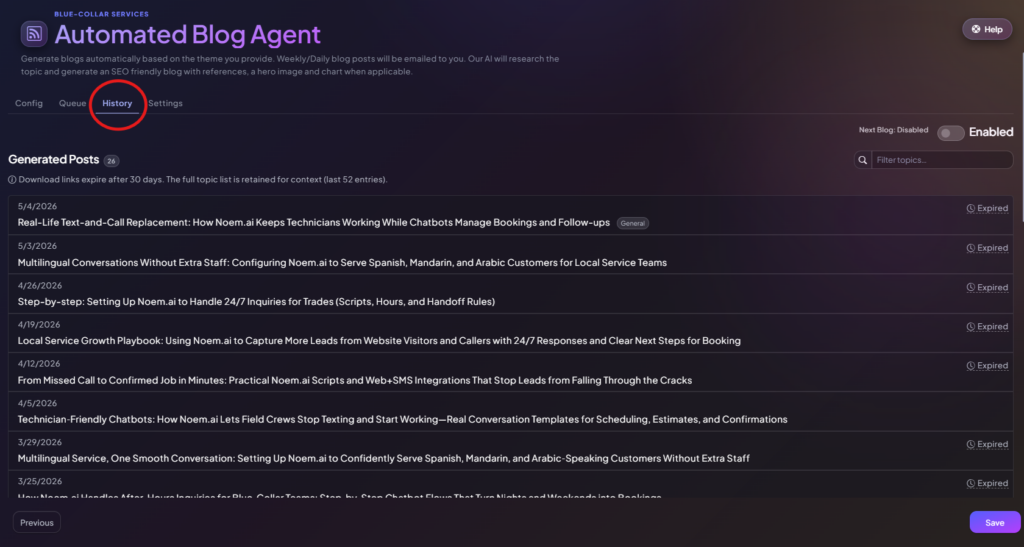
- Generated posts are available in History as downloads; download links expire after 30 days.
Troubleshooting #
“Blog Writer” option not available
Make sure you have the right subscription; Blog Writer is one of the project types offered when you click New AI Project.
Topics not saving
Ensure your titles are filled out before saving.
Duplicate topics appearing
Manually remove any repeated ideas and regenerate new ones.
Can’t add teammates
Use Manage team in the Settings tab; some access levels may be limited by your plan.
Real-World Use Cases #
Health Brands & Wellness Coaches
Set up daily blog tips around supplements, lifestyle changes, and routines.
E-commerce Marketers
Run weekly product feature blogs using seasonal themes or campaign keywords.
Agencies & Freelancers
Use Blog Writer to generate posts for multiple clients without manual effort.
SaaS Companies
Educate users with technical explainers, feature updates, or best practices.
Ready to Start? #
With just a few clicks, Noem AI can keep your blog running with fresh, consistent, on-brand content. From idea generation to formatting and delivery, the entire pipeline is automated.
Log in to your Noem AI account, start a Blog Writer project, and let your content engine run itself.


